In a joint operation in Shopian, Indian security forces killed Lashkar‑e‑Taiba terrorist Zakir Ganie, marking the first major encounter in the region in ten months. Arms and ammunition were seized, and three overground workers were arrested in Anantnag using advanced surveillance technology.
Security forces of India shot dead “category‑A” Lashkar‑e‑Taiba (LeT) terrorist Zakir Ganie during a fierce gunfight in Chanapora, Shopian district, on Wednesday. This marks the first large‑scale encounter in south Kashmir after almost ten months, signalling a renewed intensity in the region’s counter‑terrorism efforts.
Operation Overview
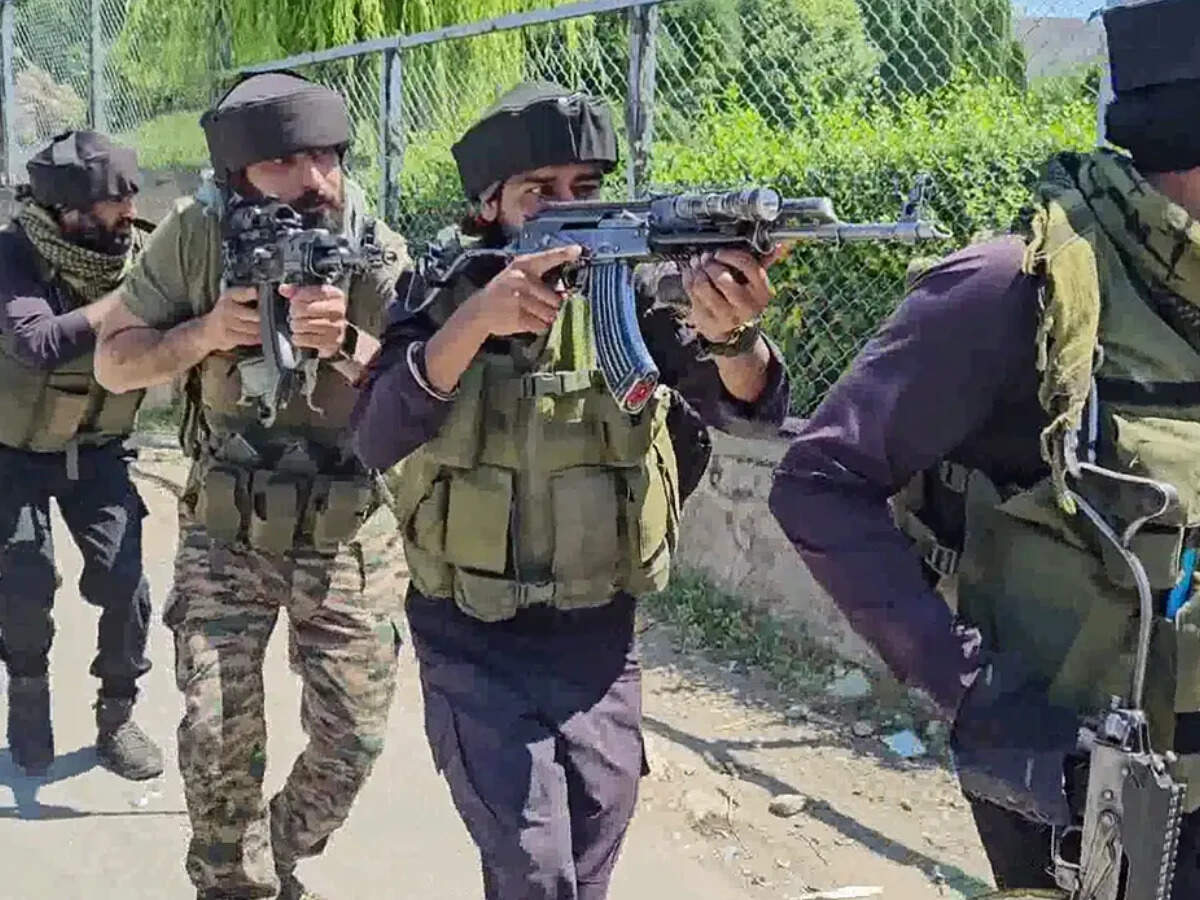
The joint operation, launched on Saturday evening, involved the Jammu & Kashmir Police, the Indian Army and the Central Reserve Police Force (CRPF). Precise intelligence indicated that Ganie and his accomplices were sheltering in the area, prompting the Special Operations Group (SOG) to act swiftly. Post‑engagement, the Army recovered a cache of firearms, ammunition and other war‑like material, underscoring the logistical capabilities of the terrorist cell.
Profile of Zakir Ganie
A native of Kulgam district, Ganie joined the Pakistan‑based LeT in December 2023. Police records attribute several terror attacks across Jammu‑Kashmir to him, ranging from bombings to targeted killings. One senior officer summed up the operation’s message: “You can run, but you cannot hide!” – a statement reflecting the relentless pursuit of terror elements.
Arrests of Overground Workers in Anantnag
On the same day, three overground workers (OGWs) were apprehended in Anantnag district. Their capture was facilitated by the police’s facial‑recognition system and other cutting‑edge surveillance tools. The suspects were intercepted while transiting through Sarbal, appearing on the police’s radar and subsequently detained. Officials hailed the arrests as evidence of “the effectiveness of advanced surveillance technology deployed for the ongoing Shri Amarnath Yatra”.
Implications for Regional Security
The last major encounter in south Kashmir occurred on September 9 last year, when two Indian soldiers and two LeT operatives, including a Pakistani national, were killed in a firefight in Kulgam’s Gader forest. Ganie’s elimination therefore represents a significant blow to the terrorist infrastructure and a morale boost for security agencies.
Security analysts contend that such decisive actions not only disrupt operational capabilities of groups like LeT but also reassure the local populace of the state’s commitment to safety. Continued intelligence sharing, joint operations, and technological upgrades are expected to further curtail terrorist activities in the volatile region.
Looking ahead, the emphasis on real‑time surveillance, facial‑recognition analytics, and inter‑agency coordination is poised to shape the next chapter of counter‑terrorism in Jammu‑Kashmir, making it increasingly difficult for militant networks to regroup.