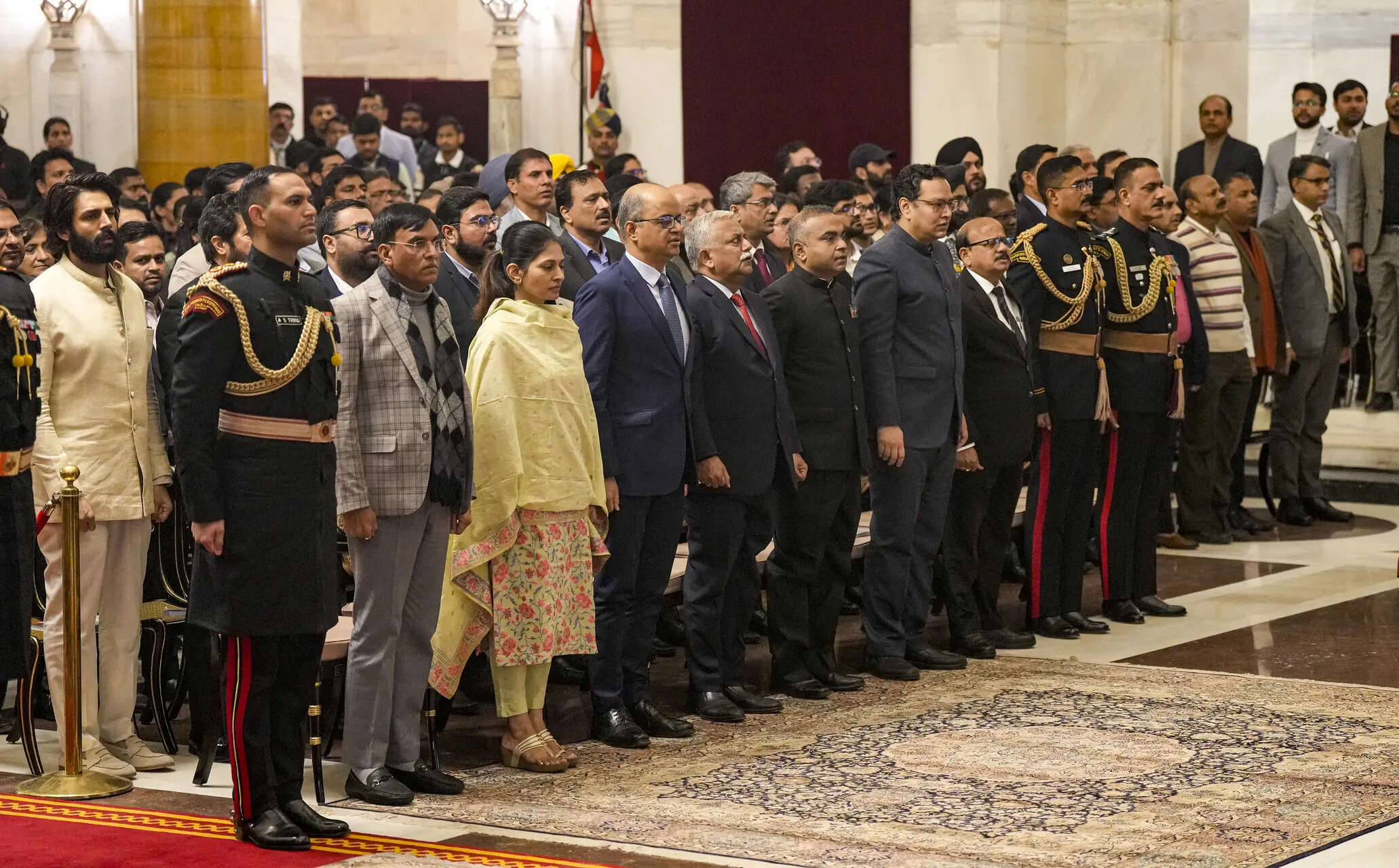
The Union Home Ministry has issued a strict directive to all states and Union Territories regarding the correct script, pronunciation, and protocol for the national song and anthem. The order establishes a clear sequence of play, mandating that state songs must precede the national song and anthem.
Key Takeaways
- States must strictly adhere to the correct script and pronunciation of the national song and anthem.
- The Home Ministry has mandated a strict sequential protocol: State Song first, followed by the National Song, and finally the National Anthem.
- The National Song (Vande Mataram) must be played in full, including all six stanzas, using official resources from the MHA portal.
The Ministry of Home Affairs (MHA) has issued a comprehensive directive to all state governments and Union Territory administrations, emphasizing the absolute necessity of maintaining the "correct script and diction" when performing or playing the national song, Vande Mataram, and the national anthem, Jana Gana Mana. The directive aims to preserve the linguistic and structural sanctity of these national symbols.
Strict Protocol for Official Ceremonies
The directive, sent via a formal communication to state chief secretaries and UT administrators, outlines a strict protocol for official ceremonies where regional or state songs are performed. Under the new guidelines, state songs can no longer be interspersed between the national song and national anthem. Instead, a strict sequence must be observed: the state song must be played first, followed by the national song, and culminating with the national anthem.
Standardization of Script and Pronunciation
Addressing concerns over mispronunciations and lyrical deviations, the Home Ministry has directed authorities to refer to the official MHA portal, which hosts the authorized scripts and pronunciation guides. Furthermore, the ministry clarified that the national song must be played in its entirety, encompassing all six stanzas, to preserve its historical and cultural integrity during formal events.
Balancing Federalism and National Identity
In India's federal structure, several states have adopted official state songs (such as Tamil Thai Valthu in Tamil Nadu or Jai Jai Garvi Gujarat in Gujarat) which are regularly played at state-sponsored events. By codifying the exact sequence, the Centre aims to prevent any protocol conflicts and ensure that national symbols retain their supreme constitutional status without undermining regional pride.
Mandatory Compliance Across Institutions
The Home Ministry's letter concludes with an explicit request to state administrations to disseminate these guidelines swiftly. Local institutions, educational bodies, and government organizations under state jurisdictions are expected to enforce compliance immediately to avoid any inadvertent disrespect to the nation's foundational symbols.