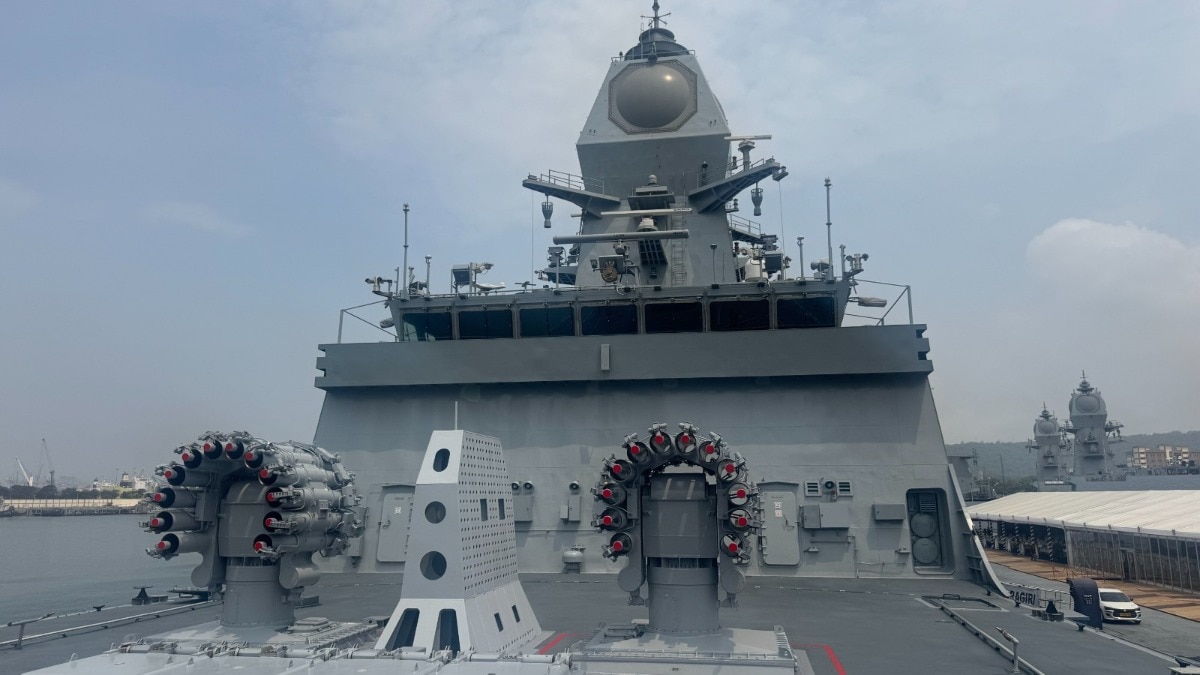
Amid rising Indo‑Pacific tensions, India commissioned INS Mahendragiri on July 11 at Visakhapatnam Naval Dockyard. The stealth frigate, built with over 75% indigenous content, marks a major boost to the Indian Navy’s self‑reliant combat capability.
मुख्य बिंदु (Key Takeaways)
- INS Mahendragiri commissioned on July 11 at Visakhapatnam.
- More than 75% indigenous components; latest Nilgiri‑class technology.
- Significant enhancement of India’s maritime surveillance and power in the Indo‑Pacific.
A new milestone in India’s Indo‑Pacific naval strategy— Defence Minister Rajnath Singh officially inducted the stealth guided‑missile frigate INS Mahendragiri (F‑38) at the Naval Dockyard in Visakhapatnam on July 11. The warship embodies India’s push for self‑reliance, with over three‑quarters of its systems sourced domestically.
Background and Project 17A
Developed under Project 17A, INS Mahendragiri belongs to the Nilgiri‑class of stealth frigates. Designed by the Indian Navy’s Warship Design Bureau (WDB) and constructed by Mazagon Dock Shipbuilders Limited (MDL) in Mumbai, the vessel takes its name from the Mahendragiri mountain range straddling Odisha and Andhra Pradesh—a symbol of strength and heritage.
Technical Specifications and Capabilities
The frigate is equipped with advanced surface‑to‑surface and surface‑to‑air missile systems, a modern radar and sensor suite, electronic warfare capabilities, and anti‑submarine weapons. Its stealth hull dramatically reduces radar cross‑section, granting a tactical edge in contested waters. High‑level automation and survivability features further enhance operational endurance.
Strategic Significance
In a region where US‑Iran tensions and broader Indo‑Pacific security concerns are intensifying, INS Mahendragiri expands India’s long‑range deployment, anti‑air, anti‑surface, and anti‑submarine warfare options. The frigate can also conduct maritime security patrols, humanitarian assistance and disaster relief (HADR), and search‑and‑rescue missions. With the addition of Mahendragiri, the Navy’s warship inductions will exceed 18 in the past year, matching the number slated for 2026.
Economic and Industrial Impact
With more than 75% indigenous content, the ship reduces reliance on foreign defence imports while bolstering India’s defence MSMEs, shipbuilding sector, and broader industrial base. Project 17A’s success sets a precedent for future high‑technology naval platforms, reinforcing the Aatmanirbhar Bharat vision.