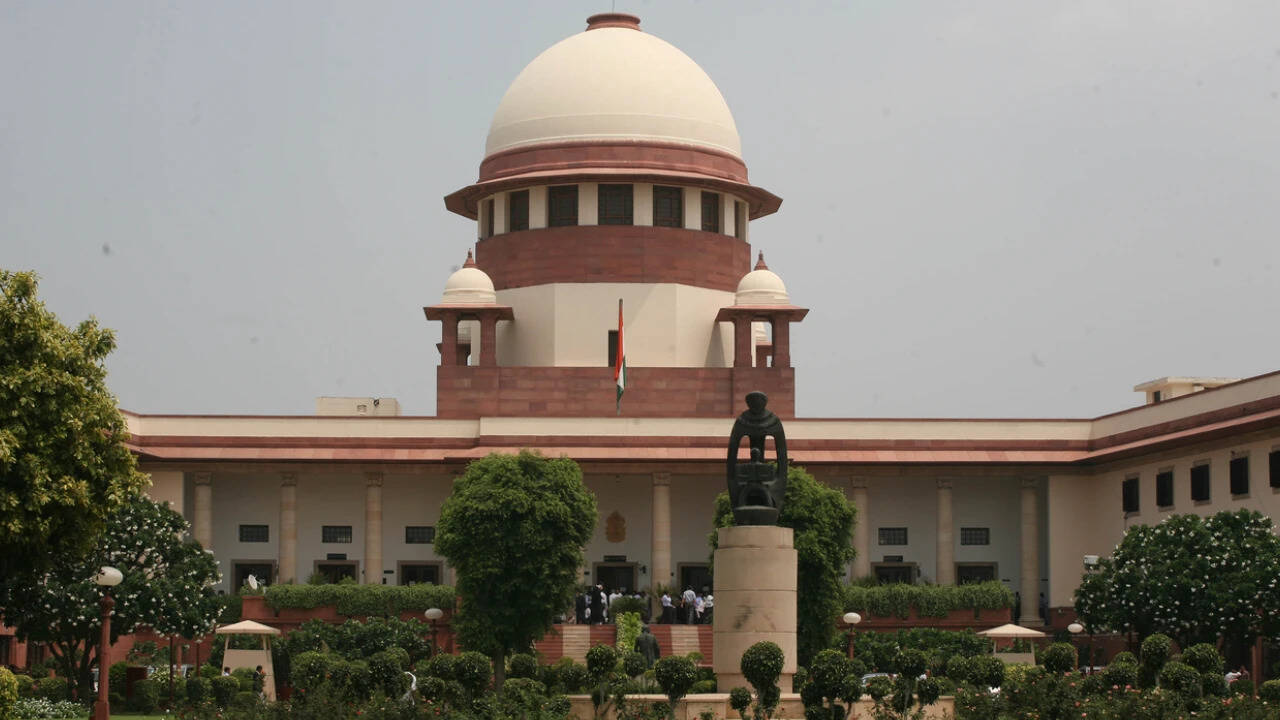
The Supreme Court nullified the Guwahati High Court's declaration of 27 individuals as foreigners, emphasizing that citizenship determination must follow a fair, lawful, and reasonable process. Tribunals have been ordered to conduct fresh hearings and reassess the cases.
Key Takeaways
- Supreme Court quashes orders declaring 27 foreigners
- Fair hearing and natural justice are mandatory in citizenship cases
- Foreigners Tribunals directed to hold fresh hearings and reconsider decisions
New Delhi: In a landmark ruling, the Supreme Court of India set aside the Guwahati High Court's orders that labeled 27 individuals as foreign nationals, underscoring that the determination of citizenship must be carried out through a "fair, lawful and reasonable" procedure. The judgment reinforces constitutional safeguards and signals a shift toward greater procedural rigor in nationality adjudication.
Legal Framework and Section 9
Under Section 9 of the Foreigners Act, the burden of proving non‑foreign status rests on the individual concerned. However, the apex court clarified that this statutory burden does not exempt a tribunal from its own duty to conduct a lawful adjudication. The justices stressed that natural‑justice principles—meaningful notice, opportunity to present evidence, and a reasoned opinion—remain indispensable, irrespective of the statutory burden.
Flaws in the Guwahati High Court Orders
A bench comprising Justices Vikram Nath and Sandeep Mehta found that many of the High Court's orders were issued without any hearing of the affected persons. Such “mechanical declarations” risk severe consequences, including detention, deportation, or statelessness. The Court directed the Foreigners Tribunals to reconvene, grant the parties a genuine chance to respond, and render decisions that satisfy constitutional standards of fairness.
Implications for Affected Individuals and Future Tribunals
The immediate effect is relief for the 27 persons whose foreign‑national status was revoked without due process. More broadly, the ruling mandates that tribunals must disclose the material basis of their allegations and provide a substantive opportunity—rather than a mere formality—for individuals to contest them. This requirement will compel tribunals to scrutinize documentary evidence related to ancestry, residence, identity, and family links with greater diligence.
Broader Constitutional Significance
By insisting on procedural fairness, the Supreme Court reaffirms the constitutional guarantees of equality before law, protection of life, and personal liberty for every individual within Indian territory. The decision sets a precedent that even when a person ultimately fails to establish Indian citizenship, the process itself must be anchored in reasonableness and non‑arbitrariness. In doing so, the Court strengthens the rule of law and sends a clear message that citizenship cannot be stripped through cursory or opaque proceedings.