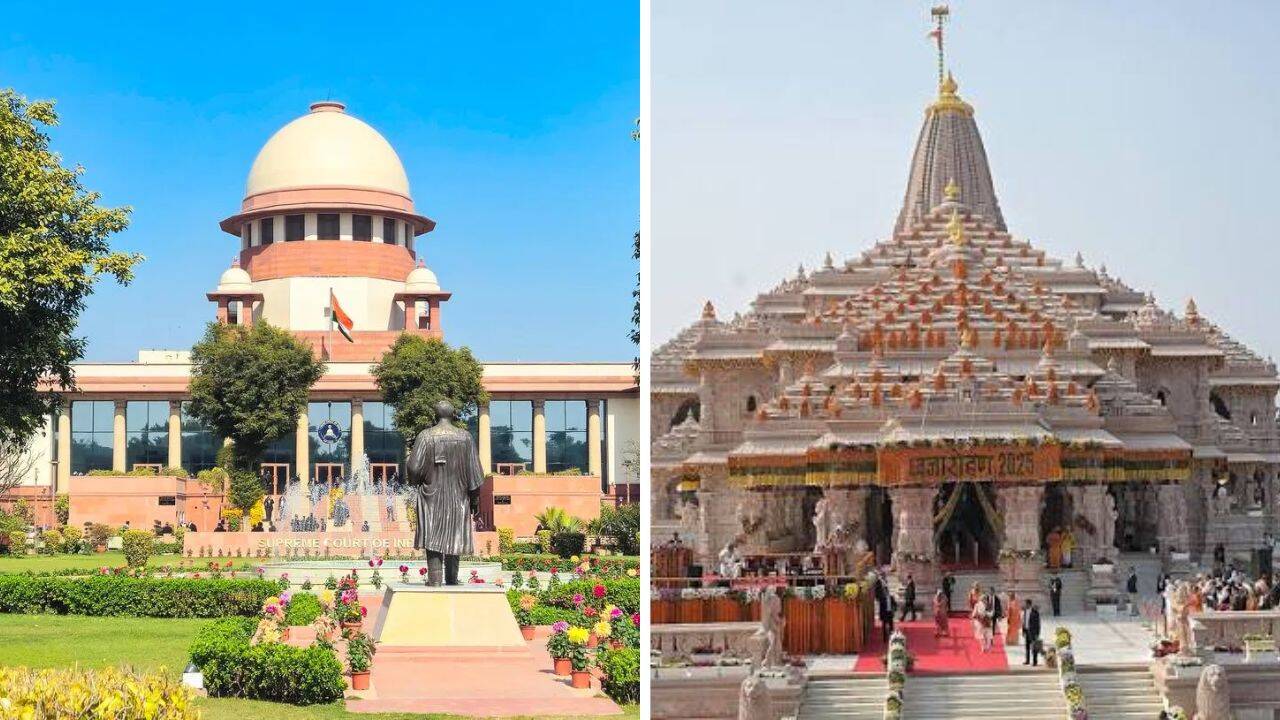
The Supreme Court has ordered the Uttar Pradesh‑constituted Special Investigation Team (SIT) to submit a status report on the alleged embezzlement of Ram Mandir donations within seven days. A further hearing is scheduled for July 20, keeping the judiciary’s oversight firmly in place.
मुख्य बिंदु (Key Takeaways)
- Supreme Court directs SIT to file report within a week
- Eight suspects already in judicial custody
- Investigation uncovered around 70 suspicious incidents
New Delhi – The Supreme Court has effectively taken over supervision of the ongoing probe into alleged misappropriation of donations to the Ayodhya Ram Mandir. A bench comprising Chief Justice Surya Kant, Justices Joymalya Bagchi and V Mohana ordered the Uttar Pradesh government’s Special Investigation Team (SIT) to submit a detailed status report within seven days.
Legal Context and Background
The Ram Janmabhoomi Teerth Kshetra Trust, created in 2020 to manage funds for the temple’s construction, has collected massive contributions from devotees across the country. Allegations of opaque accounting and possible diversion of money prompted the Uttar Pradesh government to form a three‑member SIT on June 13. The team—headed by Lucknow Divisional Commissioner Vijay Vishwas Pant, IG Kiran S, and Special Secretary (Finance) Neel Ratan—identified roughly 70 suspicious incidents between April 27 and June 5, many captured on CCTV where staff were seen concealing cash bundles on their persons.
Current Progress and Arrests
To date, the SIT has arrested eight individuals, all of whom are now in judicial custody. The arrests include senior temple staff and external operatives allegedly involved in cash handling irregularities. The bench emphasized that these detentions underscore the seriousness of the probe rather than serve as punitive measures.
Political and Societal Implications
The controversy forced the trust’s General Secretary Champat Rai and member Anil Mishra to resign, with their resignations accepted on July 6. The resignations have been framed by political parties—including the Samajwadi Party and AAP—as evidence of a broader cover‑up by the state government, accusing it of protecting a “big fish.” Public sentiment, deeply tied to religious devotion, has been inflamed, raising concerns over the integrity of charitable contributions.
Future Directions
Beyond the SIT, the Supreme Court has summoned responses from the Centre, the Uttar Pradesh government, and the Ram Janmabhoomi Trust. Petitioners have called for a CBI investigation and a CAG audit, while also seeking preservation of electronic evidence such as CCTV footage. The next hearing on July 20 will determine whether an independent probe will be mandated, potentially reshaping the regulatory framework governing religious donations in India.