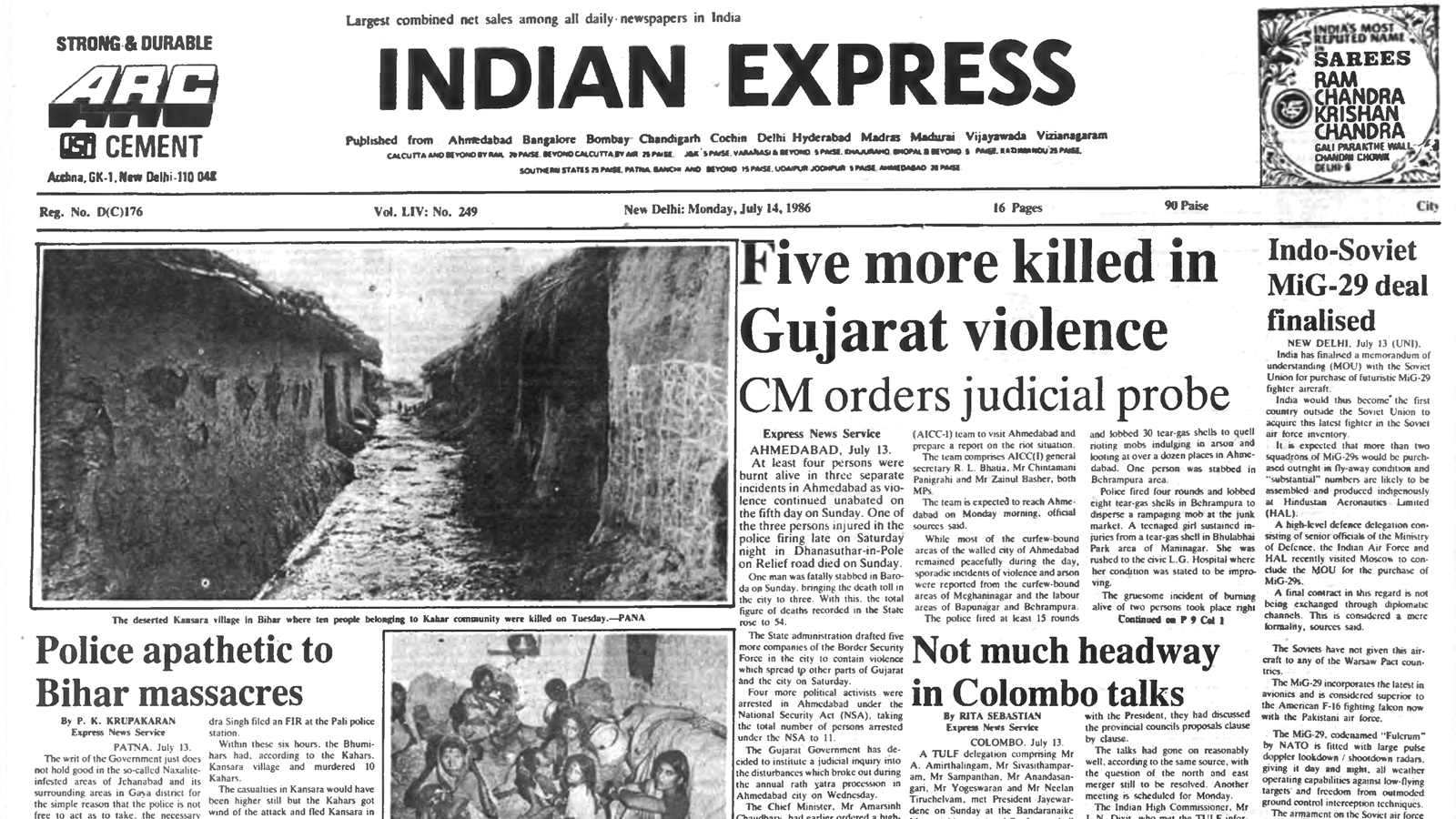
On July 14, 1986, five additional people were killed in Gujarat, pushing the state's death toll to 54. The killings came after four days of escalating unrest involving arson, police firing and stabbing incidents.
Key Takeaways
- Five new deaths reported in Gujarat on July 14, 1986
- Total fatalities in the state rose to 54
- Incidents included arson, police firing and stabbing
July 14, 1986 marked a grim escalation in Gujarat’s ongoing violence. In Ahmedabad, four individuals were burned alive across three separate sites, while a police firing late Saturday night on Dhanasuthar‑ni‑Pole (Relief Road) claimed the life of an injured civilian. In Baroda, a man was fatally stabbed, bringing the city’s death count to three. These incidents pushed Gujarat’s overall death toll to 54, underscoring a fifth day of unrelenting turmoil.
Incident Overview
The three arson attacks in Ahmedabad resulted in four deaths, highlighting the ferocity of the unrest. The police firing on Dhanasuthar‑ni‑Pole, intended to disperse crowds, instead added to the casualty list when an already‑wounded protester succumbed to injuries. Baroda’s stabbing incident further illustrated how personal vendettas intertwined with broader communal tensions, raising the city’s fatality figure.
Historical Context
The mid‑1980s saw Gujarat grappling with deep‑seated economic disparities, caste‑based tensions, and pockets of Naxalite activity. Agricultural distress and opposition to certain government policies fueled public anger, while law‑enforcement agencies struggled to maintain order. This volatile mix created a powder‑keg environment that erupted on the fifth day of violence.
State and National Response
The state government declared emergency measures, yet police inaction and perceived partiality eroded public confidence. National political leaders condemned the bloodshed and called for immediate peace restoration. Simultaneously, India finalized a Memorandum of Understanding with the Soviet Union for the acquisition of MiG‑29 fighter jets, a development that shifted attention to defense procurement amidst domestic chaos.
Future Implications
Incidents of this magnitude threaten social cohesion and impede long‑term economic growth. Analysts warn that without comprehensive police reforms, independent oversight, and robust community dialogue, Gujarat may witness similar flare‑ups. Strengthening institutional accountability remains essential to prevent history from repeating itself.