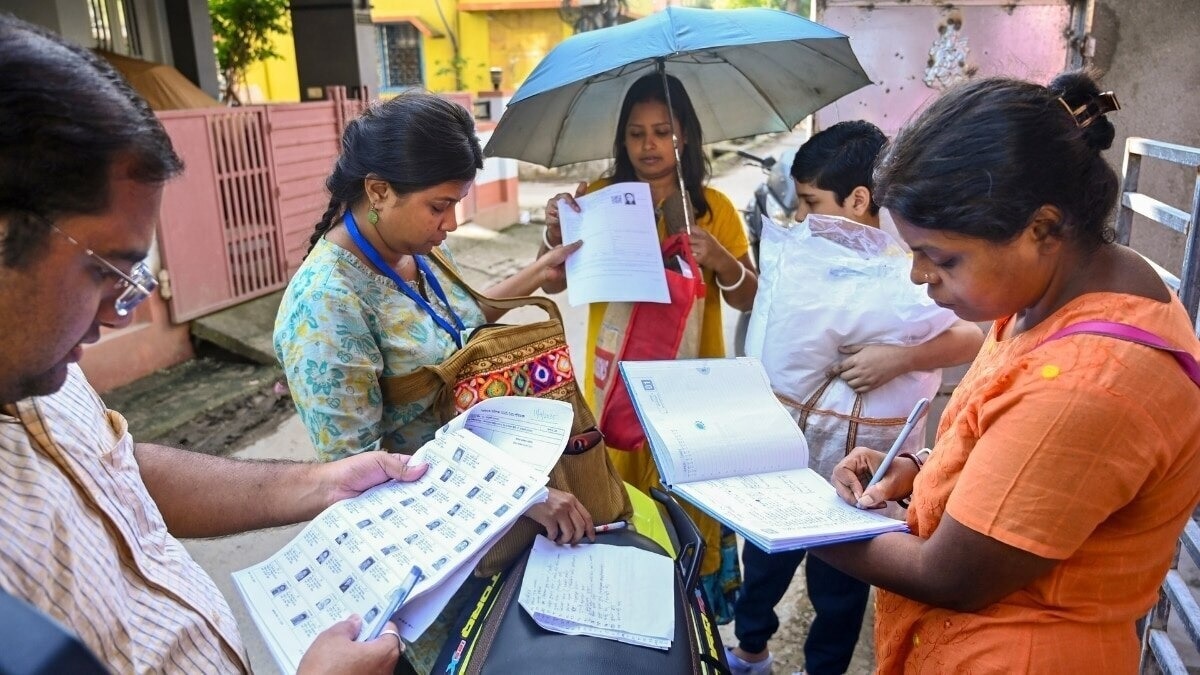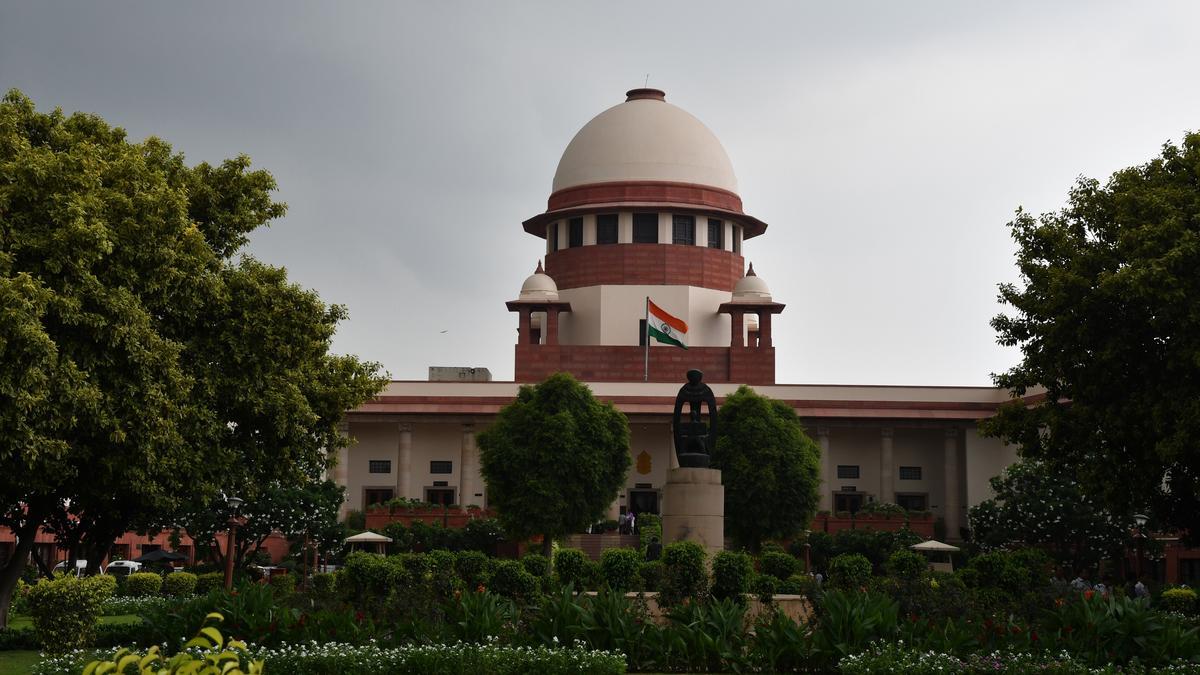
The Supreme Court has issued notices to the ECI and West Bengal government regarding the potential deprivation of welfare schemes for individuals removed from electoral rolls during the SIR exercise.
Key Takeaways
- SC issued notices to the Election Commission and West Bengal Govt regarding welfare scheme access.
- Petitioners argue deletion from voter lists should not lead to exclusion from PDS and Annapurna schemes.
- Court reiterated that the ECI cannot adjudicate citizenship; that power rests with the Ministry.
- Huge backlog of 34 lakh appeals reported in Special Tribunals.
New Delhi: In a significant legal development, the Supreme Court of India has taken up a plea concerning the fundamental rights of citizens whose names have been removed from the electoral rolls during the Special Intensive Revision (SIR) exercise in West Bengal. A bench led by Chief Justice of India (CJI) Surya Kant, including Justices Joymalya Bagchi and V. Mohana, has issued notices to the Election Commission of India (ECI) and the West Bengal government.
The Link Between Voting and Survival
The petition, filed by Prasenjit Bose, raises a critical humanitarian concern: the domino effect of being removed from the voter list. Senior Advocate Gopal Sankaranarayanan, representing the petitioner, argued that deletion from electoral rolls often leads to an automatic exclusion from essential life-sustaining schemes such as the Public Distribution System (PDS), the Annapurna scheme, and various monetary social benefits. He emphasized that such administrative actions can strip individuals of their dignity and survival mechanisms even before their legal status is finalized.
Jurisdictional Clarity on Citizenship
During the proceedings, Justice Bagchi drew a vital distinction between voting rights and citizenship. Referring to a previous landmark judgment concerning the Bihar SIR exercise, the Court clarified that while the ECI maintains superintendence over electoral rolls, it possesses no authority to decide citizenship. Under the Citizenship Act, any such disputes must be referred to the appropriate Ministry for adjudication. The Court underscored that the ECI's role is limited to managing the rolls, not determining the legal nationality of its citizens.
Systemic Delays and Transparency Issues
The Court was also informed of a massive administrative backlog. It is estimated that approximately 34 lakh appeals remain pending before the Special Tribunals, with only a fraction having been decided by the 19 existing tribunals. The petitioner has further urged the Court to exercise its extraordinary jurisdiction under Article 142 to ensure 'complete justice' by protecting affected persons from losing welfare benefits during the pendency of their cases. Additionally, calls for greater transparency, including the requirement for tribunals to maintain websites and publish standard operating procedures (SOPs), were placed before the bench.