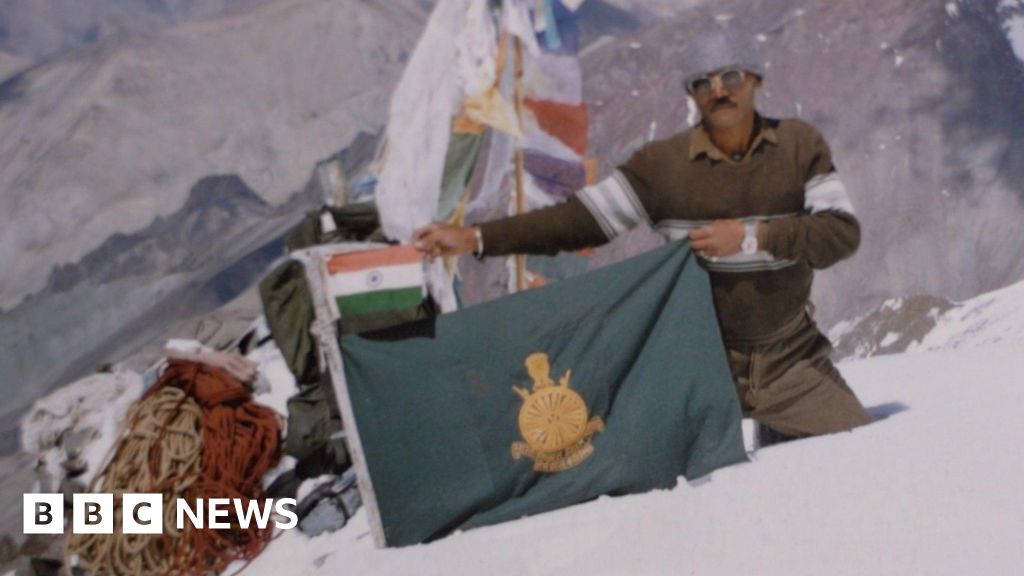
After three decades as a grim landmark on Mount Everest, the body known as 'Green Boots' has been identified as Indian climber Dorje Morup. India is now seeking a specialist team for a perilous recovery mission.
Key Takeaways
- The body known as 'Green Boots' is identified as Dorje Morup, an ITBP Lance Naik from Ladakh.
- Morup died in 1996 during a historic attempt to summit Everest via the treacherous Chinese North side.
- The remains are located at 8,500 meters in the 'Death Zone,' making recovery extremely dangerous.
- India is scouting for a high-altitude recovery team to bring the remains home for DNA testing and closure.
For 30 years, a frozen figure nestled under an overhanging rock near the summit of Mount Everest has served as a haunting trail marker for climbers. Known globally as 'Green Boots' due to the lime-colored footwear, the body has remained a mystery and a symbol of the mountain's brutality since 1996.
Recent evidence and testimonies from survivors of the 1996 expedition have led authorities to conclude that the remains belong to Dorje Morup. A Lance Corporal in the Indo-Tibetan Border Police (ITBP), Morup was part of a daring mission to become the first Indian expedition to summit Everest from the Chinese side. While he reached the peak, a catastrophic blizzard during the descent claimed his life and those of two comrades.
Why This Matters (BozokMedia Analysis)
BozokMedia analysis shows that this mission transcends a simple recovery operation; it is a matter of national pride and emotional closure. The 'Green Boots' landmark has become an iconic, albeit tragic, part of Everest lore. Successfully retrieving Morup's body from the North Face—which lacks the helicopter infrastructure of the Nepalese side—would be a feat of extreme logistics and endurance, highlighting the deep bond between the ITBP and its fallen soldiers.
"The North side is steeper and riskier; without the rapid evacuation systems found on the South side, any recovery mission is a gamble with life."
The logistical challenge is immense. At 8,500 meters, the air is thin, and temperatures plummet to -40°C. Experts suggest that bringing down a body frozen in ice—which often weighs significantly more than a living person—would require a team of 10 to 12 elite climbers to fix ropes and manually carry the remains down to a point accessible by yaks or helicopters.
Frequently Asked Questions
Q1: Who was 'Green Boots'?
Answer: He was Dorje Morup, an Indian climber and ITBP soldier who died in 1996. He became known as 'Green Boots' because of his distinctive lime-green mountaineering boots.
Q2: Why has the body remained on the mountain for 30 years?
Answer: The extreme altitude (Death Zone), unpredictable weather, and the lack of rescue infrastructure on the Chinese side made recovery nearly impossible until now.