From Operation Mahadev to the dismantling of the Shahzad Bhatti network, the Indian Army has executed 34 major counter-terror operations in Jammu and Kashmir within a year. Chinar and White Knight Corps have successfully neutralized terrorists and blocked infiltration routes.
- The Indian Army conducted 34 significant counter-terror and anti-infiltration operations in J&K over the past year.
- 'Operation Mahadev' successfully neutralized three terrorists involved in the Pahalgam attack.
- 'Operation Trashi-I' in Kishtwar eliminated 7 Jaish-e-Mohammed terrorists, including commander Saifullah.
- Nationwide crackdown on the Shahzad Bhatti network led to 253 arrests across 14 states.
In a decisive shift in counter-insurgency tactics, the Indian security forces have transitioned from reactive measures to a proactive, systematic dismantling of terror ecosystems in Jammu and Kashmir. Following the Pahalgam terror attack in April 2025, the military launched a relentless campaign that has seen 34 major operations carried out by the Chinar Corps and White Knight Corps over the last twelve months.
Chinar Corps: Neutralizing the Valley's Terror Hubs
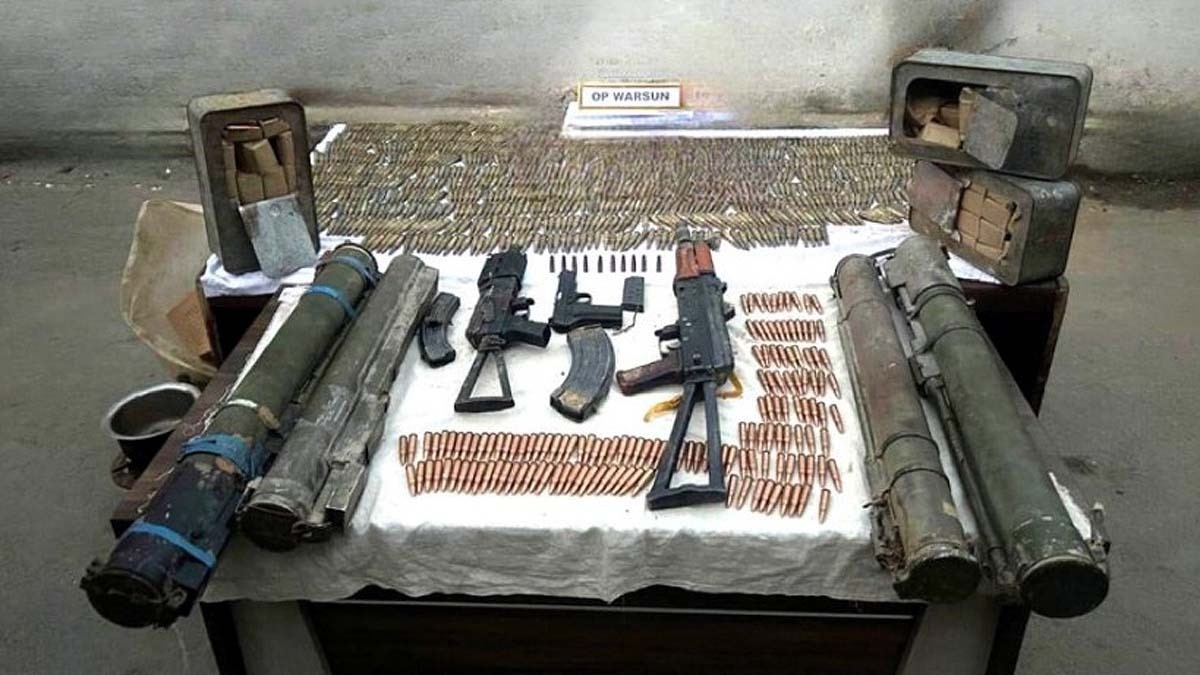
The Chinar Corps has been intensely active across North and South Kashmir, targeting hideouts in Kupwara, Baramulla, Bandipora, and Shopian. Notable successes include Operation Nagni Top in August 2025, where a major terror hideout was destroyed, yielding heavy weaponry. Furthermore, Operation Chitra-gam in Shopian successfully neutralized a massive 14.5 kg IED, preventing a potential catastrophe.
These operations emphasize a strategic shift: the focus is no longer just on neutralizing individual terrorists but on destroying their logistics, weapon caches, and local support networks. The elimination of high-value targets like Zakir Ganai of Lashkar-e-Taiba underscores the efficacy of this intelligence-led approach.
White Knight Corps: Securing the LoC and Jammu Hinterland
In the Jammu sector, the White Knight Corps has focused on sealing the Line of Control (LoC). The most significant achievement was Operation Trashi-I in the Kishtwar region. This grueling 326-day operation utilized advanced technology, including FPV drones, satellite imagery, and UAVs, to eliminate seven Jaish-e-Mohammed terrorists, including the dreaded commander Saifullah.
The military's ability to integrate high-tech surveillance with ground intelligence has fundamentally altered the battlefield dynamics in the rugged terrains of Jammu.
Why This Matters
BozokMedia analysis shows that this two-pronged strategy—preventing infiltration at the LoC while simultaneously hunting terror cells in the hinterland—is systematically choking the terror supply chain. The synchronized crackdown on the Shahzad Bhatti network across 14 states demonstrates a unified national security response that bridges the gap between border security and domestic intelligence.
Frequently Asked Questions
1. What was the significance of Operation Mahadev?
Operation Mahadev was a joint mission by the 4 Para, CRPF, and J&K Police that successfully neutralized the terrorists responsible for the Pahalgam attack.
2. How is the army using technology in these operations?
The army is increasingly using satellite imagery, UAVs, and FPV drones to track terrorists in high-altitude, difficult terrains.