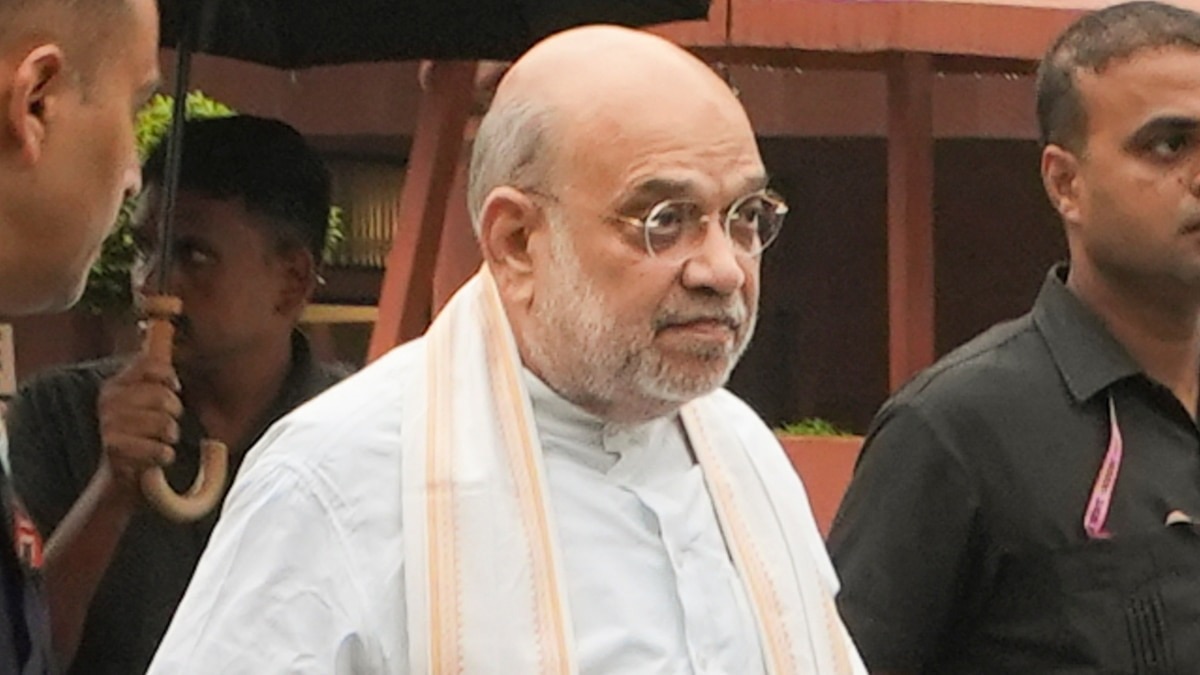
Former Army Chief General Manoj Naravane has issued a stern warning regarding the rising instability in Myanmar, Nepal, and Bangladesh, stating that unrest in these nations will directly impact India's security. He also highlighted China as India's primary long-term competitor.
- Instability in Myanmar, Nepal, and Bangladesh poses a direct security threat to India.
- General Naravane identified China as India's most significant long-term strategic competitor.
- Regional unrest could lead to refugee crises and cross-border security breaches.
In a profound strategic assessment, former Army Chief General Manoj Naravane has sounded the alarm on the escalating volatility within India's neighborhood. Addressing the geopolitical shifts in South Asia, he remarked that if neighboring nations like Myanmar, Nepal, and Bangladesh descend into chaos, the repercussions will inevitably cross Indian borders. His metaphor, 'If the neighbors burn, the smoke will reach India,' underscores the interconnectedness of regional stability and national security.
The Domino Effect of Regional Unrest
The current political landscape in Myanmar, characterized by prolonged conflict, and the recent political upheavals in Bangladesh, create a precarious environment. General Naravane suggests that such instability acts as a catalyst for various non-traditional security threats, including mass migration, smuggling, and the potential rise of insurgent activities along India's porous borders.
Regional instability in South Asia is not a localized issue; it is a direct challenge to India's internal sovereignty.
China: The Ultimate Strategic Rival
While addressing the multi-front challenges facing the Indian Armed Forces, General Naravane drew a sharp distinction between the threats posed by Pakistan and China. He emphasized that while Pakistan remains a constant concern, China represents the most formidable and sophisticated long-term competitor to India's interests. The expansionist tendencies and strategic maneuvering by the Dragon necessitate a heightened state of military readiness.
Why This Matters
BozokMedia analysis shows that India's ability to maintain regional hegemony depends heavily on the stability of its immediate neighbors. A vacuum of power in countries like Myanmar or Bangladesh provides an opening for adversarial powers to establish influence, directly threatening India's 'Neighborhood First' policy and maritime/land security architecture.
Historical Background
India's history is replete with examples where domestic unrest in neighboring territories has spilled over. The 1971 liberation of Bangladesh is a seminal moment where regional instability necessitated massive Indian intervention. Today, the shifting dynamics in the region suggest a similar need for proactive strategic engagement and border management.
Frequently Asked Questions
1. Which countries did General Naravane mention as being unstable?
He specifically highlighted Myanmar, Nepal, and Bangladesh.
2. What did he identify as India's biggest long-term threat?
He identified China as the most significant long-term competitor for India.