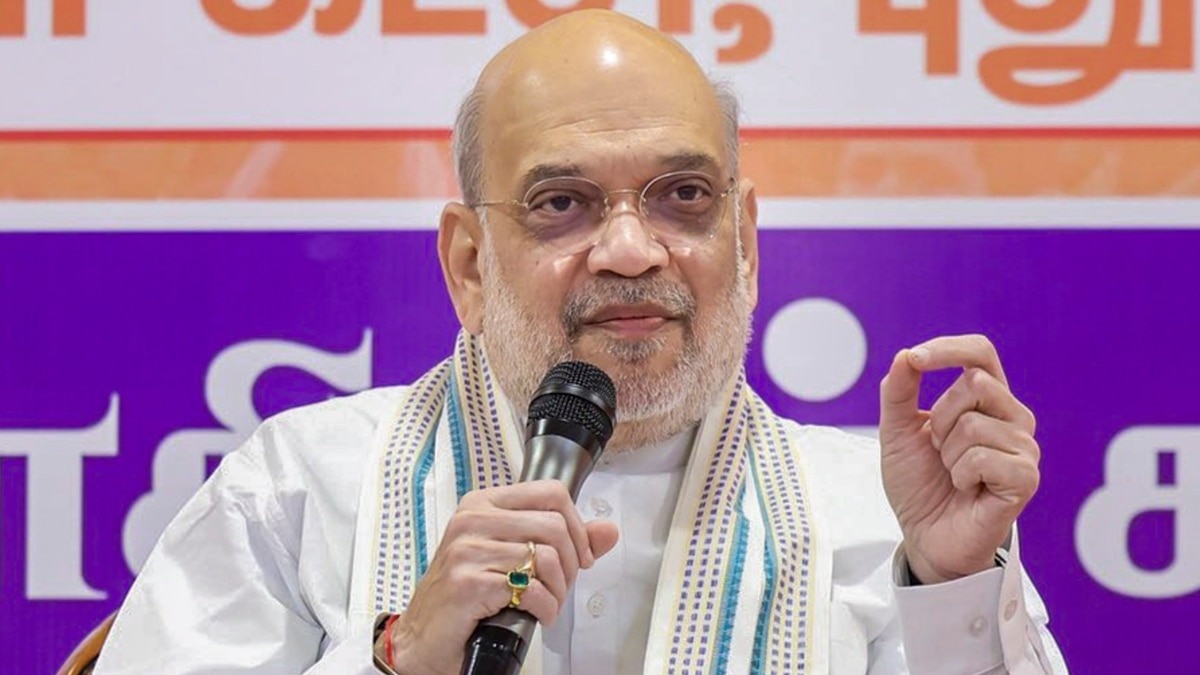
At the National Security Strategy Conference, Union Home Minister Amit Shah called for a proactive security system capable of identifying emerging threats 15 to 20 years in advance. He emphasized that strong internal security is the cornerstone for achieving India's 2047 developed nation goal.
- Shift from a 'Reactive' to a 'Predictive' security paradigm.
- Implementation of the 'Detect, Disrupt, Destroy' strategy against narcotics.
- Integrating the 'Prahar' approach into everyday policing to dismantle terror networks.
- Focus on long-term trend analysis to preempt challenges related to technology and geopolitics.
Speaking at the concluding session of the two-day National Security Strategy Conference (NSSC) in New Delhi, Union Home and Cooperation Minister Amit Shah outlined a visionary roadmap for India's defense. He asserted that India must transition toward a proactive security model that can identify and neutralize emerging threats 15 to 20 years before they manifest into major crises.
Shah emphasized that security policy should not merely be a response to existing problems but a continuous study of international and national trends. He highlighted that Prime Minister Narendra Modi's vision of a 'Viksit Bharat' (Developed India) by 2047 is fundamentally dependent on a stable and robust internal security environment.
Why This Matters
BozokMedia analysis shows that as warfare shifts toward hybrid models involving cyber threats, economic warfare, and misinformation, traditional reactive policing is no longer sufficient. By institutionalizing a 'predictive' approach, India aims to mitigate the massive economic and human costs associated with responding to crises after they have already escalated.
The mantra for future security must be 'identify first, act later' to ensure that challenges are neutralized in their infancy.
Reflecting on historical challenges, Shah noted that issues like Naxalism, narcotics trafficking, and unrest in the Northeast could have been managed more effectively if they had been visualized and addressed during their nascent stages. He credited the coordinated efforts of the Centre, State police, and the Central Armed Police Forces (CAPF) for successfully managing previous internal security hotspots.
Counter-Terrorism and the 'Prahar' Strategy
Regarding terrorism, the Home Minister urged for the 'Prahar' concept to move beyond documentation and become an integral part of daily security operations. He advocated for a 360-degree approach that targets not just the terrorists themselves, but their entire ecosystem, including funding, logistics, recruitment, and digital sleeper modules.
He specifically directed that this approach must be internalized down to the level of the Deputy Superintendent of Police (DYSP) to ensure grassroots-level effectiveness.
The War on Drugs: Detect, Disrupt, Destroy
To combat the rising menace of narcotics, Shah introduced a rigorous three-pronged strategy: Detect, Disrupt, and Destroy. This involves identifying drug networks, disrupting their financial and supply channels, and ultimately dismantling the entire infrastructure. He emphasized that the fight against drugs is a collective responsibility that involves every department of both Central and State governments to protect the nation's youth.
Border Security and Infiltration
On the issue of border security, Shah highlighted a four-pronged approach to prevent infiltration. He warned that infiltration is not just a law-and-order issue but a complex threat affecting national security, the economy, and the demographic fabric of the country. He stressed the importance of senior-level nodal officers in states to ensure rapid response and coordination.
Frequently Asked Questions
1. What is the core objective of Amit Shah's new security vision?
The core objective is to move India from a reactive security posture to a predictive one, identifying threats up to 20 years in advance.
2. How does the 'Prahar' approach work against terrorism?
It is a 360-degree strategy that targets the entire terrorist network, including their funding, recruitment, and digital connections, rather than just the individual combatants.