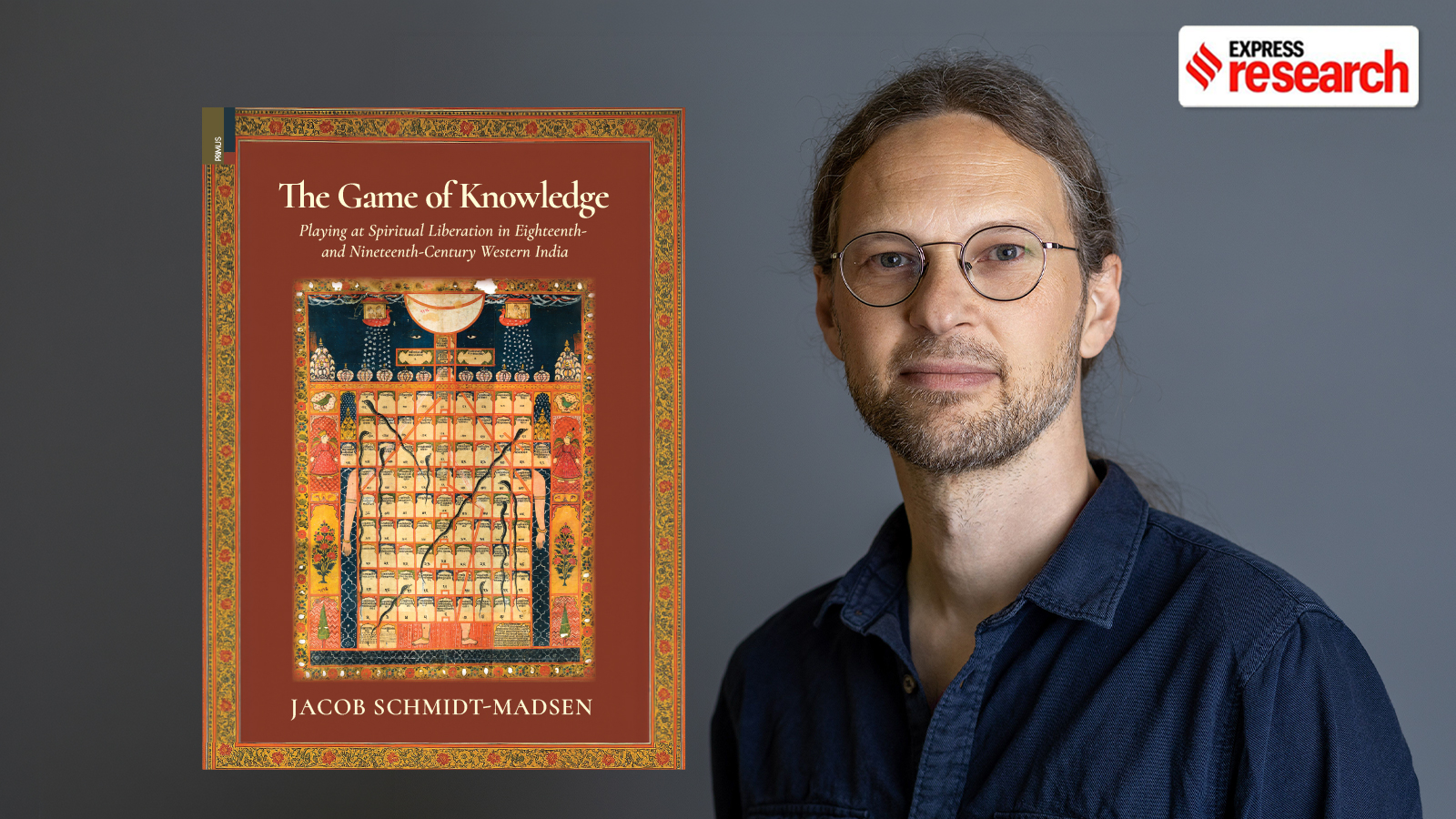
What began as 'Gyan Chaupar,' a profound spiritual tool in ancient India, was transformed into the modern 'Snakes and Ladders' by British influence. Historian Jacob Schmidt-Madsen explores this fascinating cultural shift.
- The game originated in India as 'Gyan Chaupar,' a tool for teaching spiritual concepts.
- Ancient boards featured inscriptions related to Vaishnavism, Shaivism, Sufism, and Jainism.
- British manufacturers stripped the religious symbolism to create the modern, secular version.
The ubiquitous game of Snakes and Ladders, played by millions of children globally, holds a secret history rooted in the profound spirituality of ancient India. Cultural historian Jacob Schmidt-Madsen, through his recent research and book 'The Game of Knowledge', has traced the journey of this game from its original form, known as Gyan Chaupar, to its modern-day iteration.
The Cosmic Board: Gyan Chaupar
Unlike the abstract boards used today, ancient Indian versions of the game were inscribed with complex religious symbols and text. Schmidt-Madsen, a researcher at the Max Planck Institute for the History of Science, discovered that these boards were not merely for play but served as cosmic maps. Each square represented a principle of creation or a specific realm of existence within the religious frameworks of Vaishnavism, Shaivism, Sufism, and Jainism.
The British Transformation
The shift occurred in the late 19th century when British game manufacturers encountered the concept in India. To make the game more accessible and less 'foreign' to European sensibilities, the deep philosophical inscriptions were replaced with simple illustrations. The spiritual journey toward liberation was effectively sanitized into a simple game of chance. Once modified in Europe, this new version was re-exported back to India, replacing the traditional Gyan Chaupar.
The board represented an entire universe, and each square represented an element of that universe.
Why This Matters: BozokMedia Analysis
BozokMedia analysis shows that this transformation is a microcosm of colonial cultural appropriation. By stripping the game of its theological depth, the British didn't just change a game; they fundamentally altered how a piece of Indian intellectual heritage was perceived and consumed, turning a tool of enlightenment into a tool of mere distraction.
Frequently Asked Questions
1. What was the original name of Snakes and Ladders in India?
It was known as Gyan Chaupar, which translates to 'The Game of Knowledge.'
2. How did the British change the game?
They removed the religious inscriptions and replaced them with simple illustrations to suit a secular, entertainment-focused audience.