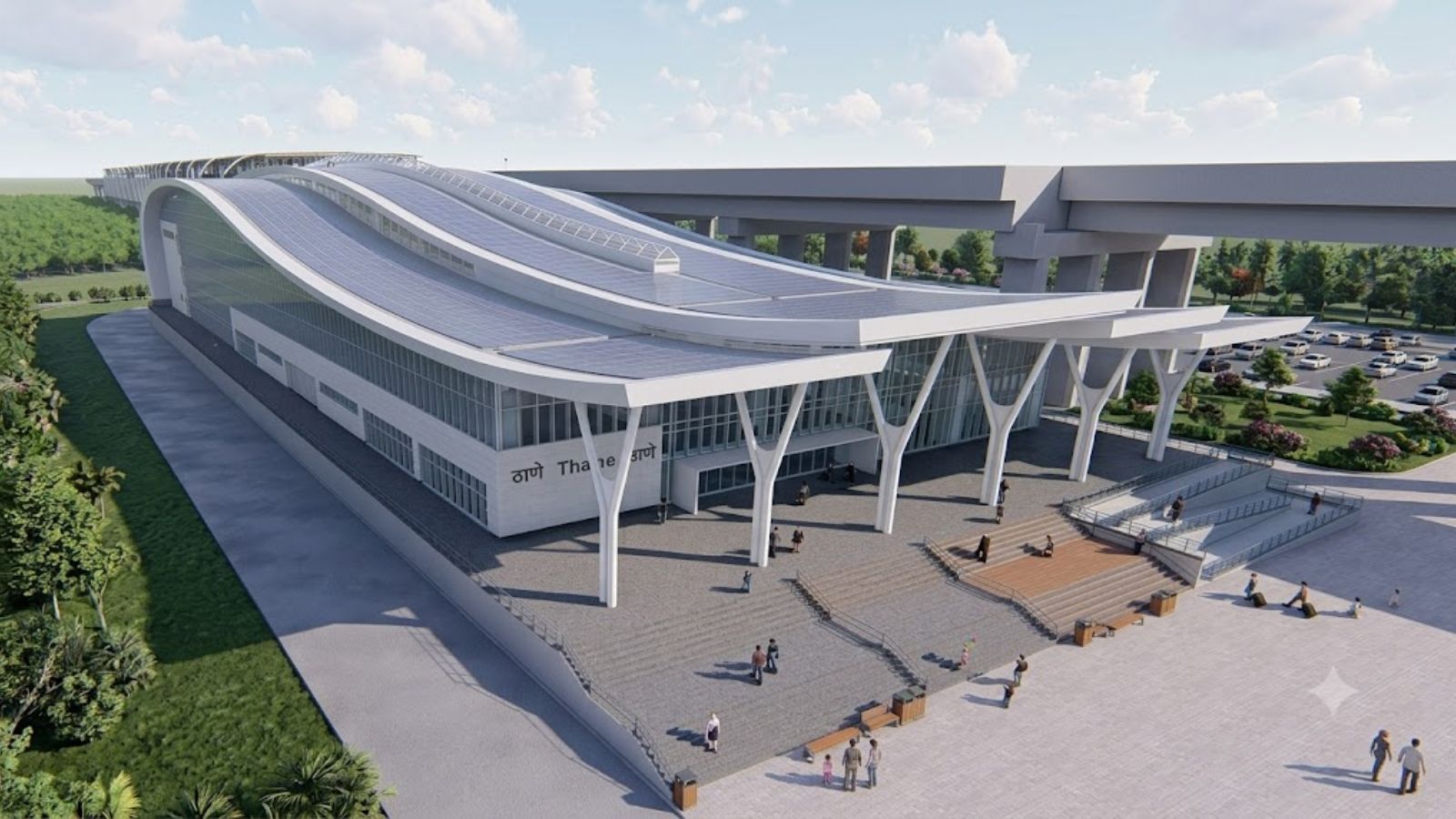
The NHSRCL is implementing a unique elevated design for the Thane bullet train station to protect local ecosystems. Discover the engineering marvel behind the project.
- The Thane bullet train station concourse will be situated 12 metres above ground level.
- The elevated design is specifically intended to preserve local mangroves and eco-sensitive zones.
- The station's roof design is inspired by the waves of the nearby Ulhas River.
The Mumbai-Ahmedabad High Speed Rail (MAHSR) project is a landmark in India's infrastructure journey. As the National High Speed Rail Corporation Limited (NHSRCL) progresses with construction, the focus has shifted to the complex engineering required in the Maharashtra section, specifically within the Thane and Palghar districts.
A standout feature of this corridor is the upcoming Thane bullet train station. Unlike conventional railway stations that sit at ground level, the Thane station is being engineered with a concourse level approximately 12 metres above the natural ground level. This decision is a strategic blend of high-speed transit requirements and environmental stewardship.
Environmental Preservation through Engineering
The primary driver behind this elevated structure is the presence of mangroves in the vicinity. The Thane region is part of an eco-sensitive zone, and building at ground level would have significantly disrupted the local flora and the natural drainage systems. By elevating the station, the NHSRCL aims to minimize the physical footprint on the soil and protect the vital mangrove ecosystems.
At Thane, the station has been designed with the concourse level approximately 12 metres above the natural ground level to preserve the mangroves in the eco-sensitive area.
Adding an aesthetic dimension to the engineering, the station's entrance building features a roof design inspired by the rhythmic movement of waves. This is a direct nod to its proximity to the Ulhas River, integrating the local geography into the architectural identity of the station.
Why This Matters
BozokMedia analysis shows that as India undergoes rapid urbanization, the conflict between massive infrastructure projects and environmental conservation becomes more acute. The Thane station design serves as a blueprint for how high-speed rail can coexist with sensitive ecological landscapes without compromising on speed or safety.
Technical Breakdown of the Maharashtra Section
The Thane station is a critical node in the 135.45-km elevated section that stretches from Shilphata to the Maharashtra-Gujarat border. This section is characterized by its extensive use of viaducts and bridges, covering nearly 124 km of the total stretch.
| Structure Type | Length / Detail |
|---|---|
| Ulhas River Bridge | 460 Metres |
| Vaitarna River Bridge | 2.32 km |
| Jagani River Bridge | 510 Metres |
| Total Elevated Section | 135.45 km |
The construction involves massive technical feats, including seven mountain tunnels—three of which have already achieved breakthroughs. The project also features 36 bridges and crossings, including 12 steel bridges spanning major railway lines and highways.
Frequently Asked Questions
1. Why is the Thane station elevated by 12 metres?
It is elevated to protect the surrounding mangrove forests and the eco-sensitive environment from construction impact.
2. Which major rivers will the bullet train cross in Maharashtra?
The route will cross the Ulhas, Vaitarna, and Jagani rivers via massive bridges.