An investigative look into the historical recordings of Vande Mataram, exploring the tension between its status as a 'National Anthem' in 1938 and its eventual classification as a 'National Song'.
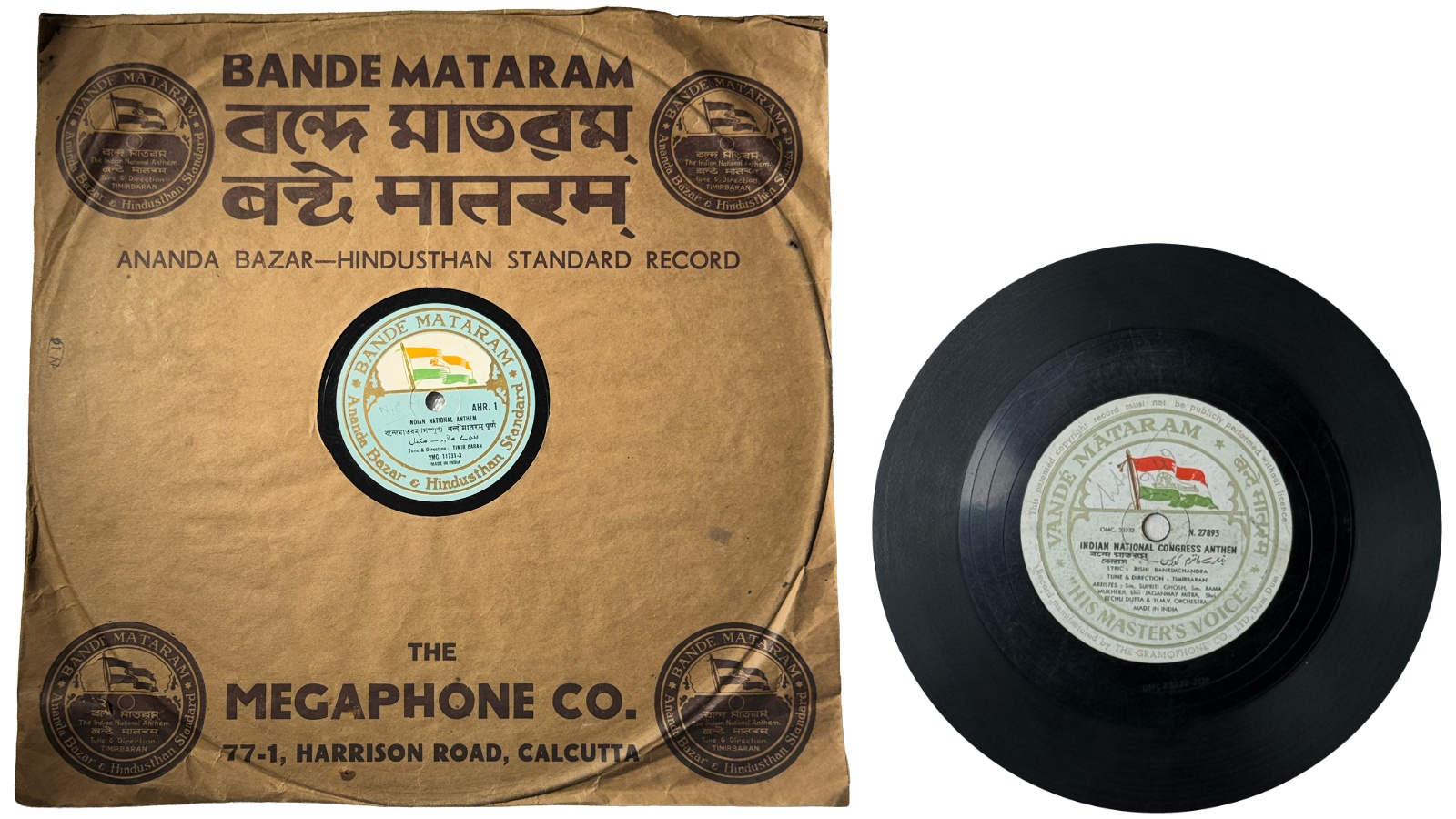
- In 1938, Subhas Chandra Bose commissioned a complete 12-inch recording of Vande Mataram as the 'Indian National Anthem'.
- The 1950 Constitutional statement granted Vande Mataram equal status to Jana Gana Mana.
- A mysterious 10-inch HMV record altered the song's identity to the 'Indian National Congress Anthem'.
The 1938 Haripura session of the Indian National Congress was far more than a political gathering; it was a profound moment of cultural reaffirmation. Under the leadership of the young Subhas Chandra Bose, the Congress sought to restore the prestige of Vande Mataram. Bose’s entrance into the session was a spectacle of political imagination, accompanied by musicians and a magnificent rath drawn by 51 bullocks, adorned with 'Vande Mataram' bells.
Central to this reclamation was a monumental gramophone recording. Tasked to the renowned orchestrator Timir Baran, the recording was a technical marvel for its time. Unlike the standard 10-inch discs, this was a massive 12-inch record designed to accommodate all six stanzas of the poem. The label was explicit, declaring it 'BANDE MATARAM-SAMPOORN' (Complete) and, most significantly, the 'INDIAN NATIONAL ANTHEM'.
Why This Matters
BozokMedia analysis shows that the medium of the gramophone record was used not just for music, but as a tool for political assertion and the solidification of national identity during the struggle for independence.
The transition of Vande Mataram from a 'National Anthem' in 1938 to a 'Special National Song' in 1955 reflects the complex political negotiations of a nascent nation.
The legal status of the song underwent significant shifts. Following independence, the 1950 statement by the Constituent Assembly declared that Vande Mataram 'shall be honoured equally with Jana Gana Mana' and 'shall have equal status'. However, the distinction between 'National Anthem' and 'National Song' was later sharpened by administrative notes in 1955, which many historians argue lacks a formal constitutional basis.
Between the grand 1938 recording and the formal 1950 declaration lies a curious anomaly: a 10-inch HMV record. This version contained only four stanzas and, most provocatively, carried the label 'Indian National Congress Anthem'. The identity of the person or entity that rebranded a national symbol into a party anthem remains one of the great unanswered questions in India's musical and political history.
Frequently Asked Questions
Question 1: What was the significance of the 12-inch record in 1938?
Answer: It was used to record the full six stanzas of Vande Mataram, asserting its completeness and status as the National Anthem.
Question 2: Why is there a distinction between the Anthem and the Song today?
Answer: While the 1950 statement suggested equal status, subsequent administrative classifications by the Prime Minister's Secretariat created the current distinction.