The Supreme Court has upheld the cancellation of bail for three co-owners of a Goa nightclub where a devastating fire claimed 25 lives. The trio must now surrender within 14 days as the court pushes for an expedited trial.
- Supreme Court upheld Bombay High Court's decision to cancel bail for three co-owners.
- Accused must surrender to authorities within two weeks.
- The tragedy resulted in 25 deaths and over 50 injuries on December 6 last year.
- Trial court directed to accelerate the framing of charges.
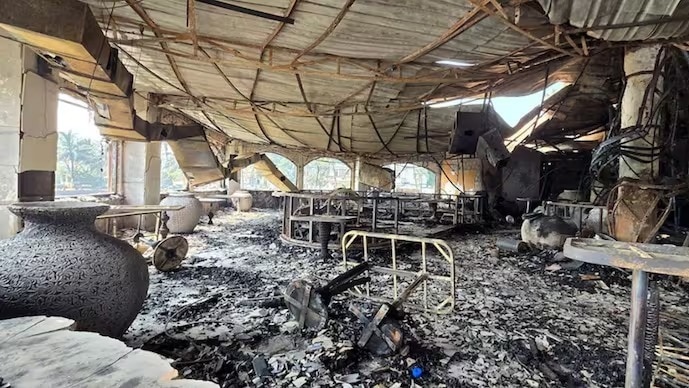
New Delhi: In a significant legal setback for the owners of Birch by Romeo Lane, the Supreme Court on Monday refused to interfere with a Bombay High Court order that cancelled the bail of three co-owners. The case stems from a catastrophic fire that ripped through the North Goa nightclub on December 6 last year, leading to the deaths of 25 patrons and injuring more than 50 others.
A bench comprising Justices Dipankar Datta and Sheel Nagu dismissed the petitions filed by Saurabh Luthra, Gaurav Luthra, and Ajay Gupta. The court not only upheld the High Court's August 18 ruling but also issued a strict directive for the trio to surrender within two weeks, while urging the lower court to fast-track the legal proceedings.
Legal Arguments and Contentions
Representing the Luthra brothers, senior advocates Abhishek M. Singhvi and Siddharth Dave argued that the incident was not a result of intentional crime but was, at most, a case of negligence. Dave contended that Section 304, Part II of the IPC (culpable homicide not amounting to murder) was inapplicable, suggesting that the charges should be limited to Section 304A (causing death by negligence).
"The judicial shift from 'negligence' to 'culpable homicide' in public safety disasters reflects a growing intolerance for systemic corporate disregard for human life."
Why This Matters
BozokMedia analysis shows that this case serves as a critical precedent for the hospitality industry in India. The allegations—ranging from operating without valid licenses to using forged documents and conducting indoor fire displays without safety equipment—point to a systemic failure of regulatory oversight. By denying bail, the Supreme Court is signaling that the scale of loss (25 lives) outweighs the technical arguments of 'shareholding percentages' or 'lack of intent'.
The case took an international turn when the Luthra brothers fled to Phuket, Thailand, shortly after the blaze. This prompted the issuance of an Interpol Blue Corner Notice. Following diplomatic intervention by the Indian mission, they were detained by Thai authorities on December 11 and subsequently extradited to India.
The Bombay High Court, in its previous order, had criticized the trial court for failing to recognize the heinous nature of the offence. The High Court noted that the accused were well aware of the risks associated with indoor fire displays in an unauthorized structure lacking basic fire safety installations, which effectively trapped victims inside the burning building.
Frequently Asked Questions
1. What was the Supreme Court's final directive?
The court rejected the bail pleas and ordered the three co-owners to surrender within two weeks from Monday.
2. Why did the Bombay High Court cancel their initial bail?
The High Court found that the trial court ignored critical evidence, including the lack of licenses, unauthorized structure, and the use of forged documents.