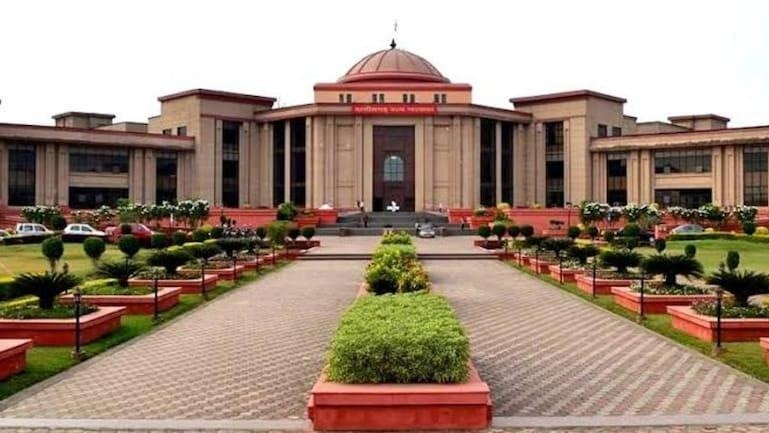
In a significant victory for gender equality, the Chhattisgarh High Court has ruled that married daughters cannot be denied compassionate appointments if they meet dependency criteria, striking down discriminatory practices.
- Marriage is not a disqualification for women seeking compassionate appointments.
- Dependency, not marital status, is the primary criterion for eligibility.
- Denying benefits to daughters while granting them to married sons violates Articles 14 and 15 of the Constitution.
- Chhattisgarh Rajya Gramin Bank ordered to appoint two women within 90 days.
The Chhattisgarh High Court has delivered a landmark judgment reinforcing gender parity in employment opportunities. The court directed the Chhattisgarh Rajya Gramin Bank to provide compassionate appointments to two married daughters of deceased employees, asserting that marital status cannot be used as a tool for disqualification when the governing scheme does not explicitly make such a distinction.
The case was brought forward by Sheena David and Ankita Mishra, whose fathers served as a branch manager and an office assistant, respectively. Both women had their claims rejected by a single-bench order on the grounds of their marriage. However, a division bench comprising Chief Justice Ramesh Sinha and Justice Ravindra Kumar Agrawal overturned this decision, labeling the rejection as arbitrary, discriminatory, and legally unsustainable.
Why This Matters
BozokMedia analysis shows that this ruling dismantles a deep-seated patriarchal assumption in Indian administrative law: the idea that a daughter's dependency ends upon marriage while a son's does not. By aligning the bank's policy with the Constitution, the court has ensured that 'dependency' is treated as a factual condition rather than a social presumption.
"The test for compassionate appointment must be actual dependency and not marital status; any distinction based solely on gender is a violation of fundamental rights."
During the proceedings, the bank's counsel argued that married sons typically maintain their parental family, whereas married daughters are presumed to merge into their matrimonial homes. The court rejected this argument, stating that such broad social assumptions cannot withstand constitutional scrutiny. The bench highlighted that the bank had previously granted compassionate appointments to several married sons, making the denial to daughters a clear act of discrimination.
The court further observed that the bank's own scheme defines a dependent family member as a "wholly dependent son" or "wholly dependent daughter" without specifying marital status. Therefore, the determinative factor must be whether the individual was actually dependent on the deceased employee at the time of death.
Historically, the bank lacked a compassionate appointment policy when the employees died in 2015 and 2016, offering only ex-gratia payments. However, a new policy introduced in 2019 was retrospectively applied to employees who died on or after February 11, 2014. The court ruled that the appellants are entitled to the benefits of this retrospective scheme regardless of their marriage dates.
| Criterion | Previous Bank Assumption | High Court Ruling |
|---|---|---|
| Married Sons | Eligible (Presumed Dependent) | Eligible (Based on Actual Dependency) |
| Married Daughters | Ineligible (Presumed Independent) | Eligible (Based on Actual Dependency) |
| Legal Basis | Social Tradition | Articles 14 & 15 of Constitution |
Frequently Asked Questions
Q1: What is a compassionate appointment?
It is a job provided to a dependent family member of an employee who dies while in service, intended to provide immediate financial relief to the family.
Q2: Does this ruling apply to all government jobs?
While this specific order is for the Chhattisgarh Rajya Gramin Bank, it sets a powerful legal precedent for other institutions regarding gender equality in dependency claims.