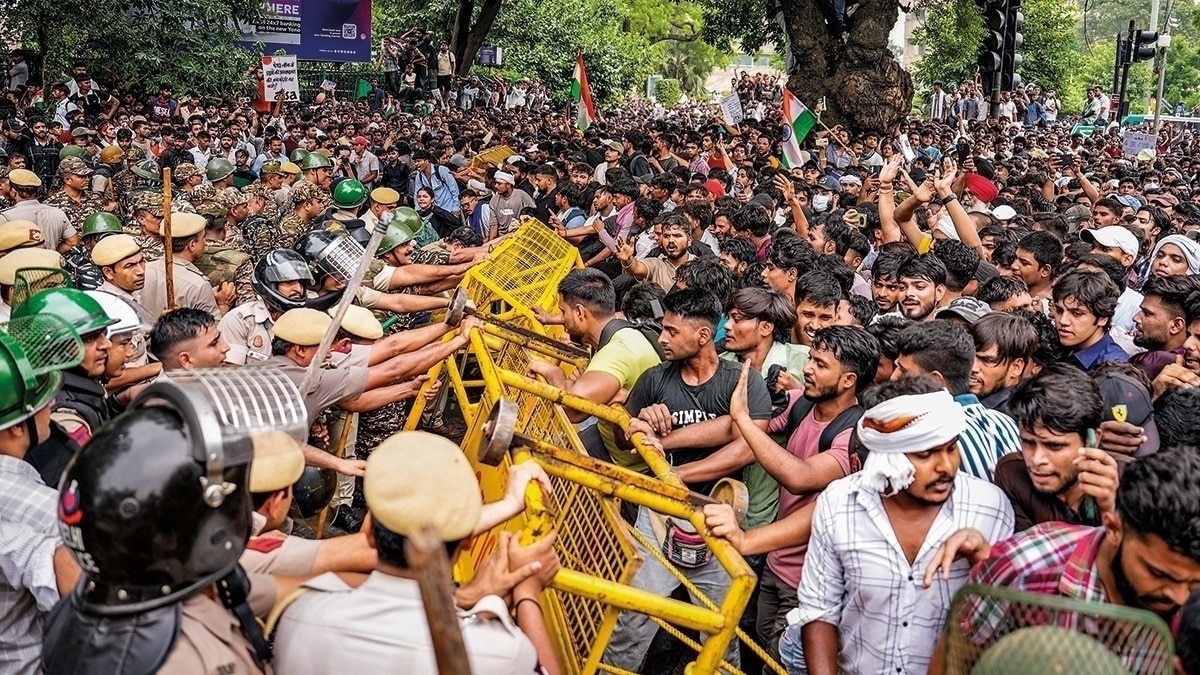
Invoking Article 142, the Supreme Court has quashed all FIRs related to the CJP protests held between July 20-25. The court also ordered the Centre to establish a nationwide compensation framework.
- Supreme Court quashed all FIRs linked to CJP protests from July 20-25.
- Special powers under Article 142 of the Constitution were invoked for the order.
- Centre directed to create a standardized compensation framework with states.
- Permission granted to file new FIRs against 2,873 specifically identified individuals.
In a landmark judgment, the Supreme Court of India has quashed all First Information Reports (FIRs) filed across five states in connection with the protests organized by the Cockroach Janata Party (CJP) between July 20 and July 25. The apex court ruled that no further investigation or legal action will be pursued regarding these specific events, and all such cases shall be treated as closed for all purposes.
The court utilized its extraordinary powers under Article 142 of the Constitution, which allows the Supreme Court to pass any order necessary for doing complete justice. Accepting applications from five state governments, the court ensured that the legal burden on the protesters is removed, effectively halting all ongoing proceedings related to these dates.
Why This Matters
BozokMedia analysis shows that this ruling serves as a critical check on the tendency of state authorities to use mass FIRs as a tool for intimidation during civil unrest. By quashing these cases, the judiciary is reinforcing the constitutional right to peaceful assembly. However, the carve-out for specific individuals suggests the court is balancing civil liberties with the need to punish actual criminal violence.
"The invocation of Article 142 underscores the court's intent to prioritize substantive justice over procedural technicalities in matters of mass detention."
Despite the general amnesty, the court granted a specific exemption to the Central Government and Delhi Police to file new FIRs against 2,873 individuals listed in the applications submitted to the court. If investigations reveal that these individuals were involved in multiple distinct offenses, they will face legal consequences, although their right to seek legal remedy remains intact.
Beyond the criminal cases, the Supreme Court has mandated the creation of a Compensation Framework. The Central Government must collaborate with states and union territories to standardize how compensation is distributed to victims of such unrest. Furthermore, the court issued a strict directive to provide compensation within three months to families affected by suicides related to NEET 2026.
Frequently Asked Questions
Q1: Does this order mean every single protester is free from charges?
A: Most are, but 2,873 individuals specifically identified by the authorities can still be charged if evidence of separate crimes exists.
Q2: What is the purpose of the compensation framework?
A: It aims to create a transparent, uniform system across India to provide financial relief to those harmed during protests or due to systemic failures like the NEET controversy.