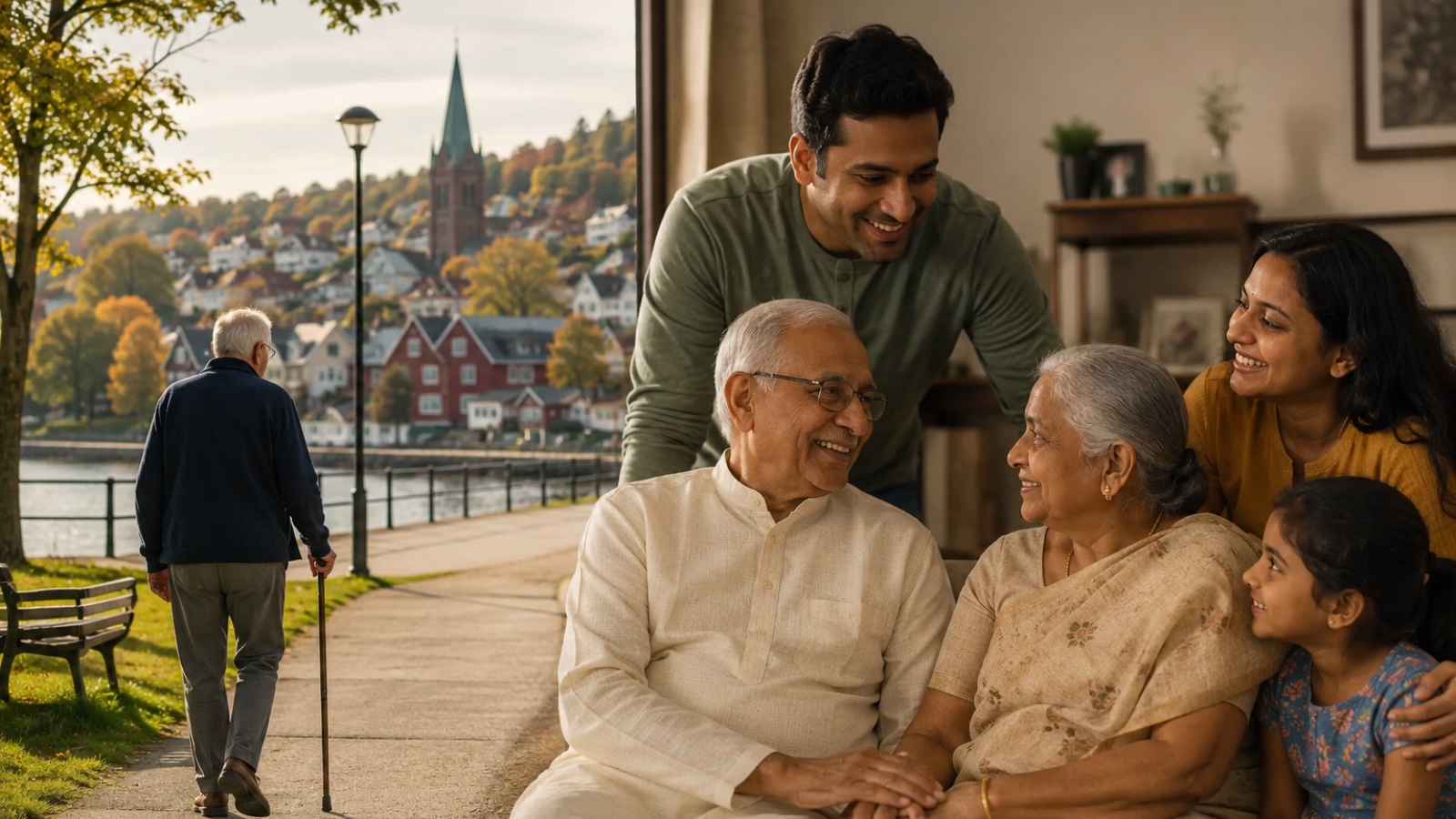
An Indian man residing in Norway has initiated an online discussion by comparing elderly care systems in both nations. He highlighted how Norway's model prioritizes independence and dignity for seniors through dedicated facilities, contrasting it with India's familial and societal pressures surrounding elder care.
- In Norway, the elderly typically live independently or in care facilities, receiving assistance and maintaining dignity.
- India's approach often views elder care as a familial duty intertwined with emotional bonds and societal expectations.
- The NRI argued for a systemic approach to elder care, reducing the sole burden on individual families.
New Delhi - A poignant comparison of elderly care systems between Norway and India has ignited a significant online debate, courtesy of Vinod (@turiyatman), an Indian expatriate living in Norway. In a widely shared post on X (formerly Twitter), Vinod articulated his observations on how the two cultures approach the twilight years of their senior citizens, prompting a wave of discussions on familial duty, societal expectations, and systemic support.
The Norwegian Model: Independence and Dignity
According to Vinod, elderly parents in Norway generally maintain their independence, either by residing in their own homes or moving into specialized care facilities. These facilities are described as places where seniors receive regular assistance, meals, engage in planned activities, and have access to medical attention, all while preserving a sense of autonomy. Crucially, this separation doesn't equate to emotional detachment. Families maintain strong bonds through weekend visits, gatherings, and shared holidays, ensuring connection without fostering dependency.
India's Familial and Societal Fabric
In stark contrast, Vinod pointed out the expectations prevalent in Indian families. He noted that placing aging parents in an old-age home in India often invites criticism from relatives, neighbours, and society at large. This perspective is rooted in the cultural emphasis on filial piety, where caring for parents is considered a profound moral and emotional obligation, frequently termed 'sanskar'.
Pressures on the Middle Class
Vinod also shed light on the immense pressures faced by many middle-class families in India. These families often juggle demanding jobs, home loan EMIs, children's school fees, and the escalating medical costs of aging parents simultaneously. This complex interplay of financial and emotional burdens can lead some parents to hesitate in expressing their needs, fearing they might become a burden on their children.
Rethinking 'Sanskar'
Vinod's observation, "It is not that we do not love our parents. Norwegians love theirs too. But we mixed love with duty, money, dependency and guilt, and called it ‘sanskar’," encapsulates a core critique. He argues that the responsibility for elder care should not rest solely on the shoulders of individual families.
Does India Need a New System?
Vinod posed a critical question: "Do we need a system in India to address this? Isn’t this as important as education for our kids?" He advocates for a system that offers older individuals the option to age with dignity and financial independence, free from guilt or reliance on their children.
Online Reactions
Vinod's post garnered a spectrum of responses on X. Some users countered that the comparison overlooked fundamental differences in societal structures, arguing that India's joint family system is superior for preventing depression common in nuclear families. Others agreed on the need for stronger systems in India to support independent living for the elderly but highlighted affordability as a major hurdle, noting that quality care homes are often expensive and out of reach for the middle class. A third user supported Vinod's stance, drawing a parallel with state-funded education, suggesting that if the state shoulders certain burdens, families can save more for their old age, and children grow up more independent.
Why This Matters
BozokMedia analysis shows that the debate highlights a critical juncture in India's evolving social fabric. As urbanization increases and traditional joint families give way to nuclear ones, the strain on individual families to provide comprehensive elder care is mounting. The comparison with Norway, while stark, prompts a necessary conversation about systemic solutions versus familial obligation, and the potential for a hybrid model that balances cultural values with modern needs.
"The true measure of a society's progress is how it treats its most vulnerable citizens, and that includes its elders. The conversation initiated by Vinod is not just about care systems, but about dignity, independence, and the evolving definition of family responsibility in the 21st century."
Historical Background
Traditionally, the joint family system has been the primary framework for elder care in India. Grandparents were often central figures, not only providing emotional support but also playing a crucial role in raising children. However, with the increasing influence of industrialization, urbanization, and Westernization, joint families have seen a decline. The younger generation often migrates to cities for better employment opportunities, leaving elderly parents behind or living in smaller, nuclear family units with their children. This shift has strained traditional care models and necessitated the rise of old-age homes and other forms of professional elder care services, though these remain culturally contentious.
Frequently Asked Questions
- Is the Norwegian model completely adaptable to India?
- What alternative models could be considered for elder care in India?