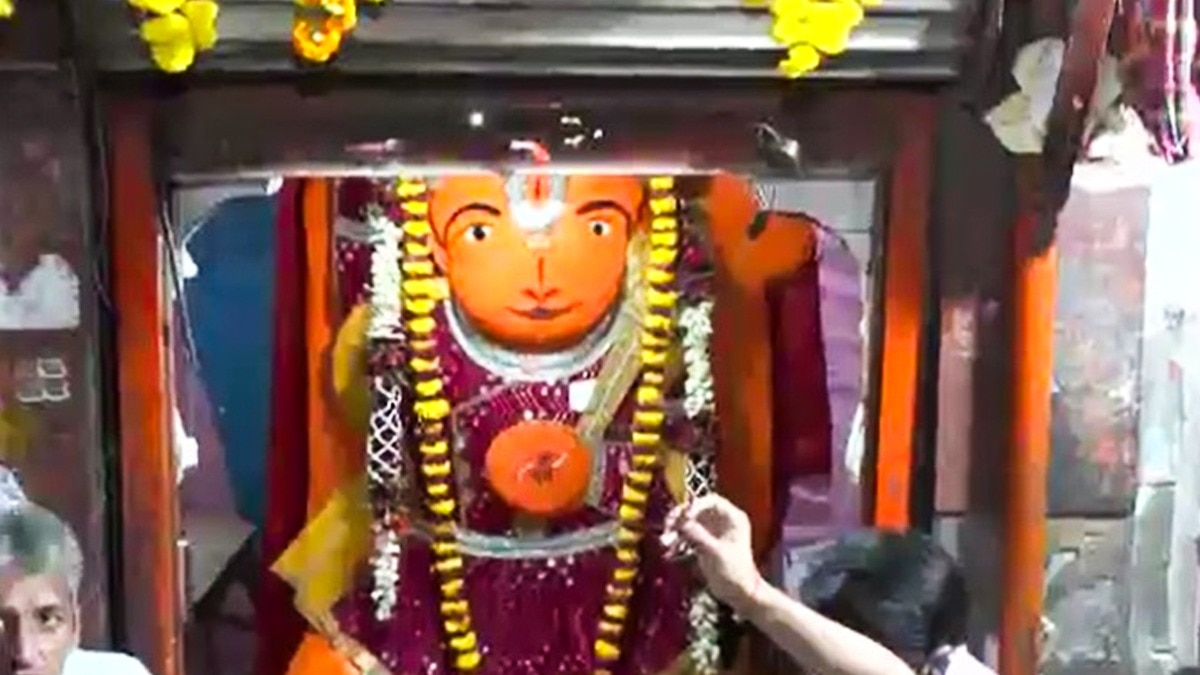
During road widening efforts for Simhastha 2028 in Ujjain, a 170-year-old temple structure was demolished, but the central idol of Lord Hanuman remained immovable despite the use of heavy machinery and expert engineers.
- A 170-year-old temple structure was demolished for road widening from Kanthal Square to Chhatri Chowk in Ujjain.
- Despite deploying engineers from Indore and modern machinery, the Hanuman idol remained stationary.
- Local devotees and Hindu organizations have protested, organizing a 'Maha Aarti' to demand the idol stay put.
- The administration is currently excavating the base to understand the structural foundation for potential relocation.
In the spiritual city of Ujjain, a peculiar situation has unfolded that has left both engineers and devotees stunned. As part of the preparations for the Simhastha Kumbh 2028, the local administration has been working on widening roads and improving traffic flow in the city's ancient quarters. One such project involved the stretch from Kanthal Square to Chhatri Chowk, where a century-old Hanuman temple stood in the way of the proposed expansion.
While the administration successfully demolished the temple's boundary walls and the main building, they hit a literal wall when attempting to move the idol of Lord Hanuman. Despite utilizing advanced machinery and consulting technical experts, the idol did not budge an inch. The failure was so absolute that a specialized team of engineers was summoned from Indore, yet after two days of rigorous attempts, the idol remained firmly rooted in its spot.
Why This Matters
BozokMedia analysis shows that this incident has transcended a simple civil engineering project to become a clash between urban infrastructure development and deep-rooted religious faith. In a city like Ujjain, where every stone is tied to mythology, the failure of technology to move a deity is being interpreted by locals as a divine sign, putting the administration in a precarious position regarding public order and spiritual sentiment.
"When modern science and machinery fail, society often perceives it as divine will, significantly amplifying the administrative challenge."
Currently, the idol has been protected under a temporary tent. To investigate the cause of the immobility, the administration has dug a hole approximately 1.5 feet deep around the base to analyze the foundation. The proposed plan is to relocate the idol to Tanki Chowk, but until a safe method is discovered, the process remains stalled.
The situation has sparked significant unrest among local residents and Hindu organizations. On Tuesday evening, hundreds of devotees gathered at the site to perform a 'Maha Aarti' and recite the Hanuman Chalisa. The protesters argue that if the deity refuses to move despite all human efforts, it is a sign that the road plan should be redesigned to accommodate the idol's current position.
The temple priest, Sulabh Shantanu Sharma, and the temple committee have formally objected to the relocation. The priest has demanded a written guarantee from the administration that the idol will be moved to Tanki Chowk without a single scratch or damage before any further attempts are made.
According to local historians, the idol is approximately 170 years old. Although layers of vermilion (sindoor) applied over decades have obscured its original features, the site holds immense historical and spiritual value for the people of Ujjain. The administration now faces the delicate task of balancing urban necessity with public sentiment.
Frequently Asked Questions
Q1: Why did the administration fail to move the Hanuman idol?
A: Despite using heavy machinery and experts from Indore, the structural foundation and the sheer weight/positioning of the idol made it technically impossible to move without risking damage.
A: Devotees demand that the idol remain in its original spot or that the administration provide a written guarantee for its safe relocation.