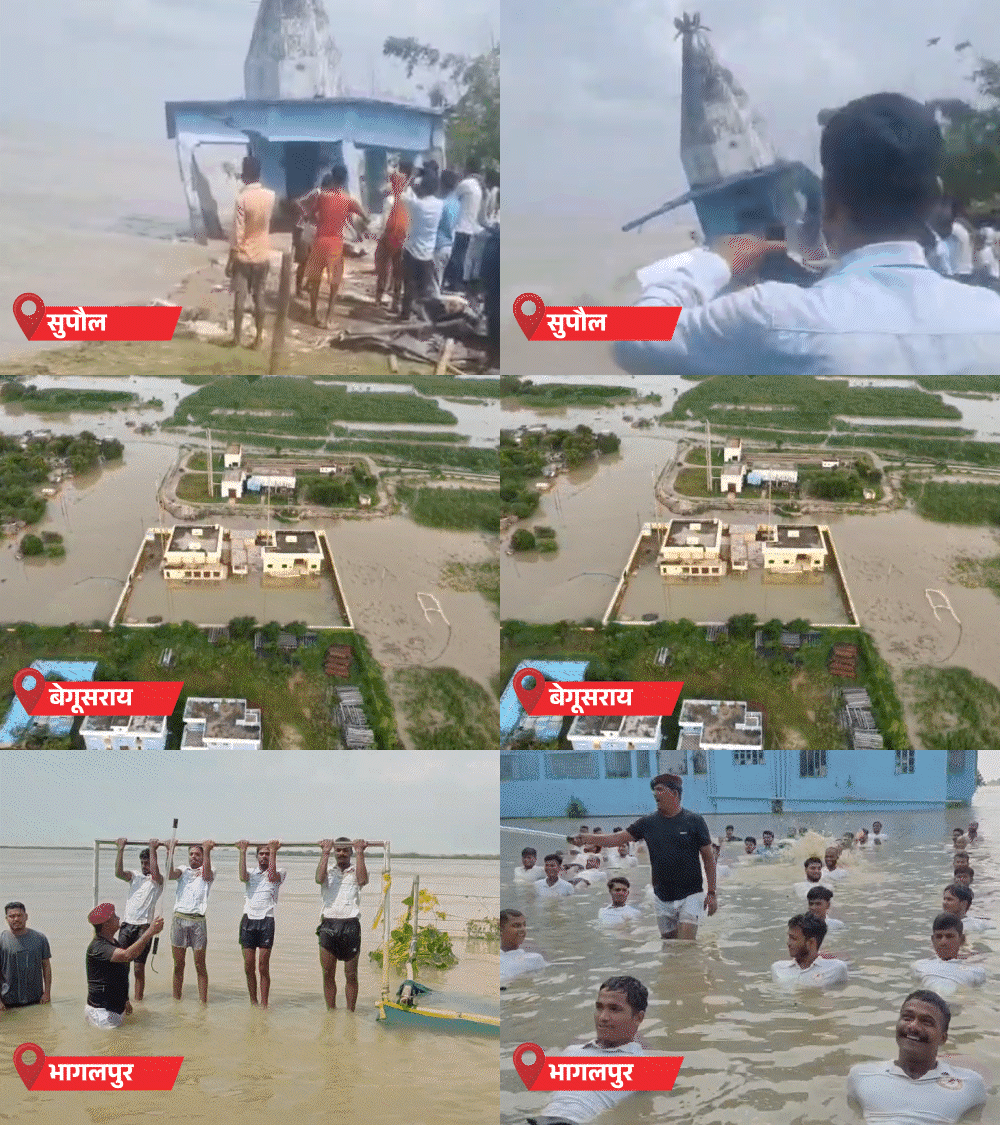
Massive flooding in Bihar has left 4.4 million people stranded across 14 districts. Devastating scenes emerge from Bhagalpur and Begusarai where crematoriums are submerged, forcing funerals on roadsides.
- 4.4 million people are affected across 2,360 villages in 14 Bihar districts.
- Crematoriums in Bhagalpur and Begusarai are underwater, forcing traditional rites onto roadsides.
- A Radha-Krishna temple in Supaul has been washed away by the Kosi River due to erosion.
- Bihar has recorded 34% less rainfall than the seasonal average.
The monsoon season in Bihar has taken a devastating turn, leaving a trail of destruction across multiple districts. Currently, a staggering 4.4 million people are surrounded by floodwaters in 2,360 villages across 14 districts. With eight major rivers flowing above the danger mark, the state is grappling with a massive humanitarian crisis.
Tragedy at the Ghats: Funerals on Roadsides
The most harrowing reports are emerging from Bhagalpur and Begusarai. In Bhagalpur, the Barari crematorium has been completely submerged, forcing grieving families to perform last rites on the roadsides. In Sultanganj, the local crematorium has turned into an isolated island. Similarly, in Begusarai, the Simaria Ghat is underwater, disrupting essential funeral services and causing immense distress to the community.
Erosion and Loss of Heritage
The rising water levels and aggressive river erosion are not just claiming homes but also religious landmarks. In Supaul, a local Radha-Krishna temple was swallowed by the Kosi River due to intense bank erosion. In Khagaria, a Shiva temple is partially submerged, with water reaching waist level inside the sanctum, making it inaccessible for devotees.
Why This Matters
BozokMedia analysis shows that the paradox of Bihar's current situation—high flood impact despite a 34% rainfall deficit—highlights a critical failure in riverbank management and siltation control. The infrastructure is unable to withstand the erratic flow of rivers, even when the overall monsoon is weak.
The submergence of crematoriums and temples is a grim indicator of how climate volatility is clashing with inadequate disaster preparedness.
Rescue operations are in full swing. According to SDRF Commander Kumar Neenu in Bhagalpur, teams are rescuing approximately 250 to 300 people daily. While water levels in some areas are beginning to recede slightly, the threat remains imminent as the Ganga continues to flow significantly above the danger mark.
The Monsoon Paradox: Less Rain, More Floods
Data reveals a strange contradiction: Bihar has recorded only 568.8 mm of rainfall this season against a normal of 867.7 mm, marking a 34% deficit. However, the combination of river erosion, siltation, and localized heavy downpours in districts like Muzaffarpur has exacerbated the flooding intensity.
| Region | Water Level Status | Primary Impact |
|---|---|---|
| Bhagalpur | 61cm above danger mark | Crematoriums submerged, active rescue |
| Begusarai | 1.15m above danger mark | Neighborhoods flooded, public protests |
| Supaul | High erosion zone | Temple washed away by Kosi River |
Frequently Asked Questions
1. Which districts are most affected by the floods in Bihar?
Bhagalpur, Begusarai, Khagaria, and Supaul are currently facing the most severe flood conditions.
2. Is the rainfall in Bihar below average this year?
Yes, the state has recorded 34% less rainfall than the normal seasonal average.