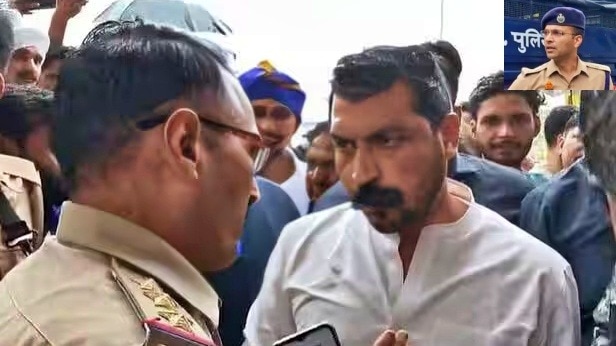
In Meerut, SSP Avinash Pandey was seen slapping a protester during a demonstration, prompting Congress stalwart Chandrashekhar Azad to publicly condemn the act. A police inspector also voiced dissent, intensifying the friction between law enforcement and political leaders.
Key Takeaways
- SSP Avinash Pandey slapped a protester, sparking condemnation from Chandrashekhar Azad.
- A police inspector publicly supported the criticism, indicating internal dissent.
- The incident has revived debates on police accountability and democratic rights in Meerut.
On July 15, a protest rally in Meerut turned tense when Senior Superintendent of Police Avinash Pandey struck a demonstrator with an open hand. The protest, organized around pension concerns of farmers, was being monitored by police under the pretext of preventing “law and order” breaches. Video footage, broadcast live by local news channels, showed Pandey delivering a slap to a man attempting to address the crowd.
Chandrashekhar Azad’s Strong Rebuttal
Congress veteran Chandrashekhar Azad reacted within hours, labeling the SSP’s action as “provocative and illegal.” In a fiery statement, Azad warned, “Tomorrow they could even fire a bullet,” underscoring the danger of unchecked police force. He announced plans for a press conference to demand a transparent inquiry and called for stricter enforcement of citizens’ constitutional rights.
Police Inspector’s Unusual Support
Adding an unexpected twist, a Meerut police inspector—who asked to remain unnamed—publicly sided with Azad, stating, “Our duty is to protect citizens, not to suppress their rights.” The inspector’s remarks suggest growing discontent within the force regarding the use of excessive force, raising questions about internal disciplinary mechanisms.
Historical and Legal Context
India’s democratic framework guarantees freedom of speech and assembly under Articles 19(1)(a) and (b) of the Constitution, while police are tasked with maintaining public order. Past incidents, such as the 2020 farmer protests and the 2022 Delhi curfew enforcement, have highlighted tensions between these twin responsibilities. When police actions are perceived as disproportionate, they often become subject to judicial review and scrutiny by bodies like the National Human Rights Commission.
Potential Fallout
In response, several civil society groups in Meerut have filed a petition in the local court seeking a judicial probe. The Congress party has escalated the issue to the central government, demanding an independent committee to examine the conduct of SSP Pandey. Should the inquiry deem the slap unlawful, administrative penalties—including suspension—could follow.
The Meerut episode is a micro‑cosm of a larger national debate: balancing law‑enforcement prerogatives with the protection of democratic liberties. The coming weeks will reveal whether this incident catalyzes meaningful police reforms or merely adds another chapter to India’s ongoing struggle for accountable governance.