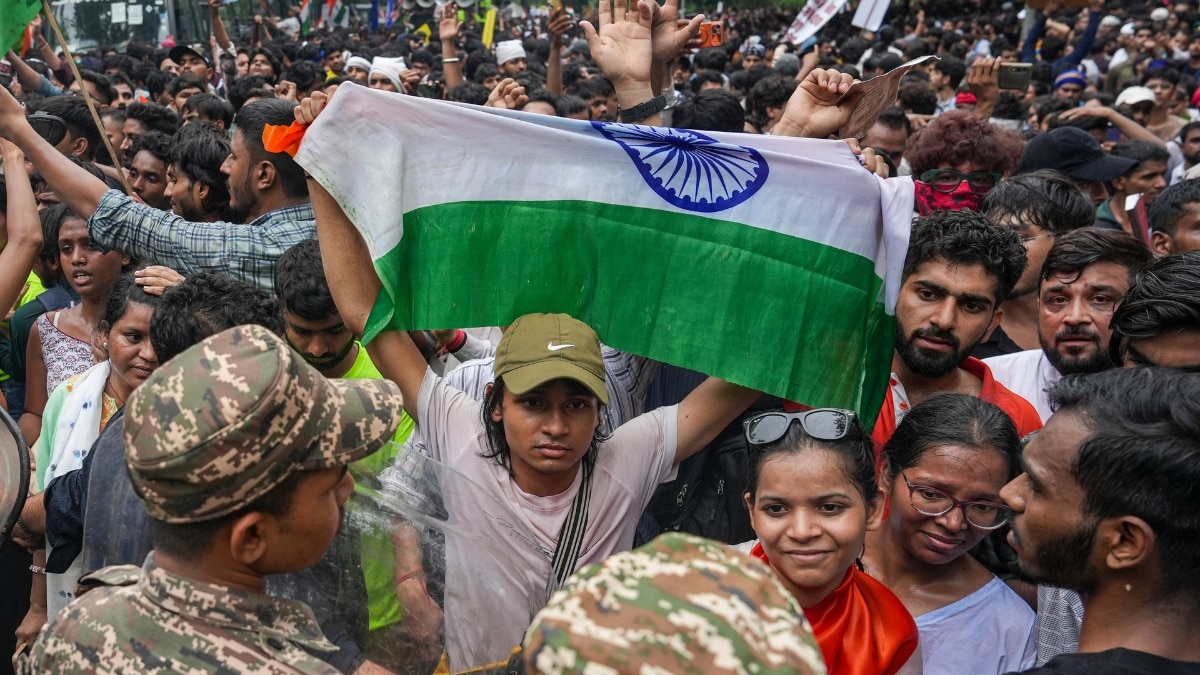
DMK President M.K. Stalin has asserted that the complete abolition of the NEET exam is the only permanent solution to student grievances. He urged that this demand remain at the forefront of the ongoing student protests in New Delhi.
Key Takeaways
- DMK President M.K. Stalin demands the complete abolition of the NEET examination.
- Stalin emphasizes that NEET abolition must be the primary focus of student protests in New Delhi.
- Tamil Nadu continues its historic stance against NEET, advocating for social justice in education.
CHENNAI: Dravida Munnetra Kazhagam (DMK) President M.K. Stalin has once again taken a fierce stance against the National Eligibility cum Entrance Test (NEET), asserting that the complete scrapping of the exam is the only viable path forward. Addressing the intensifying student protests in New Delhi, Stalin emphasized that the outright abolition of NEET must remain the central demand of the agitating students, overshadowing all other administrative reform proposals.
The DMK chief reiterated his party's historic opposition to the centralized examination, pointing out that they were among the first to raise alarms regarding its structural flaws. "We were the first to warn that NEET was designed to enable large-scale irregularities. That is why the DMK has opposed NEET from the very beginning, consistently pointing out the dangers it poses to our educational ecosystem," Stalin remarked.
Historical Background
The National Eligibility cum Entrance Test (NEET) was introduced to streamline medical admissions across India under a single-window system. However, Tamil Nadu has historically resisted this centralization. The state argues that NEET undermines the state's robust public healthcare system and disadvantages deserving students from rural and underprivileged backgrounds who cannot access commercial coaching centers. Over the years, the Tamil Nadu Assembly has repeatedly passed bills seeking exemption from NEET, highlighting the deep-seated regional discontent with centralized educational policies.
| Feature | State Board-Based Admission (Proposed) | Centralized NEET System (Current) |
|---|---|---|
| Inclusivity | Highly accessible for rural and state-board students without coaching. | Favors urban students with access to expensive coaching facilities. |
| State Autonomy | Empowers states to define admission criteria and protect local reservation. | Centralized control, reducing the decision-making power of state governments. |
| Security & Reliability | Decentralized administration, minimizing widespread systemic leaks. | Single-window exam prone to massive national-level leaks and irregularities. |
Why This Matters
The nationwide controversy surrounding the NEET exam is not merely an administrative glitch; it represents a deep-seated federal and socio-economic conflict in India's education system. BozokMedia analysis shows that centralized exams disproportionately disadvantage rural and marginalized students who cannot afford expensive coaching centers, thereby intensifying regional disparities.
Stalin’s timely intervention amid escalating protests in New Delhi amplifies the political pressure on the central government. It shifts the debate from mere administrative reforms to a fundamental questioning of centralized testing, potentially reshaping India's medical education policy.
"The opposition to NEET is not merely about an exam; it is a battle to safeguard the educational autonomy of states and uphold social justice." - M.K. Stalin, DMK President
Frequently Asked Questions
Q1: Why has the DMK consistently opposed the NEET exam?
A1: The DMK argues that NEET favors affluent urban students who can afford private coaching, thereby marginalizing rural and economically weaker students, while also enabling large-scale irregularities.
Q2: What alternative does Tamil Nadu propose instead of NEET?
A2: Tamil Nadu advocates for admitting students to medical courses based on their Class 12 board examination marks, restoring the system that existed prior to NEET's implementation.