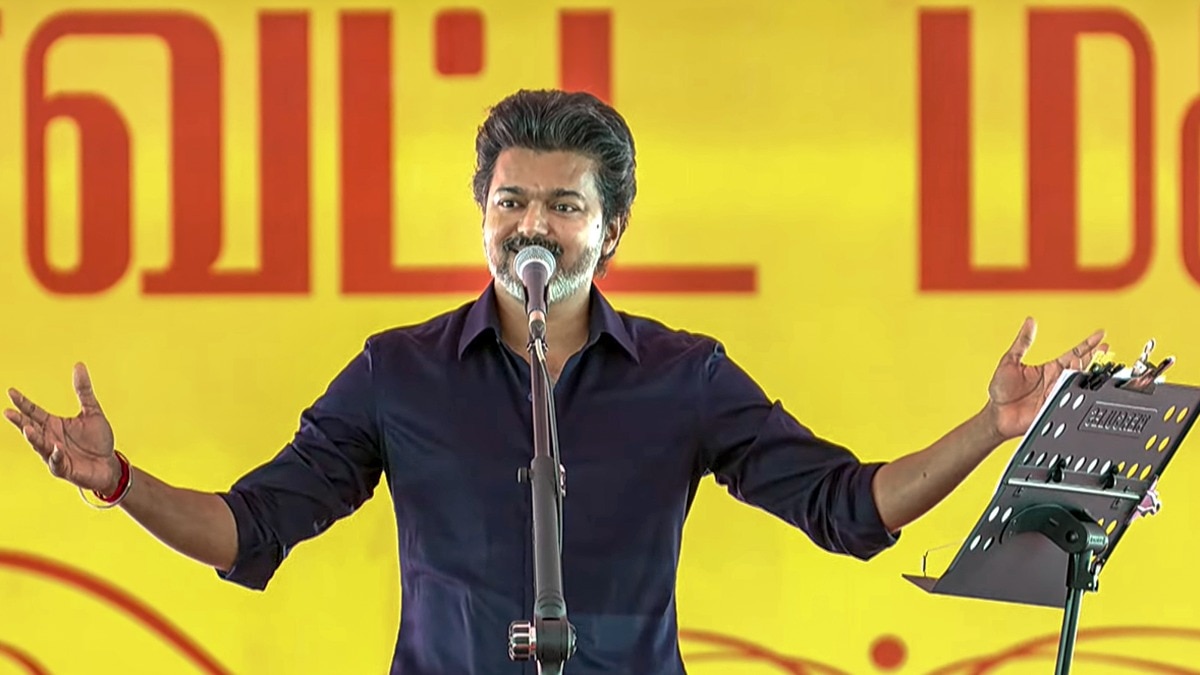
Chief Minister C. Joseph Vijay, speaking in Karur, strongly opposed the central government's delimitation proposal, warning it would dilute southern states' parliamentary voice and reduce Tamil Nadu's share of central funds. He urged the NDA‑led government to abandon the plan, citing its bias against the South.
Key Takeaways
- Tamil Nadu views delimitation as a threat to southern states' parliamentary representation.
- Chief Minister Vijay calls on the Centre to withdraw the proposal.
- Delimitation could reduce funds and influence for southern states, especially Tamil Nadu.
The 131st Constitutional Amendment Bill, introduced in 2026, seeks to redraw electoral boundaries across India, potentially diminishing Tamil Nadu’s share in Parliament. Tamil Nadu, which passed a formal assembly resolution against delimitation in 2024, has maintained a firm stance against the proposal.
Vijay’s Emotional Address in Karur
During his first official visit to Karur—a town that suffered a tragic stampede in 2025—Chief Minister C. Joseph Vijay handed job orders to bereaved families while delivering a passionate speech. He declared, “No one can take away our rightful place,” underscoring the state’s refusal to accept delimitation.
Political and Social Ramifications
Vijay warned that delimitation would erode the voice of southern states in Parliament, favoring the North in matters of language, culture, and state rights. The Tamil Viduthalai Kazhagam (TVK), despite supporting a 33% reservation for women, opposed the amendment, arguing it would disadvantage the South.
Economic Impact and Resource Allocation
He expressed concerns that delimitation could slash central funds earmarked for population‑based schemes, worsening an already uneven distribution of resources. Vijay urged the Centre to retain the existing allocation framework to avoid further fiscal disparities.
Future Outlook
Vijay’s remarks signal that Tamil Nadu will resist any attempt to revive delimitation, regardless of the central government’s composition. The state’s formal opposition in the assembly and its unwavering stance make this issue a politically sensitive one that cannot be ignored.