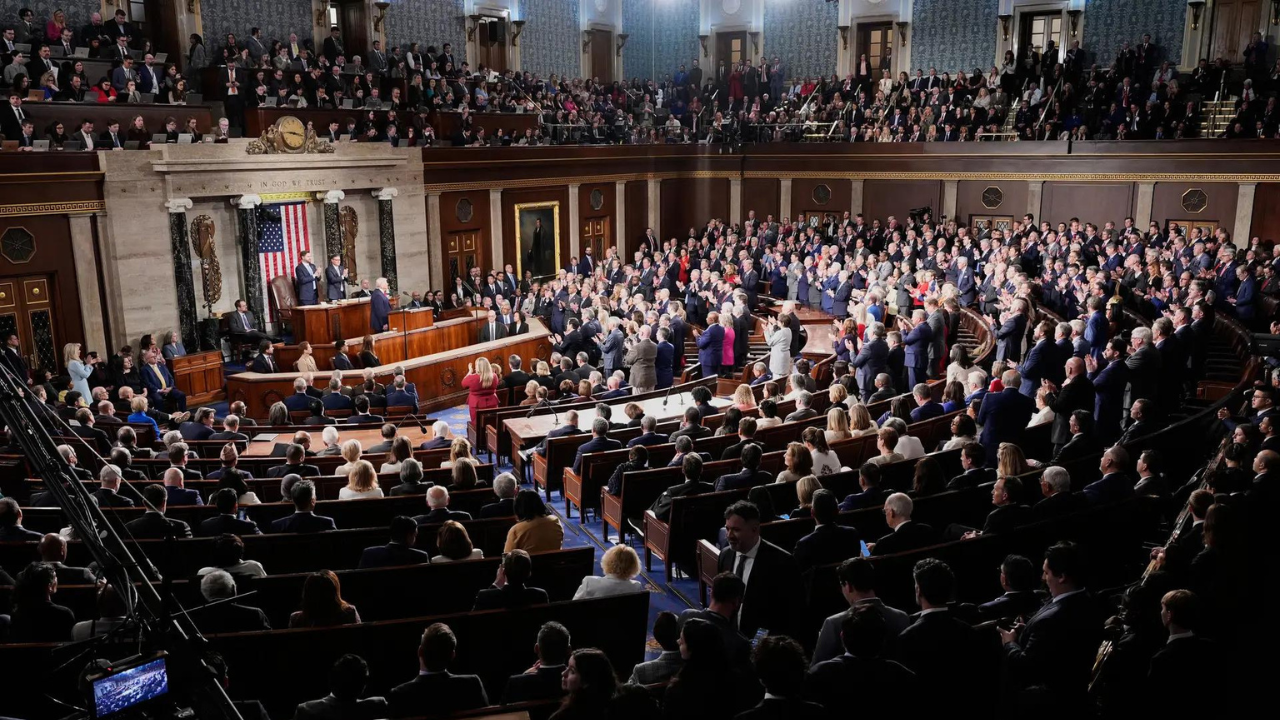
The median age of U.S. senators now stands at 64, with more than half over 65, turning the Senate into a retirement‑heavy institution. This article examines the structural roots, European contrasts, and democratic implications of a government dominated by senior lawmakers.
Key Takeaways (मुख्य बिंदु)
- Median age of U.S. Senate is 64; a quarter of members are over 75.
- Seniority‑based rules hinder entry of younger challengers.
- Health scares of senior lawmakers raise questions about functional governance.
The United States Congress, especially the Senate, has evolved into a chamber where age is not merely a demographic statistic but a cornerstone of power. In the current Congress, the median age of senators is 64, and more than half are older than 65, with notable figures such as 92‑year‑old Republican Chuck Grassley and 84‑year‑old Democrat Bernie Sanders still active. This makes the Senate one of the oldest legislative bodies in modern history, often likened to a “retirement community” that still wields global influence.
Historical Context and International Comparison
Senior politicians have long been a hallmark of American governance. Figures like Strom Thurmond, who served into his 100s, and Robert Byrd, who remained in office until his death at 92, exemplify a tradition of lifelong tenure. In contrast, many European democracies showcase considerably younger leadership: France’s President Emmanuel Macron is 48, Britain’s incoming Prime Minister Andy Burnham is 56, and Italy’s Giorgia Meloni is 49. Such differences highlight that the U.S. reliance on seniority is more a product of institutional design than cultural preference.
Structural Drivers of Gerontocracy
Senate seniority translates into coveted committee chairmanships, fundraising clout, institutional memory, and legislative influence. Incumbents enjoy substantial electoral advantages, making it arduous for younger aspirants to break through. This seniority‑centric system reinforces a “centralized power” model where experienced lawmakers are treated as political assets, akin to hereditary estates.
Health Concerns and Democratic Accountability
As lawmakers age, health‑related uncertainties become unavoidable. The recent hospitalization of Senator Mitch McConnell, now 84, revived longstanding jokes about the Senate being a “retirement village,” while also prompting serious questions about the capacity of senior officials to fulfill demanding duties. Unlike Supreme Court justices, who have life tenure and face no periodic voter scrutiny, senators must continuously justify their physical and mental stamina to an electorate that increasingly demands transparency.
Path Forward
Addressing America’s gerontocracy requires two complementary strategies: first, shifting the emphasis from seniority to merit‑based leadership; second, providing financial and institutional support to younger candidates. By fostering a pipeline of fresh voices, the United States can transform its “elder‑dominated chamber” into a dynamic arena of policy innovation, preserving both continuity and democratic vitality.