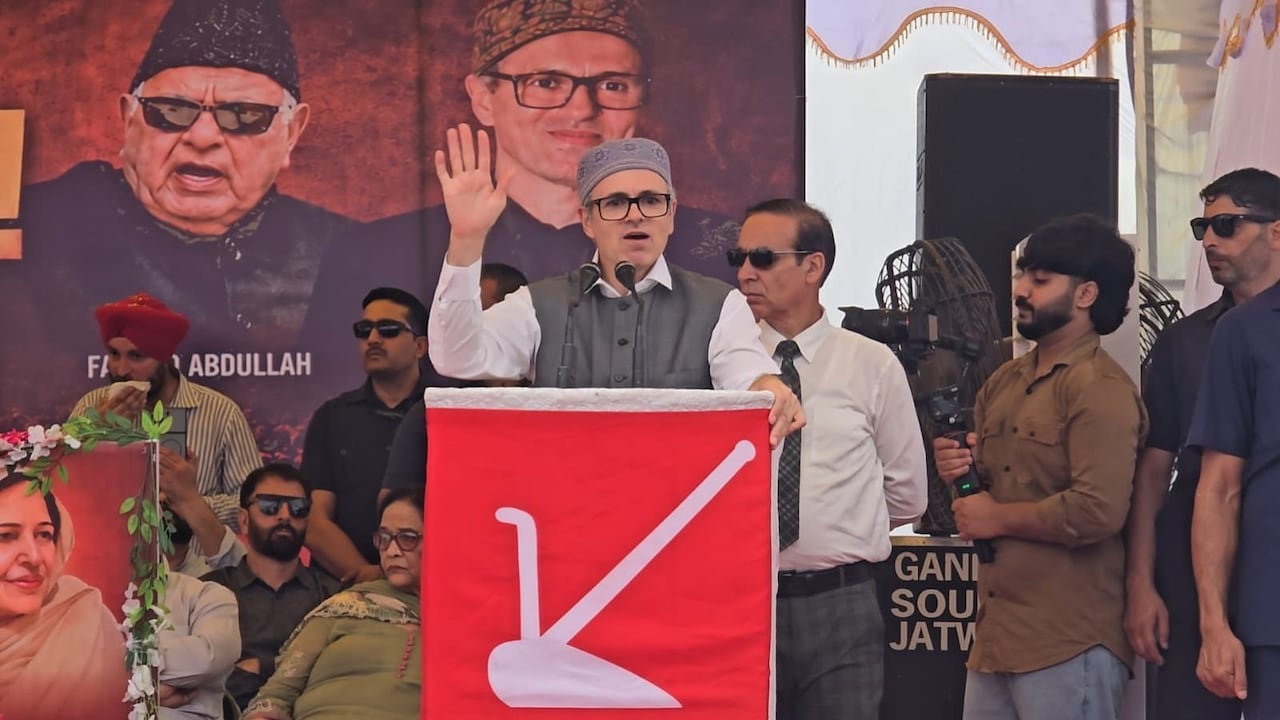
Jammu & Kashmir Chief Minister Omar Abdullah, speaking at a rally, accused the BJP of systematically weakening opposition parties and suggested seeking statehood through the U.S. White House if Delhi avenues fail.
मुख्य बिंदु (Key Takeaways)
- Omar Abdullah hints at an international route for statehood via the White House.
- BJP is accused of deliberately weakening opposition across India.
- The statement could reshape the discourse around Jammu & Kashmir's statehood demand.
Jammu and Kashmir Chief Minister Omar Abdullah addressed a massive rally on Sunday, declaring, “If Delhi does not offer a solution, should we take our statehood plea to the White House?” The remark signals a bold shift, hinting that the region’s long‑standing demand for full statehood might be taken to an international arena.
Political Background
Abdullah, a veteran politician and former president of the Jammu & Kashmir National Conference, has been a vocal critic of the Bharatiya Janata Party (BJP) since the abrogation of Article 370 in August 2019. That constitutional amendment stripped the state of its special status, igniting widespread protests and a renewed call for greater autonomy. Since then, the BJP‑led central government has pursued a hard‑line approach, while opposition parties in the region have rallied around the statehood banner.
Accusations Against the BJP
During his speech, Abdullah directly accused the BJP of “systematically weakening opposition parties across the country.” He argued that the party’s policies not only dismantled Jammu & Kashmir’s autonomy but also eroded democratic pluralism nationwide. The charge is especially potent ahead of upcoming state and national elections, where the opposition seeks to capitalize on anti‑incumbency sentiments.
Why the White House?
Invoking the U.S. White House as a possible mediator is unconventional. Abdullah suggests that international pressure could compel the central government to negotiate a more favorable settlement. Analysts caution that while India‑U.S. ties are strong, leveraging American diplomatic channels for an internal constitutional matter could complicate bilateral relations and set a precedent for external involvement in India’s internal affairs.
Implications and Future Outlook
If Abdullah’s strategy gains traction, it could redefine the federal‑state dynamics in India, encouraging other regions with autonomy aspirations to seek external advocacy. Conversely, the central government may double down on its stance, framing any foreign intervention as a breach of sovereignty. The coming weeks will reveal whether this rhetoric translates into diplomatic outreach or remains a high‑impact political statement aimed at rallying domestic support.
In sum, Omar Abdullah’s bold suggestion not only revives the debate on Jammu & Kashmir’s statehood but also tests the limits of India’s internal political discourse in a globalized world.