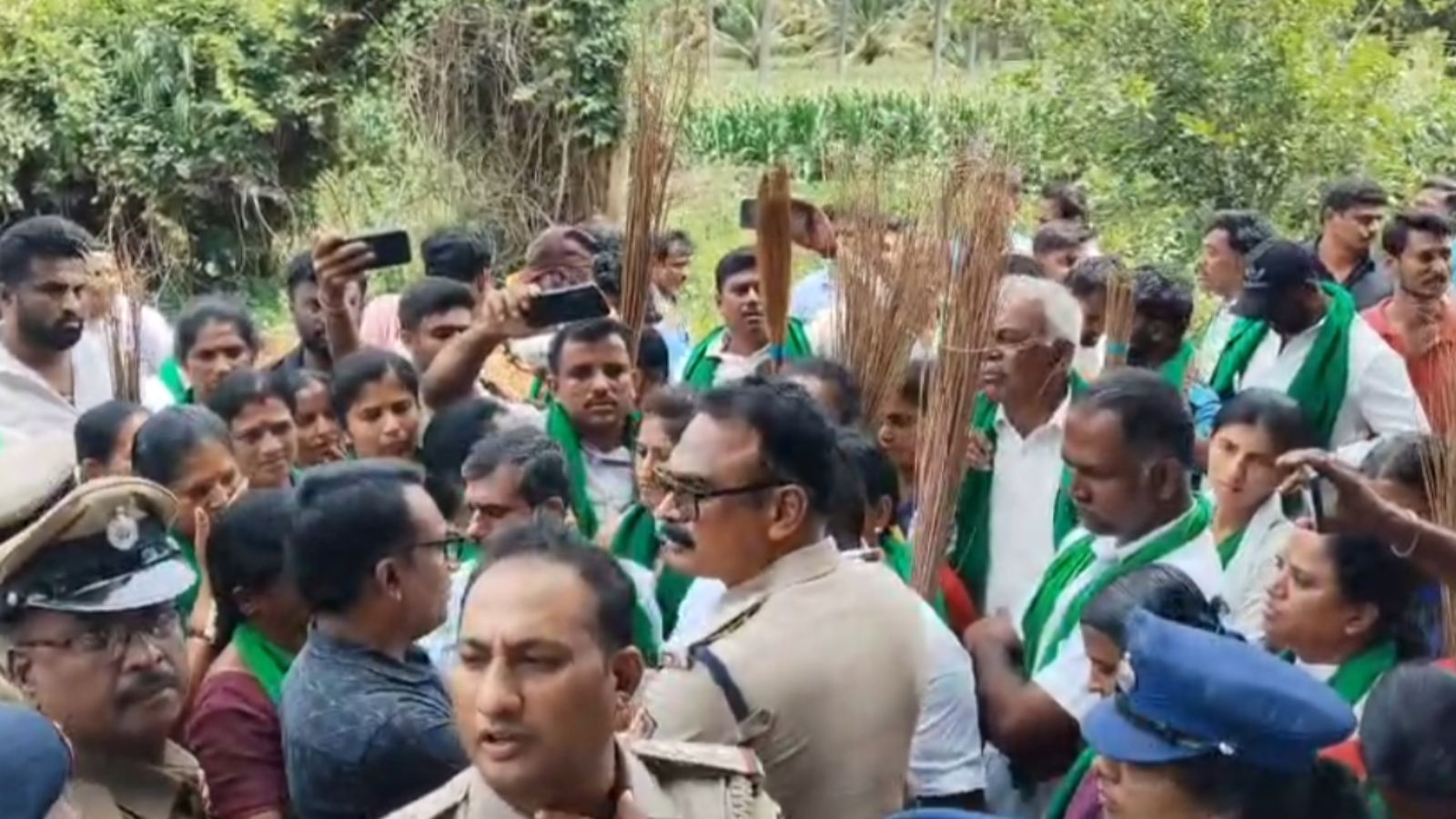
In Karnataka’s Bidadi township scheme, villagers from Mandalahalli blocked officials and forced them to flee after hurling stones and brooms. The protest, condemned by JD(S), underscores growing tensions over land acquisition and government outreach.
Key Takeaways
- 7,400 acres earmarked for the Bidadi Township integrated development project.
- Mandalahalli villagers repelled Joint Measurement Committee surveyors with stones and brooms.
- JD(S) denounced the survey as ‘forceful’ and called for the project’s cancellation.
On Monday, residents of Mandalahalli village in Bengaluru South district staged a dramatic protest against the ongoing land‑acquisition survey for the Bidadi Township project. The scheme, championed by Karnataka Chief Minister D.K. Shivakumar, seeks to acquire roughly 7,400 acres across nine villages to create a large‑scale integrated township.
Background and Historical Context
The project’s initial notification was issued in March 2025, sparking immediate apprehension among farmers who feared loss of livelihood and inadequate compensation. Karnataka’s history of contentious land‑acquisition drives—most notably the 2017 Juhu Township case—has left a legacy of mistrust when authorities bypass proper consultation. In the Bidadi case, villagers claim they were not informed in advance, fueling the present confrontation.
Details of the Incident
When officials from the Joint Measurement Committee (JMC) arrived, villagers first blocked the main road leading to the survey site. Soon after, women from the community took to the streets armed with brooms, while other protestors hurled stones at the survey team’s vehicles. Video footage captured women striking surveyors with brooms and officials scrambling to retreat via alternate routes as their cars were pelted with rocks.
Political Reactions
The opposition party JD(S) swiftly posted a video of the clash, labeling the survey as “forceful” and conducted without prior notice to the villagers. JD(S) youth wing president Nikhil Kumaraswamy demanded the immediate release of farmers already detained and urged the state government to abandon the Bidadi Township project altogether. This stance reflects broader political friction between the ruling party and regional opposition over development‑vs‑farmer interests.
Implications and Future Outlook
If the government fails to engage constructively with the affected communities, the Bidadi Township project may face prolonged legal battles, delays, and heightened public scrutiny. Moreover, the incident highlights the need for a more participatory approach to urban expansion in Karnataka, where transparent compensation mechanisms and genuine dialogue are essential to avert similar flashpoints across the state.