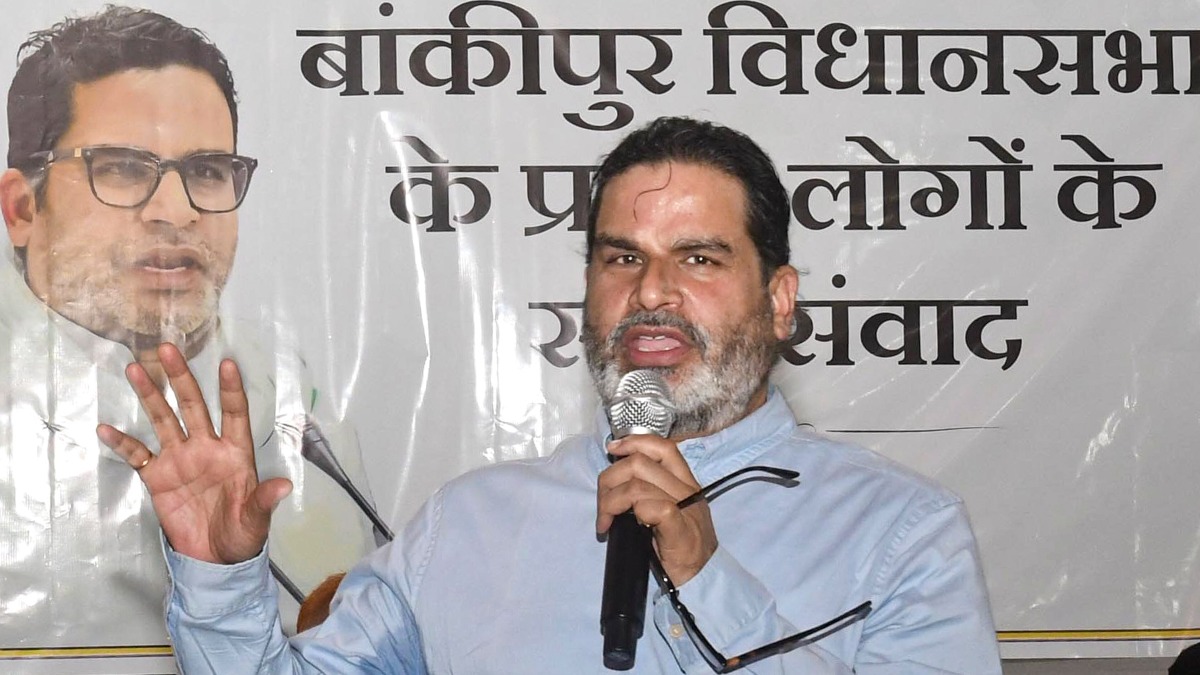
Jan Suraj Party candidate Prashant Kishor disclosed a net worth of roughly ₹198 crore ahead of the Bankipur assembly by‑election. The declaration includes extensive real‑estate holdings from Delhi to Guwahati, substantial bank deposits, and the existence of four separate legal cases against him.
मुख्य बिंदु (Key Takeaways)
- Prashant Kishor’s total assets are about ₹198 crore
- Real‑estate spread across Delhi, Uttar Pradesh, Bihar and Assam
- Four distinct legal cases are pending against him
In the Bankipur assembly by‑election, Jan Suraj Party’s nominee Prashant Kishor submitted a detailed election affidavit revealing his wealth. Official figures show that together with his wife Jahanvi Das, their combined movable and immovable assets total roughly ₹198 crore, comprising ₹73 crore in property and ₹22 crore in cash equivalents. This level of financial disclosure is noteworthy in a political environment that often lacks transparency.
Extensive Real‑Estate Portfolio
Kishor’s name appears on properties in Delhi’s Vasant Vihar, two flats in Noida’s JP Greens, a house in Patna’s Patliputra, agricultural land in Rohtas district, and an apartment in Guwahati’s Mother Teresa Road, among others. The cumulative valuation of these immovable assets is estimated at about ₹73 crore, accounting for over a third of his total net worth.
Financial Investments and Deposits
Beyond real estate, Kishor holds sizable bank balances, fixed deposits exceeding ₹3 crore, mutual fund holdings of ₹1.24 crore, and life‑insurance policies worth ₹5.34 crore. He has also invested ₹58.75 lakh in the Post Office’s Public Provident Fund (PPF). His wife’s cash on hand stands at ₹1.95 lakh, while she possesses 475 grams of gold valued at roughly ₹64 lakh. Kishor himself owns only a single gold ring.
Debt and Legal Cases
Both spouses carry a combined loan burden of approximately ₹9 crore, a relatively modest figure against their asset base. However, four criminal cases are listed against Kishor—one each in the courts of Saharsa, Patna, Muzaffarpur, and Betia. The specifics of these cases have not been disclosed, but their existence adds a layer of political risk, especially as opponents may weaponize this information.
Political and Social Implications
Such a high‑profile financial disclosure serves dual purposes. It promotes transparency for voters seeking a clear picture of a candidate’s economic standing, while simultaneously offering opposition parties fresh ammunition for scrutiny. The juxtaposition of wealth and pending litigation could reshape campaign narratives and influence voter sentiment in the upcoming election.