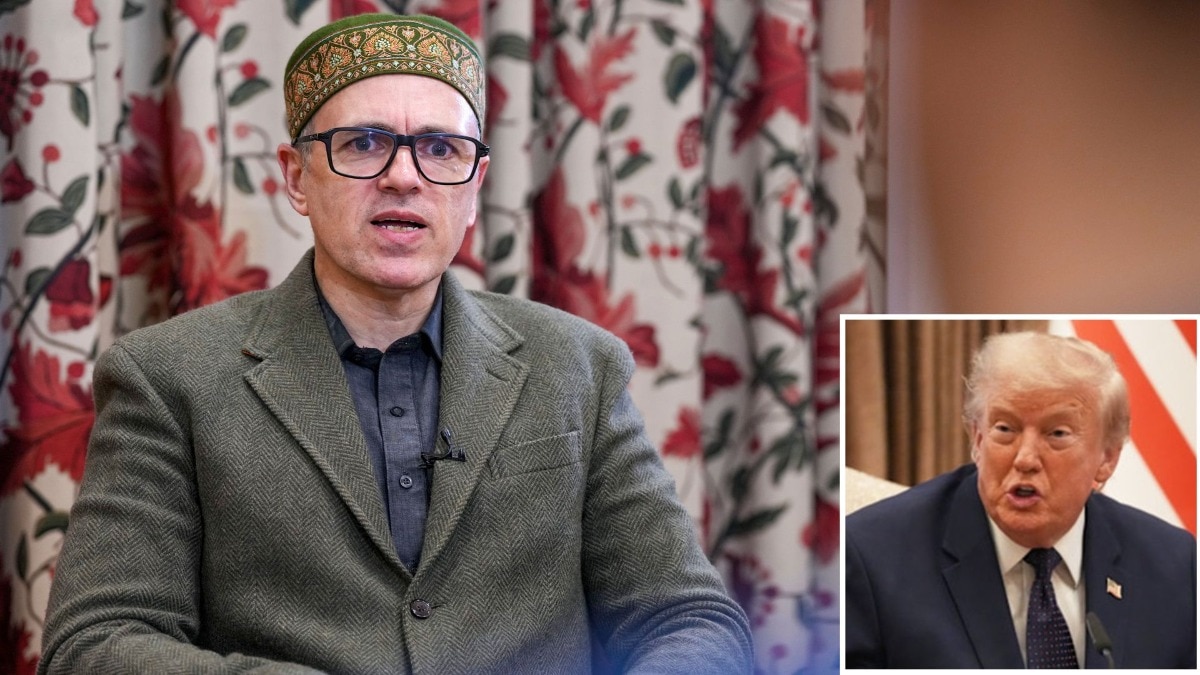
Former U.S. President Donald Trump hinted that Jammu and Kashmir should be granted statehood. Indian politician Omar Abdullah responded by sharing a satirical post aimed at mocking the BJP, sparking a wave of online debate.
Key Takeaways
- Trump’s ambiguous comment appears to back J&K statehood, raising diplomatic eyebrows.
- Omar Abdullah uses satire to criticize the BJP’s 2019 policy shift.
- The exchange could influence Indo‑U.S. dialogue and domestic political narratives.
Former President Donald Trump recently posted a cryptic remark suggesting that Jammu and Kashmir ought to become a full-fledged Indian state. Though not an official statement, the comment instantly ignited debate across Indian media circles. Analysts are split – some view it as a simple misunderstanding, while others suspect a strategic move to test the waters on a highly sensitive issue that India altered in 2019 by revoking Article 370.
Omar Abdullah’s Satirical Counter
Known for his measured political discourse, Omar Abdullah seized the moment to launch a pointed critique of the Bharatiya Janata Party (BJP). He retweeted a fabricated screenshot titled “Trump backs J&K statehood?” and added a witty caption that underscored the BJP’s controversial decision to dismantle the region’s special status. The post, deliberately tongue‑in‑cheek, was designed to highlight perceived hypocrisy and to rally opposition voices on social platforms.
Historical Context
Jammu and Kashmir enjoyed a unique constitutional status under Article 370 since 1947, granting it autonomy over internal matters. In August 2019, Prime Minister Narendra Modi’s government abrogated this provision, bifurcating the territory into two Union Territories—Jammu & Kashmir and Ladakh. The move sparked both domestic protests and international scrutiny, with supporters lauding it as a step toward national integration and detractors decrying it as an erosion of democratic rights.
Potential Diplomatic and Political Ramifications
If Trump’s comment is read as an implicit policy shift, it could add a new layer to the already complex Indo‑U.S. relationship. Washington’s stance on the Kashmir issue has traditionally been cautious, respecting India’s sovereignty while urging human‑rights safeguards. A perceived endorsement of statehood might compel New Delhi to recalibrate its diplomatic messaging. Simultaneously, Abdullah’s satirical tweet showcases the growing potency of social media as a tool for political dissent in India, where humor often masks sharp criticism.
Conclusion
The convergence of an ambiguous foreign remark and a domestic satirical response underscores the intertwined nature of global optics and local politics. Whether this episode translates into substantive policy dialogue or remains a fleeting social‑media moment will depend on how both governments and political actors choose to frame the narrative.