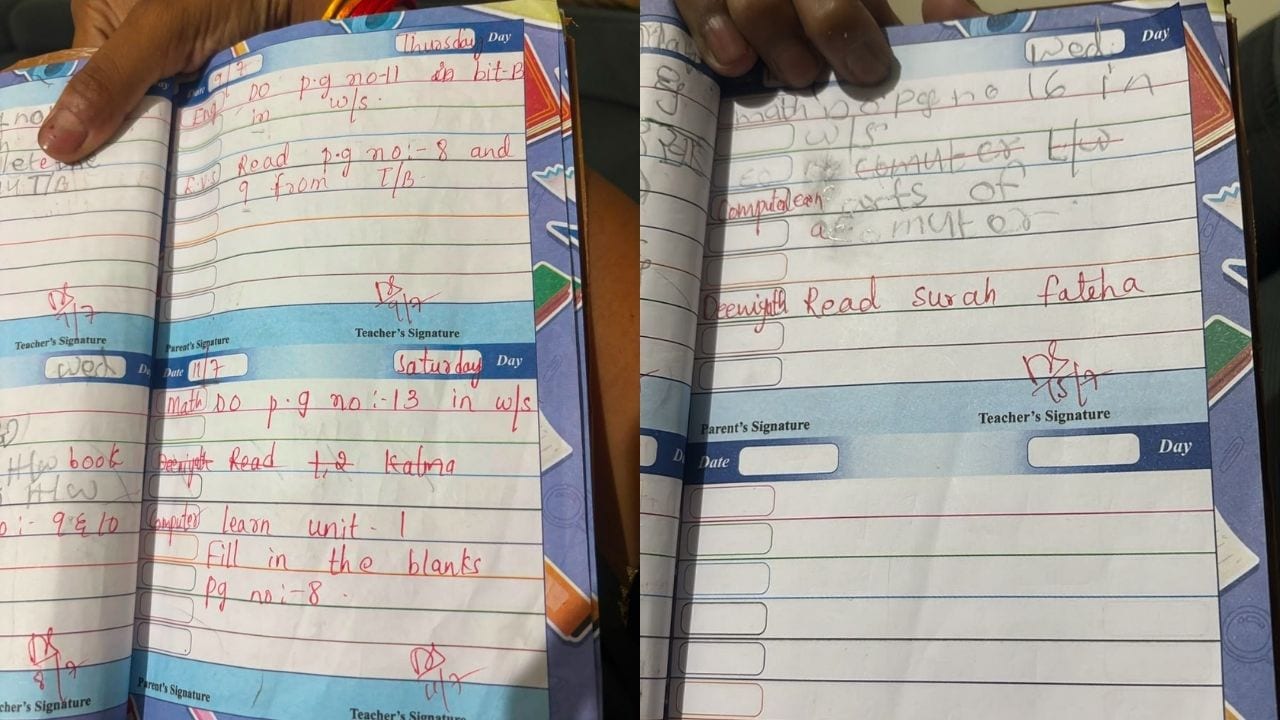
A controversy has erupted after a Class 2 Hindu student was assigned religious homework involving 'Kalma' and 'Fateh', sparking outrage among parents and political leaders.
Key Takeaways
- A 6-year-old Hindu student was assigned '1st and 2nd Kalma' and 'Fateh' as homework.
- Parents have raised serious concerns regarding religious instruction in a secular school setting.
- BJP leaders have condemned the move, questioning the sanctity of the educational curriculum.
In a development that has sent shockwaves through the educational community, a private school is under intense scrutiny following allegations of religious indoctrination. The parents of a six-year-old Hindu student in Class 2 reported that their child returned home with a homework diary containing explicit instructions to recite the '1st and 2nd Kalma' and 'Fateh'.
The Core of the Controversy
The incident has ignited a fierce debate regarding the boundaries between academic learning and religious practice within educational institutions. The parents expressed profound distress, arguing that a child of such a tender age, who is still mastering basic literacy, should not be burdened with complex religious rituals that do not align with their family's faith. They have demanded an immediate investigation into how such instructions were included in the official curriculum.
Political Backlash and Social Implications
The matter has quickly escalated from a parental grievance to a significant political issue. BJP leaders have stepped in to condemn the school's actions, framing the incident as an attempt to impose a specific religious identity on minority students within the classroom. Leaders have poignantly asked, "Should Hindus study in fear?", suggesting that such practices undermine the secular fabric of the nation's schooling system.
The Need for Curricular Integrity
This incident highlights a growing concern regarding the oversight of private educational institutions. Experts suggest that without strict adherence to secular educational standards, schools risk becoming conduits for communal polarization. As the debate intensifies, the school administration faces mounting pressure to clarify its stance and ensure that the curriculum remains inclusive and respectful of all religious backgrounds, thereby safeguarding the psychological and social well-being of its students.