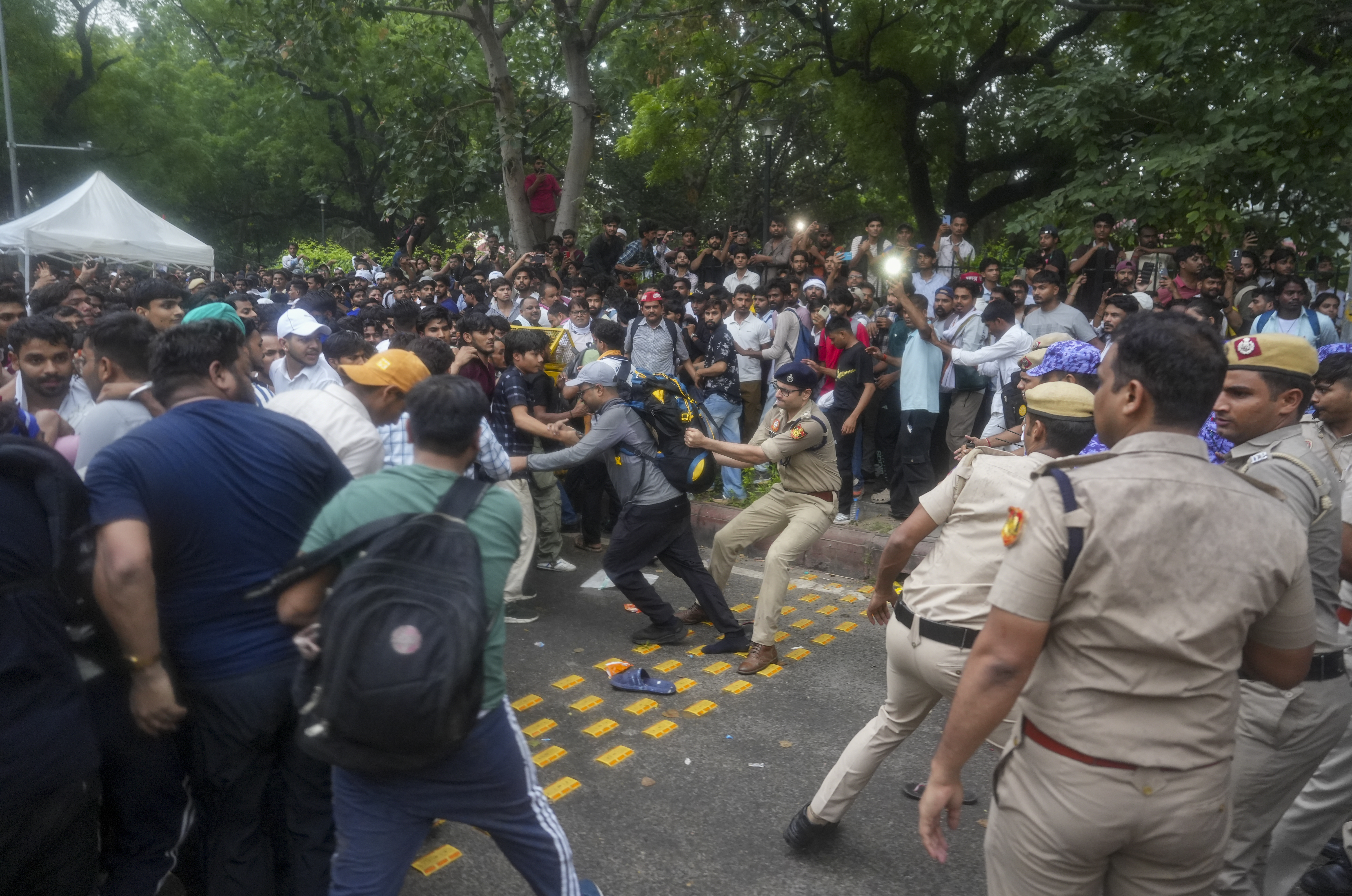
Authorities have shut down mobile internet services in parts of Central Delhi as police deny permission for the Cockroach Janta Party's (CJP) planned march to Parliament.
Tensions are escalating in the national capital, Delhi, as authorities move to preempt potential unrest. Ahead of the proposed Parliament march by the Cockroach Janta Party (CJP), mobile internet services have been suspended across several sectors of Central Delhi. The Delhi Police has officially denied permission for the protest march and has imposed a strict ban on large gatherings in the vicinity of sensitive government installations.
The decision to curb internet connectivity comes as a preemptive measure to prevent the spread of misinformation and to manage crowd movements. Security forces have been deployed in massive numbers around the Parliament House, setting up barricades to ensure that no unauthorized groups can approach the legislative building.
Why This Matters (इसके मायने क्या हैं)
BozokMedia analysis shows that such localized internet shutdowns create a ripple effect on the local economy, particularly affecting small businesses that rely on digital transactions and commuters who depend on real-time navigation and communication.
From a socio-political standpoint, this move highlights the growing friction between the state's duty to maintain order and the fundamental right to protest. The use of internet shutdowns as a tool for crowd control is a controversial practice that raises significant questions about digital rights and transparency in democratic governance.
The intersection of digital connectivity and public order is becoming the new frontline of political struggle in modern democracies.
Historical Background
Delhi has long been the epicenter of political agitation in India. From the historic movements of the independence era to modern-day protests, locations like Jantar Mantar and the Parliament area have seen significant mobilization. In recent years, the deployment of 'internet shutdowns' has become a standard administrative response to prevent the coordination of large-scale demonstrations, a move that is frequently debated in the Supreme Court of India regarding its constitutionality.
| Aspect | Police/Administration Stance | CJP Protest Aim |
|---|---|---|
| Protest Permission | Denied | March to Parliament |
| Internet Access | Suspended | Unrestricted Access |
| Public Assembly | Banned | Mass Mobilization |
Frequently Asked Questions (अक्सर पूछे जाने वाले प्रश्न)
1. Why has the internet been shut down in Delhi?
The internet has been suspended in parts of Central Delhi as a security measure to prevent the coordination of protests and the spread of rumors during the CJP march.
2. Can the CJP proceed with their march?
No, the Delhi Police has explicitly denied permission for the march and has prohibited large gatherings in the area.