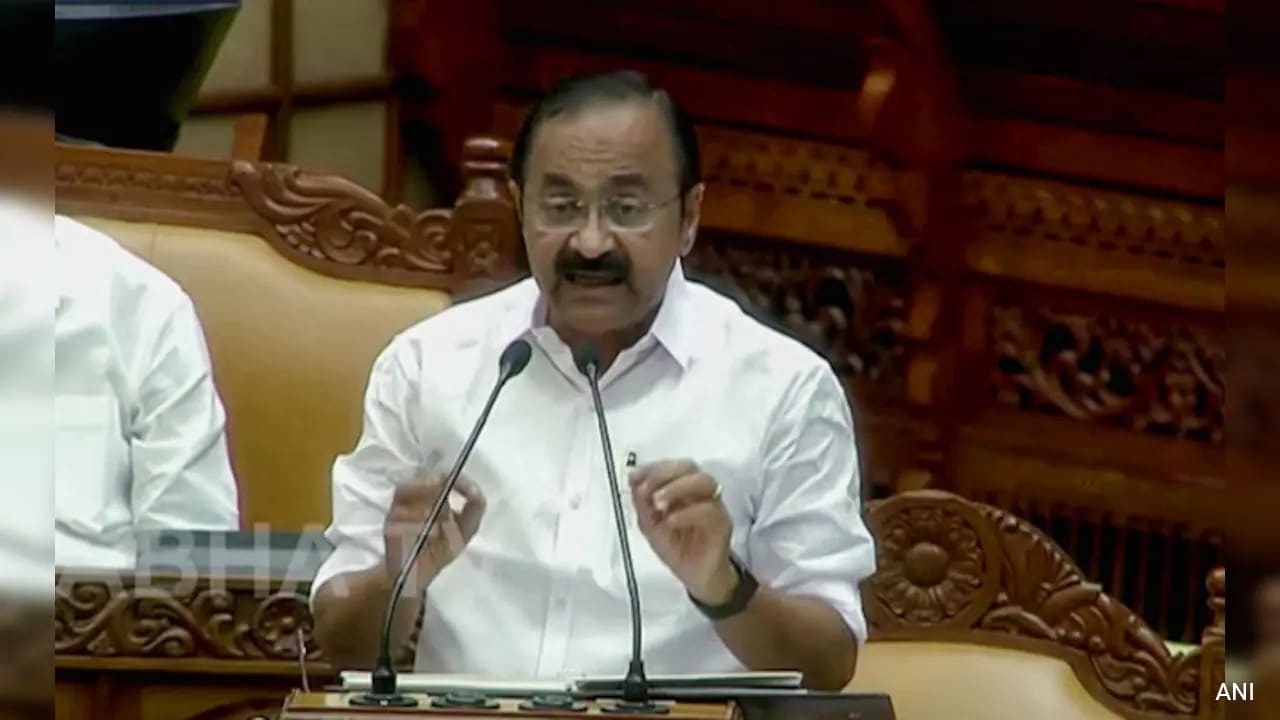
The political temperature in Kerala has soared as Opposition Leader VD Satheesan slammed Chief Minister Pinarayi Vijayan over the Waqf Board dispute, accusing the LDF government of playing divisive politics.
Key Takeaways
- Opposition Leader VD Satheesan accused CM Pinarayi Vijayan of misleading the Muslim community.
- CM Vijayan had previously accused the UDF of spreading communal propaganda to alienate Muslims from the LDF.
- The controversy stems from the ongoing Waqf property disputes, notably the Munambam land issue in Kerala.
The political landscape of Kerala is witnessing an intense showdown over the Waqf Board property dispute. VD Satheesan, the Leader of the Opposition and senior Congress leader, has launched a scathing attack on Chief Minister Pinarayi Vijayan, accusing him of deliberately misleading the Muslim community to cover up his administration's failures.
The controversy escalated after Chief Minister Vijayan publicly alleged that the opposition United Democratic Front (UDF) was carrying out communal propaganda. According to the CM, this propaganda was aimed at turning the Muslim community against the ruling Left Democratic Front (LDF) government. The Chief Minister also noted that four petitions were subsequently filed in the High Court challenging the board, further complicating the legal dimensions of the issue.
To provide historical background, the dispute is deeply linked to the Munambam land controversy, where hundreds of local families, mostly belonging to the Christian community, face uncertainty after the Waqf Board claimed ownership of the land they reside on. This delicate situation has forced both the LDF and UDF to tread carefully to avoid alienating either the Christian or Muslim vote banks in the state.
| Stance/Feature | LDF (Pinarayi Vijayan) | UDF (VD Satheesan) |
|---|---|---|
| Core Allegation | Accuses UDF of spreading communal propaganda to alienate Muslims from LDF. | Accuses CM of playing double games and misleading Muslims to hide governance failures. |
| Waqf Dispute Approach | Advocates for legal resolution while keeping minority interests aligned with the state. | Demands immediate government intervention to protect landholders without harming Waqf laws. |
Why This Matters
According to BozokMedia analysis shows that the Waqf dispute in Kerala has transcended legal boundaries to become a critical electoral battleground. With Kerala’s unique demographic composition, where minorities play a decisive role in elections, both the LDF and UDF are vying for dominance. The LDF seeks to retain its hold over the Muslim electorate, while the UDF is attempting a delicate balancing act to appease both Christian and Muslim communities.
This political tug-of-war has broader implications for Kerala's social harmony. If left unresolved, the dispute risks deepening communal fault lines, potentially reshaping the state’s political alliances and electoral strategies ahead of future local and general elections.
"The Waqf dispute in Kerala is no longer just a legal battle over land; it has transformed into a high-stakes political chess game where both the LDF and UDF are vying for the decisive minority vote bank." - Dr. K. Raghavan, Political Analyst.blockquote>Did You Know?: The Waqf Act was first passed by the Indian Parliament in 1954, and subsequent amendments have made the Waqf Boards some of the largest landowners in India after the Railways and the Defense Ministry.Frequently Asked Questions (FAQs)
Q1: What is the core of the Waqf dispute in Kerala?
A1: The dispute primarily involves claims made by the Waqf Board on lands inhabited by local communities (such as in Munambam), leading to legal and political conflicts between different religious and social groups.Q2: Why is the opposition criticizing Chief Minister Pinarayi Vijayan?
A2: The opposition, led by VD Satheesan, claims that the CM is using the Waqf issue to create communal polarization and divert attention from the government's administrative inefficiencies.