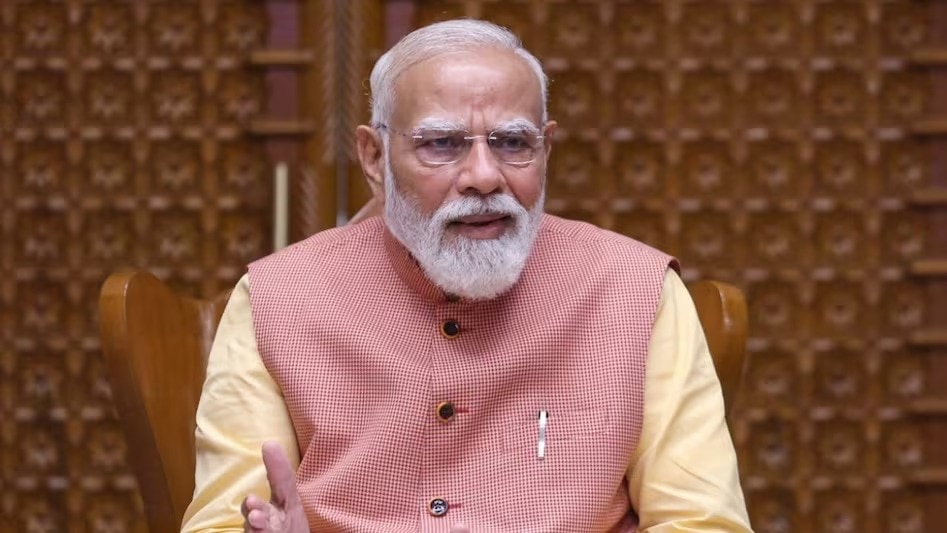
Prime Minister Narendra Modi conducted a high-level, three-hour strategic session with over 12 independent charge Ministers to discuss the roadmap for 'Viksit Bharat 2047'. The discussions focused on time-bound project delivery, transparency, and ensuring welfare schemes reach the grassroots level.
- PM Modi met with over 12 Ministers holding independent charges for over three hours.
- The primary focus was aligning ministerial goals with the 'Viksit Bharat 2047' vision.
- Emphasis placed on time-bound delivery, quality, and absolute transparency.
- Direct focus on ensuring welfare schemes reach the intended beneficiaries without delay.
In a significant administrative move, Prime Minister Narendra Modi held a marathon meeting lasting over three hours with more than 12 Ministers holding independent charges at the Prime Minister's Office (PMO). This session was not merely a routine review but a strategic deep dive into the future trajectory of the nation, specifically focusing on the 'Viksit Bharat 2047' agenda.
During the session, Ministers presented detailed reports on the progress of various departmental initiatives and recent reforms. The Prime Minister underscored that the role of ministries must transcend mere policy formulation; they must focus on the actual impact on the ground. He issued strict directives regarding time-bound delivery, insisting that all major projects must be completed within their stipulated deadlines without compromising on quality.
Why This Matters
BozokMedia analysis shows that this meeting represents a shift toward decentralized accountability. By engaging directly with Ministers holding independent charges—rather than just Cabinet Ministers and top bureaucrats—PM Modi is fostering a sense of direct responsibility among the mid-tier leadership. This approach aims to accelerate decision-making and ensure that the vision of a developed India is integrated into every micro-level ministerial plan.
'To achieve the 2047 vision, ministries must transition from being planning bodies to becoming execution-driven engines of growth.'
A central theme of the meeting was the 'Viksit Bharat 2047' roadmap. The Prime Minister challenged each Minister to define their department's specific contribution toward making India a developed nation by 2047. Key sectors such as Agriculture, Education, Rural Development, and Social Justice were highlighted as critical pillars for this transformation.
Furthermore, the Prime Minister placed a heavy emphasis on Garib Kalyan (Welfare of the Poor). He stressed that there should be zero tolerance for delays or hurdles in delivering government benefits to the intended beneficiaries. He also inquired about the ministries' engagement with the public, specifically regarding social media outreach and direct citizen communication.
Historical Background
As India enters the 'Amrit Kaal', the government has set an ambitious goal to transform the country into a developed economy within the next 25 years. This period is characterized by massive infrastructure development, digital transformation, and social empowerment, all aimed at reaching the milestone year of 2047.
Frequently Asked Questions
1. What was the main objective of the PM's meeting?
The meeting aimed to review ministerial progress and align all departmental strategies with the long-term goal of 'Viksit Bharat 2047'.
2. Which sectors were prioritized during the discussion?
Priority was given to sectors like agriculture, education, rural development, and social justice to ensure holistic national growth.