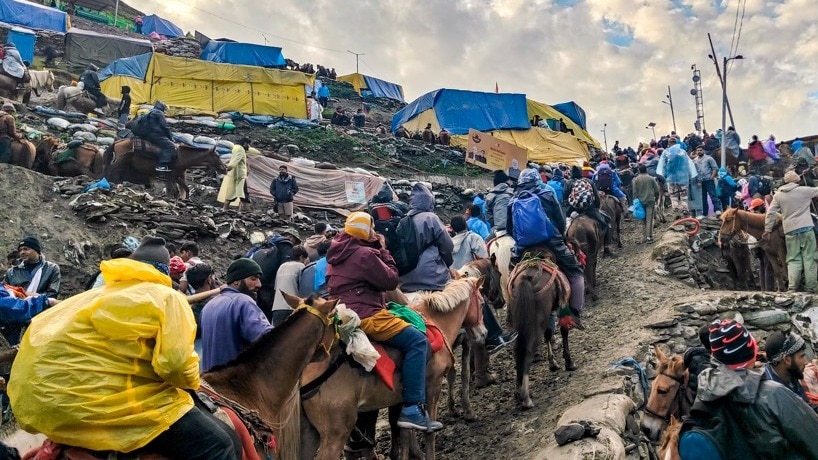
The Jammu and Kashmir administration released a new advisory for the 2026 Amarnath Yatra, urging pilgrims to strictly follow registration, safety protocols, and daily caps set by the Supreme Court. Unregistered devotees are asked to await further instructions before attempting the pilgrimage.
Key Takeaways
- Only registered pilgrims are permitted to start the Yatra
- Daily pilgrim cap per Supreme Court directives remains enforced
- Unregistered devotees must wait for additional guidance
On July 10, 2026, the Jammu and Kashmir administration issued a comprehensive advisory for the upcoming Amarnath Yatra, reiterating stringent rules on registration, safety, and travel scheduling. The advisory comes at a time when the pilgrimage draws thousands of devotees each year, amplifying crowd management and security challenges.
Registration Compulsory: Core Elements of the New Advisory
Tourism officials stressed that only pilgrims holding a valid registration certificate will be allowed to proceed along the sacred route. The registration process continues to adhere to the Supreme Court‑mandated daily pilgrim limit (approximately 5,000), a measure designed to facilitate crowd control and ensure rapid emergency response.
Safety Protocols and Documentation
All registered participants are required to carry identification, registration numbers, and health certificates throughout the journey. Security personnel are empowered to verify these documents at every checkpoint, minimizing the risk of unauthorized entry and potential hazards. Additionally, medical camps, emergency shelters, and water supply points along the route will receive periodic updates to maintain operational readiness.
Warning to Unregistered Pilgrims
Shortly after the advisory’s release, reports emerged of unregistered devotees already present in the region. Authorities have urged them to immediately contact local police or the tourism department and await further instructions. Any attempt to join the Yatra without proper registration not only endangers the individual but also compromises overall public safety.
Historical Context and Societal Impact
The Amarnath pilgrimage traces its roots back to the 8th century and remains one of India’s largest religious treks. Over the decades, security concerns have prompted the Supreme Court to impose daily caps, balancing devotional fervor with safety imperatives. The latest advisory reflects a continuation of this legacy, aiming to safeguard pilgrims while honoring their spiritual aspirations.
Looking Ahead
Officials indicated that strict adherence to registration and safety guidelines could enable a smooth 2026 Yatra without major disruptions. The administration is also promoting the use of digital registration portals and mobile applications for real‑time updates, a move that could transform future pilgrimage management into a more transparent and efficient process.