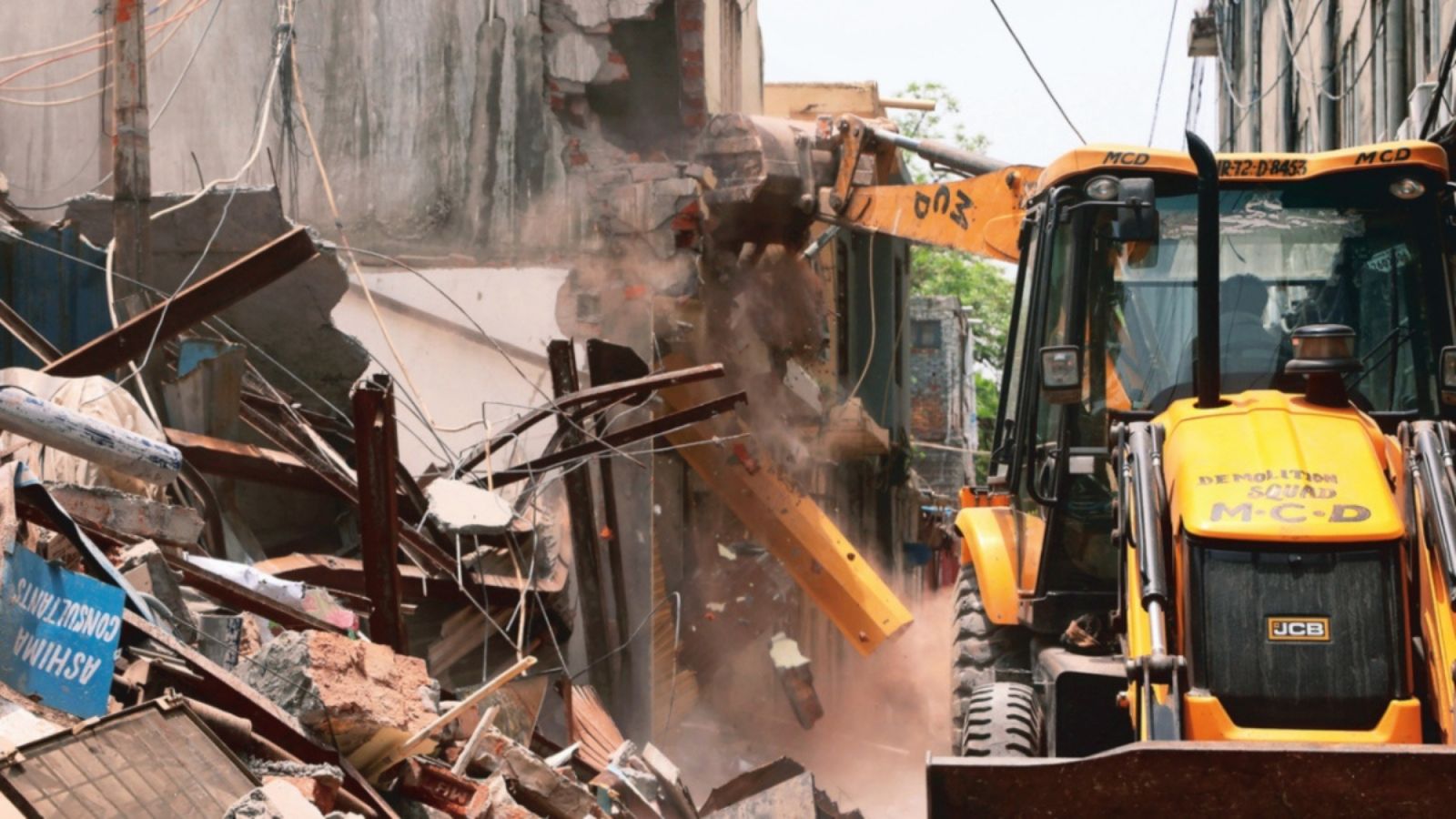
A 200‑year‑old Kali temple dome collapsed during a Public Works Department road‑widening operation in Chandauli, Uttar Pradesh, killing one contractor worker and injuring another. The incident highlights procedural lapses and safety oversights in large‑scale infrastructure projects.
Key Takeaways (मुख्य बिंदु)
- 200‑year‑old Kali temple dome collapsed, killing one worker and injuring another
- Demolition carried out under PWD road‑expansion project without prior notice to local authorities
- Immediate rescue response launched; investigation ordered by district magistrate
During a Public Works Department (PWD) road‑expansion drive in the town of Mughalsarai, Chandauli district, Uttar Pradesh, the dome of a 200‑year‑old Kali temple gave way on Friday night. The collapse killed 45‑year‑old local resident Baldev Yadav and left another contractor employee seriously injured. Both men were part of a private firm hired by the PWD to clear the proposed roadway alignment.
Project Background
The widening project, now in its fourth month, aims to broaden a national highway segment to ease traffic congestion. The planned alignment cut through several historic structures, including the aforementioned temple, which authorities deemed necessary to remove. However, officials admitted that the demolition proceeded without notifying the district administration or police, raising serious concerns about compliance with safety regulations.
Sequence of Events
At approximately 9 p.m., workers operated a bulldozer to dismantle the temple dome. When the bulldozer’s bucket struck the dome, the structure toppled, striking Baldev Yadav, who was holding a guide rope, and a nearby colleague. Both men were buried under rubble, prompting panic among on‑site laborers.
Immediate Response and Investigation
Chandauli District Magistrate Chandra Mohan Garg summoned PWD officials to ascertain the cause of the collapse. Rescue teams comprising police, administrative staff, and local residents rushed to the site, extricating the injured worker and transporting him to a hospital, where Baldev later succumbed to his injuries. The surviving worker remains under medical care.
Procedural Insights
According to senior officials, a new temple was constructed nearby and idols were relocated a few days before demolition. A consecration ceremony (pran pratishtha) was performed, and the old structure was cleared after receiving approval from the temple committee. Nevertheless, the lack of formal communication with local authorities suggests a procedural gap that could have prevented the tragedy.
Implications for Future Infrastructure Work
The incident underscores the critical need for stringent safety protocols and community engagement in infrastructure projects, especially when cultural heritage sites are involved. Experts argue that transparent coordination between PWD, local bodies, and religious institutions must become a mandatory step to avoid similar loss of life.