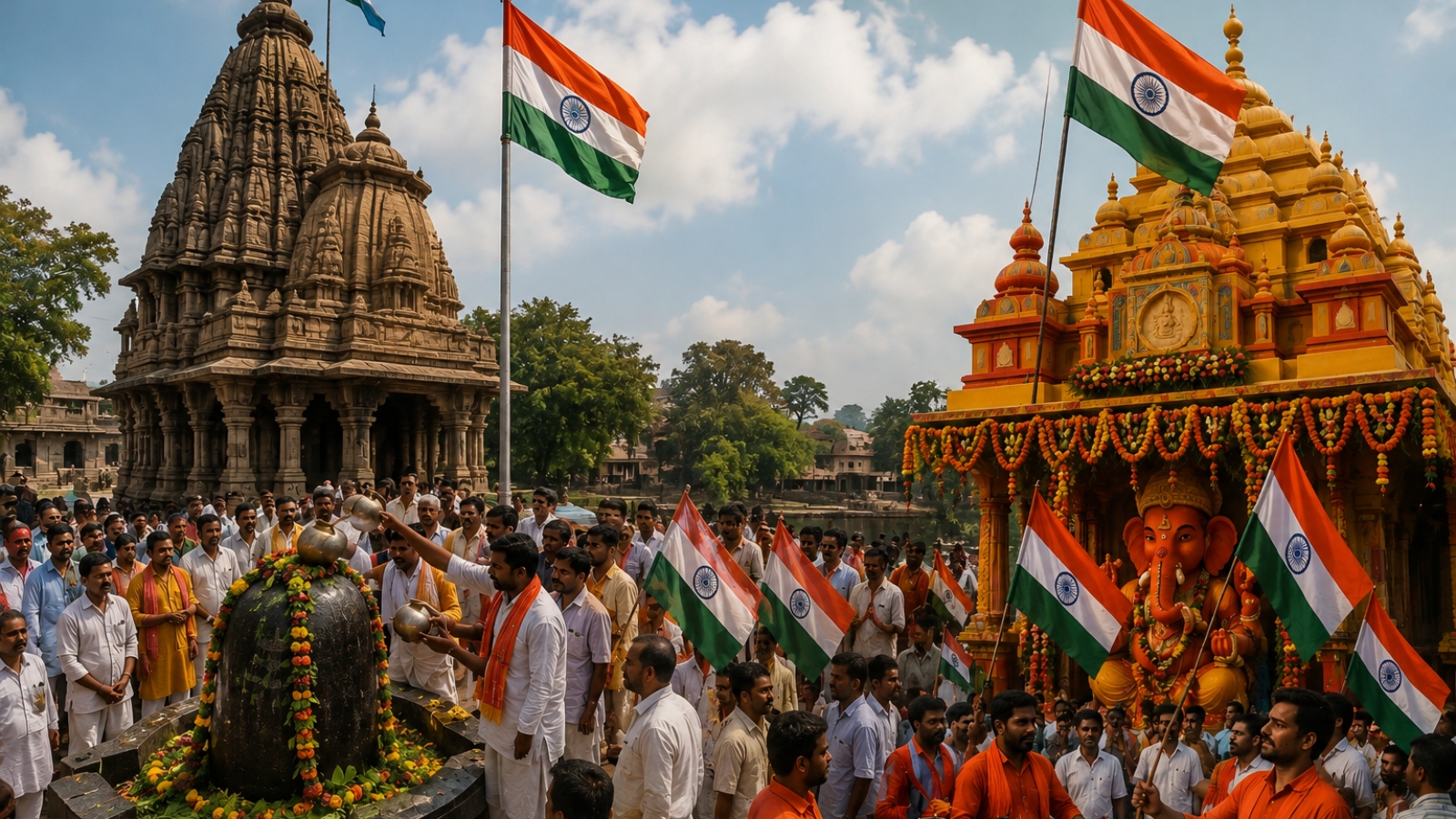
In a unique blend of faith and patriotism, the Pashupatinath Temple in Mandsaur and the Bade Ganesh Temple in Ujjain celebrated India's Independence Day on August 11, following the Hindu calendar.
Key Takeaways
- The Pashupatinath Temple (Mandsaur) and Bade Ganesh Temple (Ujjain) observed Independence Day on August 11.
- The celebration follows the Hindu calendar rather than the Gregorian calendar.
- Rituals included special prayers, flag hoisting, and a 'Tiranga Yatra' (Tricolor Procession).
As India gears up for its 80th Independence Day on August 15, two prominent religious landmarks in Madhya Pradesh observed the national festival four days ahead of schedule. The Pashupatinath Temple in Mandsaur and the Bade Ganesh Temple in Ujjain have maintained a long-standing tradition of aligning national celebrations with the Hindu lunar calendar.
The Link Between Tradition and History
The tradition is deeply rooted in the significance of August 15, 1947. However, rather than following the standard Gregorian date, these shrines celebrate based on the specific Hindu tithi. This year, the corresponding date, Shravan Krishna Chaturdashi, fell on August 11.
At the ancient Pashupatinath Temple, located on the banks of the Shivna River, devotees participated in a grand 'abhishek' of the eight-faced Shivling. Using water infused with 'durva' grass, priests chanted Vedic hymns, praying for India to emerge as a developed nation by 2047.
Why This Matters
BozokMedia analysis shows that such traditions highlight the seamless integration of religious identity and nationalistic fervor in India. In Ujjain, the Bade Ganesh Temple treats Lord Ganesh as the "God of the Republic," organizing a vibrant Tiranga Yatra accompanied by patriotic slogans and grand aartis before hoisting the tricolor on the temple's spire.
The alignment of Vedic rituals with national milestones showcases the unique cultural fabric of India where faith and patriotism coexist.
Frequently Asked Questions
1. Why is the date different for these temples?
These temples follow the Hindu calendar (Shravan Krishna Chaturdashi) to mark the occasion, which varies every year against the Gregorian calendar.
2. What special rituals were performed?
Rituals included the worship of the Shivling with durva-infused water in Mandsaur and a grand Maha Aarti for Lord Ganesh in Ujjain.