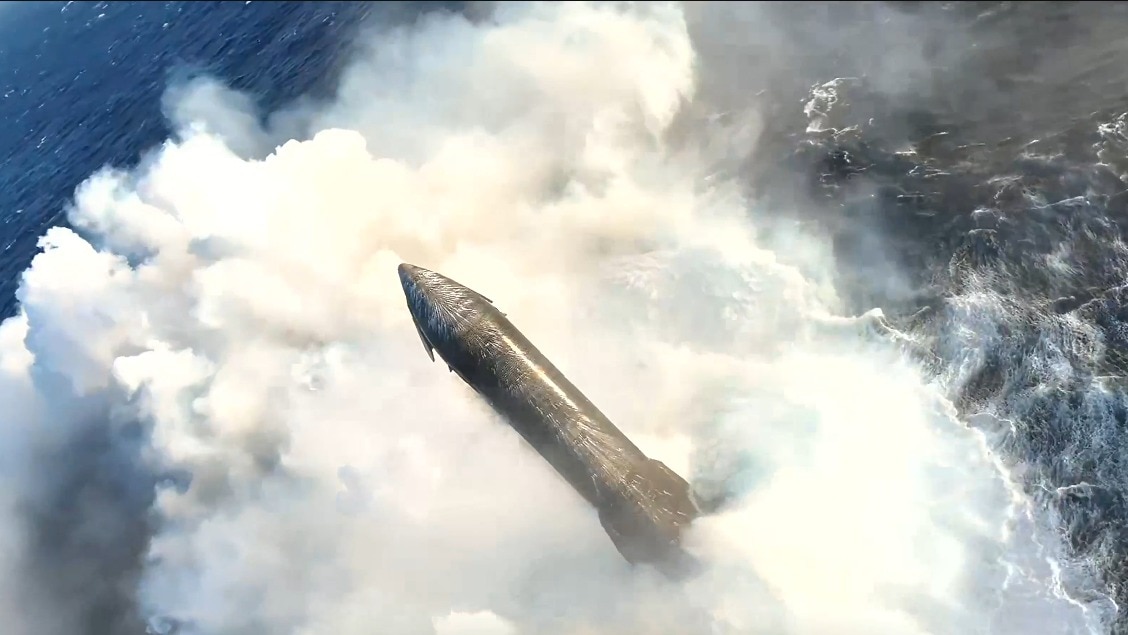
Following a previous aborted attempt, SpaceX has launched the Starship V3 megarocket from Texas, aiming for a controlled splashdown and critical testing for NASA's moon mission.
Key Takeaways
- SpaceX launched Flight 13 of the Starship V3 megarocket from Starbase, Texas.
- The mission aims for a controlled splashdown of the Starship in the Indian Ocean.
- All 33 Raptor engines on the Super Heavy booster successfully ignited.
- The flight includes testing real Starlink V3 satellites in a suborbital trajectory.
After a setback last week where several engines failed to ignite, SpaceX has once again taken to the skies from its Starbase facility in Texas. The latest test flight, designated Flight 13, represents a critical step in perfecting the Starship V3 architecture, which is central to humanity's future in deep space exploration.
The mission's technical complexity was highlighted during the 'hot staging' maneuver, where the Starship spacecraft ignited its own engines to separate from the Super Heavy booster. Unlike previous attempts, SpaceX engineers successfully managed the peak stress point, known as Max Q, by pushing the vehicle through higher dynamic pressure to test its structural integrity and fuel efficiency.
Why This Matters
BozokMedia analysis shows that the stakes for SpaceX have never been higher. As a publicly traded company, recent launch failures have impacted market confidence. Furthermore, NASA is closely monitoring these tests, as Starship is the designated vehicle for the upcoming lunar landings. Any technical gap in crew survival or landing reliability could jeopardize the entire Artemis program.
The successful ignition of all 33 Raptor engines marks a significant engineering triumph over recent hardware setbacks.
In addition to the heavy lifting, this flight serves as a high-tech laboratory. SpaceX is deploying 20 Starlink V3 satellites, which will act as flying sensors, using onboard cameras to scan the Starship's heat shield during reentry. This provides invaluable data for future reusable spacecraft designs.
Comparison: Flight Performance
| Feature | Previous Flight (May) | Current Flight (Flight 13) |
|---|---|---|
| Engine Reliability | Partial outages reported | All 33 engines lit successfully |
| Staging Precision | Unstable separation | Optimized 'Hot Staging' |
| Payload Type | Dummy Satellites | Actual Starlink V3 Satellites |
Frequently Asked Questions
1. What is 'Max Q' in rocket launches?
Max Q is the point during flight where the spacecraft experiences the maximum aerodynamic stress.
2. Why is NASA interested in Starship?
NASA plans to use Starship as the landing system to return astronauts to the lunar surface.