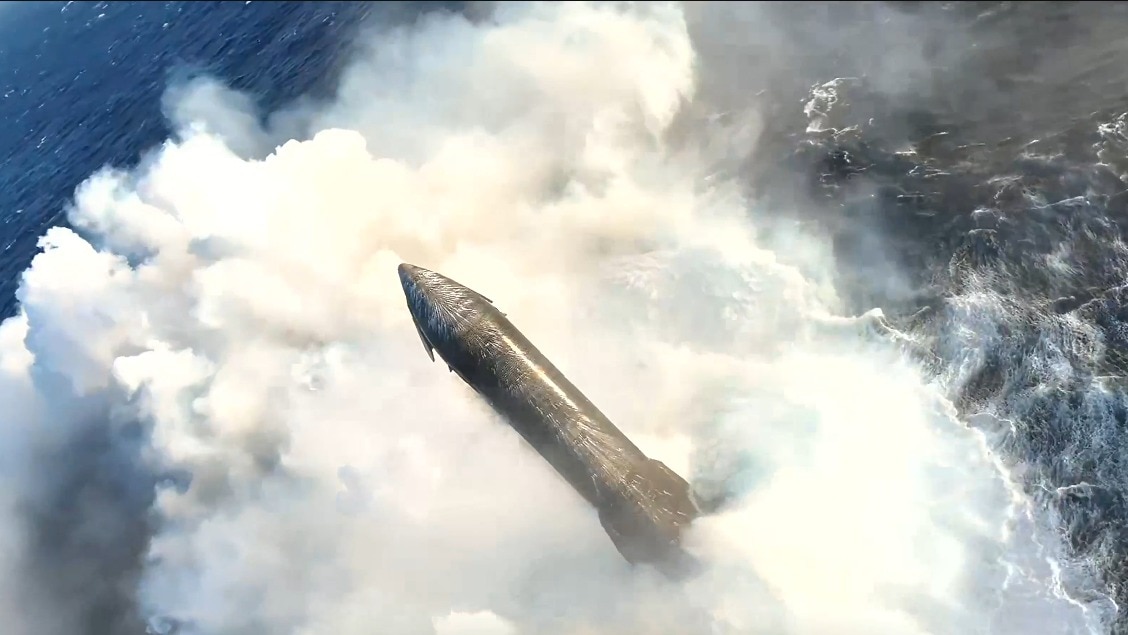
SpaceX has successfully concluded its 13th integrated Starship test mission. After launching from Texas, the spacecraft achieved a planned splashdown in the Indian Ocean following critical mission milestones.
Key Takeaways
- SpaceX successfully completed its 13th Starship integrated test flight.
- Deployed 20 next-generation Starlink Version 3 satellites.
- Achieved the longest in-space Raptor engine relight to date (14 seconds).
- Concluded with a controlled splashdown in the Indian Ocean.
In a landmark achievement for commercial spaceflight, SpaceX successfully concluded its 13th integrated Starship test mission on Saturday, July 25. The spacecraft's upper stage completed its planned suborbital trajectory and performed a controlled splashdown in the Indian Ocean, west of Australia, marking a significant step toward full reusability.
The mission, which lifted off from the Starbase facility in Boca Chica, Texas, was packed with high-stakes demonstrations. A primary highlight was the successful deployment of 20 next-generation Starlink Version 3 satellites. This marks the first time Starship has been utilized to carry these upgraded satellites, which underwent brief onboard system tests, including solar array and laser link functionality, before re-entering the atmosphere.
Why This Matters
BozokMedia analysis shows that the success of Flight 13 is a pivot point for the future of interplanetary travel. By perfecting engine relights and satellite deployment, SpaceX is systematically removing the technical barriers to low-cost, high-frequency space access. This capability is essential for supporting NASA's Artemis missions to the Moon and the long-term goal of human colonization of Mars.
The successful 14-second Raptor engine relight in space demonstrates a critical mastery of propulsion required for complex orbital maneuvers.
Beyond satellite deployment, SpaceX engineers achieved a major milestone with a 14-second in-space relight of a single Raptor engine. This represents the longest engine burn in space for the Starship program so far, proving the reliability of the propulsion system for future multi-stage orbital missions.
Historical Background
Since its inception, the Starship program has undergone rigorous testing, evolving from early explosive failures to highly sophisticated controlled maneuvers. Each flight builds on the data gathered from previous iterations, focusing on stage separation, thermal protection during re-entry, and precise landing capabilities.
Frequently Asked Questions
1. Where did the Starship splashdown occur?
The splashdown took place in a designated zone in the Indian Ocean, located west of Australia.
2. What was unique about the Starlink satellites deployed?
This mission featured the first deployment of the upgraded Starlink Version 3 satellites using the Starship vehicle.