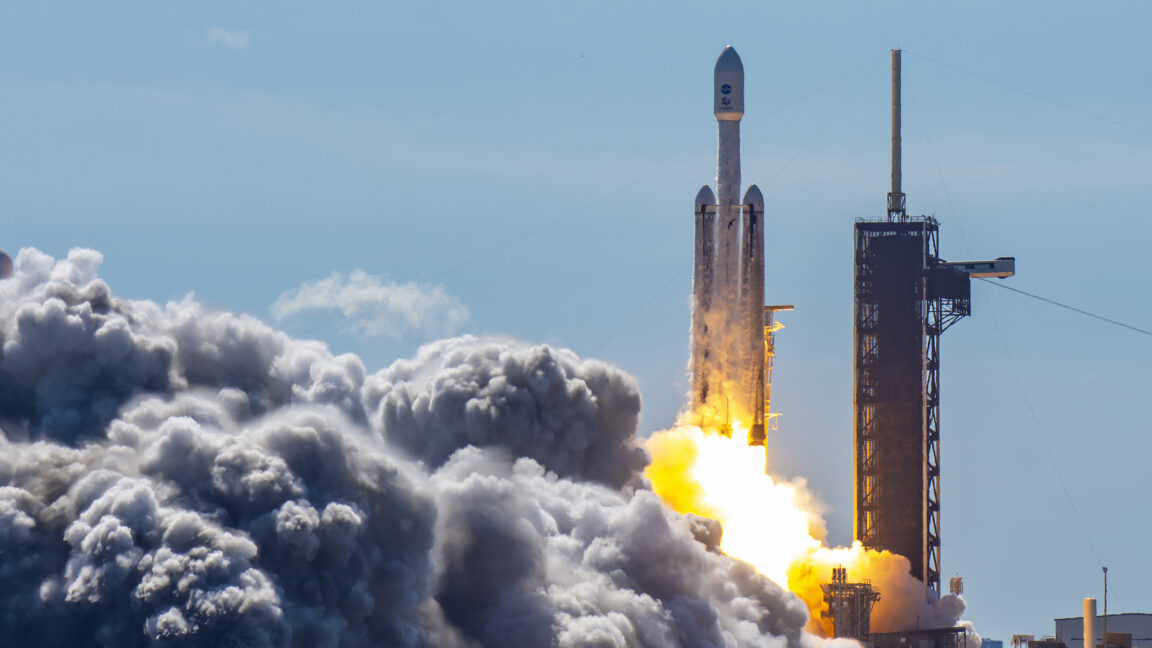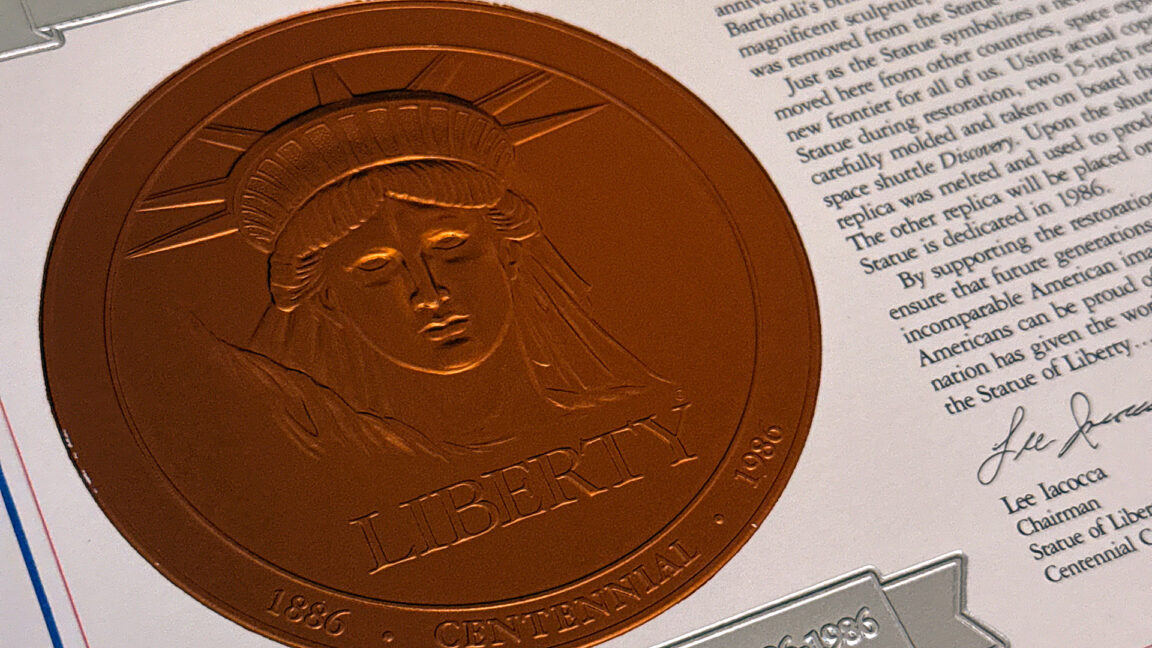
Two iconic American relics—a Revolutionary War flag and the Statue of Liberty—have both been launched into orbit. In April 1985, Space Shuttle Discovery carried two 15‑inch copper replicas, cut from the original statue during its restoration, into space.
Spaceflight history usually highlights massive rockets, scientific payloads, or human crews, but the 1985 Shuttle mission STS‑51D carved a niche of its own: two miniature Statue of Liberty models, each 15 inches (38.1 cm) tall, rode aboard Discovery into Earth orbit. Cast from copper removed during the Statue’s extensive restoration, the models were both a technical curiosity and a cultural statement.
Restoration, Copper, and the Miniature Statues
During 1984‑85 the Statue of Liberty underwent a major refurbishment. To protect the copper skin from corrosion, conservators stripped away roughly 31 tons of original metal. From this reclaimed copper, two small replicas were fashioned and loaded onto the shuttle—a symbolic gesture of preserving American heritage while pushing the frontiers of space.
Key Facts of the STS‑51D Flight
Discovery lifted off on 12 April 1985 for its fourth flight, deploying communication satellites, conducting scientific experiments, and placing the two Liberty models into orbit. The mission lasted a week, giving the statues seven days of weightlessness. After the flight, one replica was displayed publicly, while the other was melted down to produce copper seals sold by the Statue of Liberty Ellis Island Centennial Commission.
The Oldest American Object in Space?
When scholars talk about the "oldest American object," they often cite a Revolutionary‑War flag or early 20th‑century aeronautical artifacts. Yet the Liberty miniatures, launched in 1985 and still orbiting, claim the title of the oldest U.S.‑origin item ever placed in space, creating a unique intersection of science, history, and national identity.
Future Implications and Preservation
As private firms and national agencies explore placing heritage items in orbit, the 1985 Liberty experiment offers a blueprint for durable extraterrestrial monuments. It proves that historic artifacts need not be confined to terrestrial museums; with proper engineering and legal frameworks, they can become part of humanity’s permanent space legacy.
In short, this quirky mission stands as both a milestone in spaceflight and a bold statement of American cultural pride, propelling a symbol of freedom beyond the atmosphere.