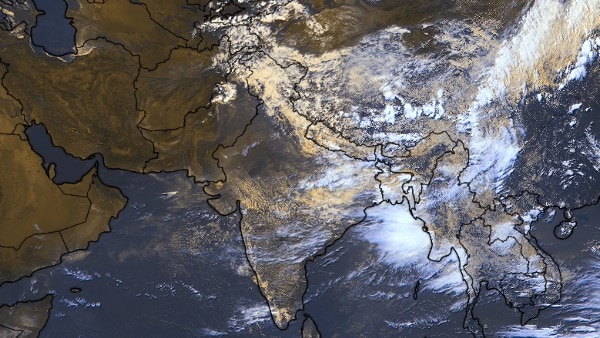
Satellite images captured on July 11 reveal that roughly 70‑80% of India is devoid of rain‑bearing clouds, sparking worries about the 2026 monsoon's strength. Experts point to a powerful tropical cyclone in the western Pacific as the likely disruptor.
मुख्य बिंदु (Key Takeaways)
- Satellite imagery shows minimal cloud cover over 70% of India
- A western Pacific cyclone is diverting moisture, weakening the monsoon trough
- IMD forecasts reduced rainfall and higher daytime temperatures for the coming days
On July 11, 2026, satellite snapshots displayed an unprecedented lack of rain‑bearing clouds across about seventy to eighty percent of the Indian subcontinent. This anomaly arrived just days after the southwest monsoon had seemingly blanket‑covered the nation, leaving both meteorologists and the public perplexed.
How the Monsoon Works
The southwest monsoon relies on moisture‑laden winds from the Indian Ocean and a low‑pressure belt known as the monsoon trough to deliver widespread precipitation. When the trough weakens, the entire rain‑bringing mechanism falters. Currently, a powerful tropical cyclone forming over the western Pacific is siphoning off this moisture and altering atmospheric circulation patterns.
Impact of the Pacific Cyclone
The cyclone’s presence not only deprives India of essential humidity but also disrupts the broader circulation that sustains the monsoon. Consequently, large swathes of central and peninsular India are experiencing a sharp decline in rainfall, even as isolated showers continue in parts of the west and east.
2026 Monsoon Outlook
While the monsoon reached its full geographic extent by July 9—only a day later than the climatological norm—its progress has been anything but smooth. June ended with a national rainfall deficit of nearly 40%, one of the weakest starts in recent memory. Heavy downpours in the final days of June and early July narrowed this shortfall to about 14%, yet the distribution remains highly uneven.
Role of El Niño
Compounding the situation is a developing El Niño in the equatorial Pacific, a phenomenon known to weaken the Indian monsoon and elevate daytime temperatures. The India Meteorological Department (IMD) projects that July’s rainfall will stay below the long‑term average, with monthly totals likely to remain under 94% of normal.
In essence, the monsoon has not vanished; it is merely in a temporary weak phase. Its recovery will depend on how swiftly the Pacific weather system weakens and the monsoon circulation over the subcontinent re‑establishes itself.