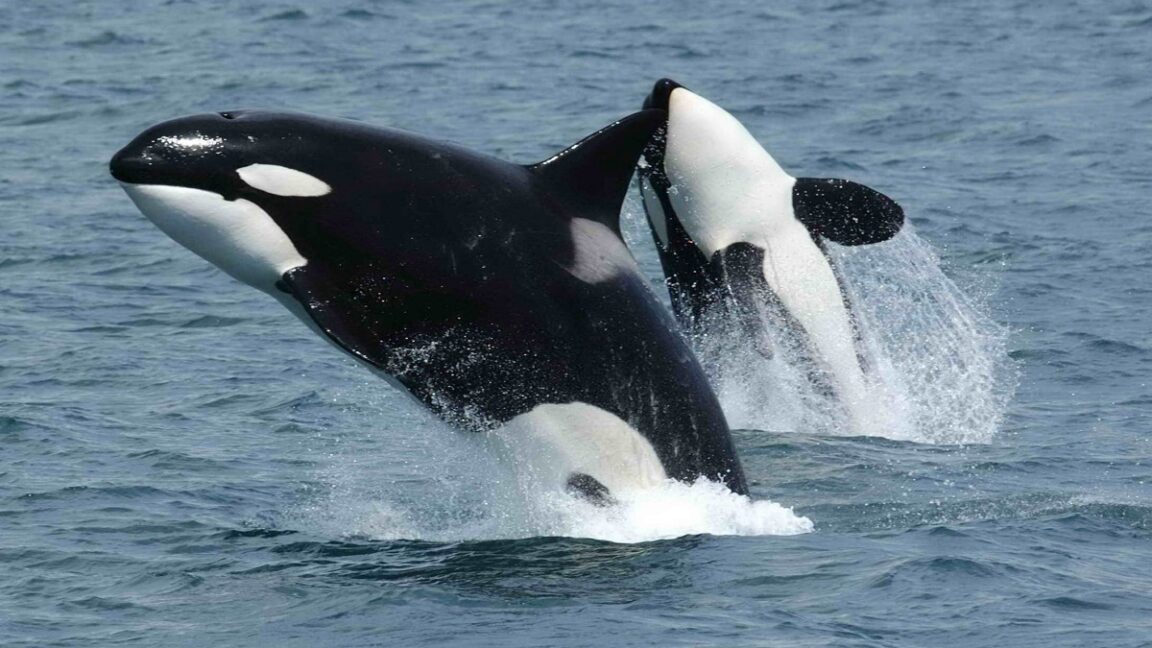
In the Gulf of California, orcas were filmed colluding to ram sunfish with such force that the carcasses shattered into fragments. Scientists suggest the behavior may help juveniles feed or simply serve as play.
Key Takeaways
- Orcas coordinated to ram sunfish, causing bodies to explode into fragments.
- The behavior could aid juvenile feeding or be a form of play.
- New research adds depth to our understanding of orca social learning.
Footage captured in the Gulf of California shows a pod of orcas (Orcinus orca) striking a sunfish with such intensity that the animal’s carcass burst into small pieces. The incident is documented in a recent paper published in Frontiers in Ethology, with co‑author Kathryn Ayres of Beneath The Waves noting that the act may either facilitate feeding for younger whales or simply be a playful exercise.
Orcas have a long‑recorded history of ramming vessels and even sinking them, a behavior many scientists view as culturally transmitted across generations. This latest event expands the repertoire, demonstrating that orcas can use coordinated force not just to extract flesh but to create a dramatic, explosive outcome.
Historical Background
Known as “killer whales,” orcas are apex predators with sophisticated social structures. Over the past decades, researchers have observed them using cooperative hunting tactics—boxing whale sharks, herding rays, and even generating waves to dislodge penguins from ice floes. Such tactics are often interpreted as a blend of hunting, social interaction, and play, indicating a high level of cognitive flexibility.
Why This Matters
BozokMedia analysis shows that these socially driven actions influence marine ecosystem dynamics by teaching younger whales effective hunting techniques, thereby enhancing survival rates and maintaining ecological balance.
Understanding the nuance of such behavior also informs conservation strategies, highlighting how human activities might intersect with orca play zones and potentially mitigate conflict.
"Orca cooperative hunting showcases complex social cognition, akin to human play."
Frequently Asked Questions
Q: Is this explosive ramming behavior common across all orca pods?
A: No, variations exist; some pods display more aggressive play, while others rarely engage in such acts.
Q: Could this behavior impact the sunfish population?
A: While isolated incidents are unlikely to threaten sunfish numbers, repeated predation can affect local food‑web dynamics.