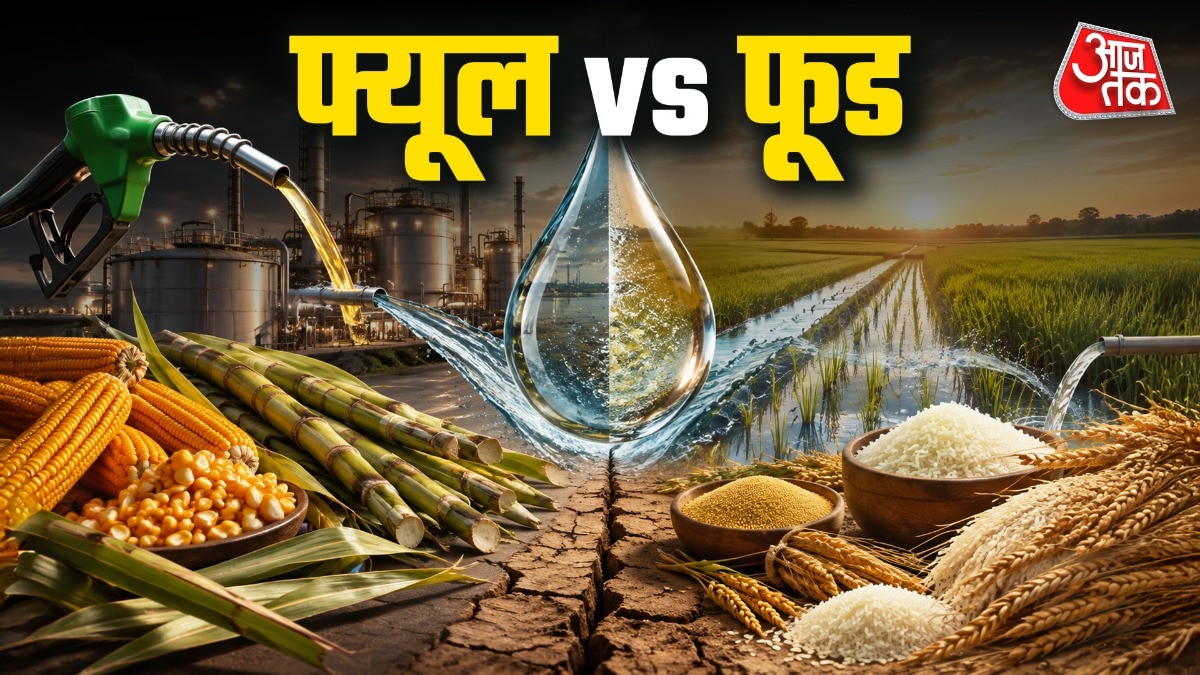
As India pushes beyond E20 ethanol blending, concerns are mounting over the 'Food vs Fuel' conflict. The rising demand for corn and sugarcane threatens to inflate food prices and deplete critical water resources.
- India has achieved the E20 blending target (20% ethanol) and is eyeing E27 and E30.
- Increased reliance on corn and sugarcane for fuel could lead to severe food price hikes.
- The dual pressure of crop irrigation and industrial processing poses a significant threat to water tables.
India's aggressive pursuit of energy independence has led to the successful implementation of E20 petrol, where 20% of the fuel is derived from ethanol. While the government is now discussing further increments to E27 or E30, the conversation is shifting from automotive engineering to agricultural sustainability. The core of the issue lies in the raw materials required to sustain this hunger for ethanol: corn and sugarcane.
The transition to higher blending levels creates a direct competition between the fuel tank and the dinner plate. Corn is a versatile crop used for human consumption and as a primary component of livestock feed. As a larger share of corn is diverted toward ethanol distilleries, the availability of feed for poultry and dairy sectors drops, potentially triggering a domino effect of price increases across the protein supply chain.
Why This Matters
BozokMedia analysis shows that while reducing dependence on imported crude oil is a strategic masterstroke for the national exchequer, it must not come at the cost of nutritional security. If the agricultural land is pivoted solely toward energy crops, India risks creating an artificial scarcity of staples, making the economy vulnerable to food inflation and compromising the dietary needs of its massive population.
"Energy security cannot be pursued in isolation; it must be integrated with water and food security to avoid a systemic ecological collapse."
Sugarcane, the other primary feedstock, presents a similar dilemma. Since sugarcane is the source for both sugar and ethanol, a shift in priority toward fuel could destabilize the sugar market. Moreover, the environmental footprint of ethanol is substantial. Sugarcane is a water-intensive crop, and the distillation process itself requires vast amounts of water.
In states like Maharashtra and Karnataka, where sugarcane cultivation is dominant, the pressure on groundwater is already critical. An increase in ethanol production targets will necessitate more irrigation, further depleting aquifers in regions already battling drought and water scarcity.
| Factor | Benefits of Blending | Potential Risks |
|---|---|---|
| Economic | Lower Crude Oil Imports | Higher Food Inflation |
| Farmers | New Market for Crops | Soil and Water Degradation |
| Environment | Reduced Carbon Emissions | Groundwater Depletion |
Frequently Asked Questions
Q1: What is E20 Petrol?
A: E20 petrol is a blend of 20% ethanol and 80% gasoline, designed to reduce carbon emissions and oil imports.
Q2: How does ethanol cause a food crisis?
A: When crops like corn are used for fuel instead of food, the supply of these staples decreases, leading to higher prices and potential shortages in the food market.