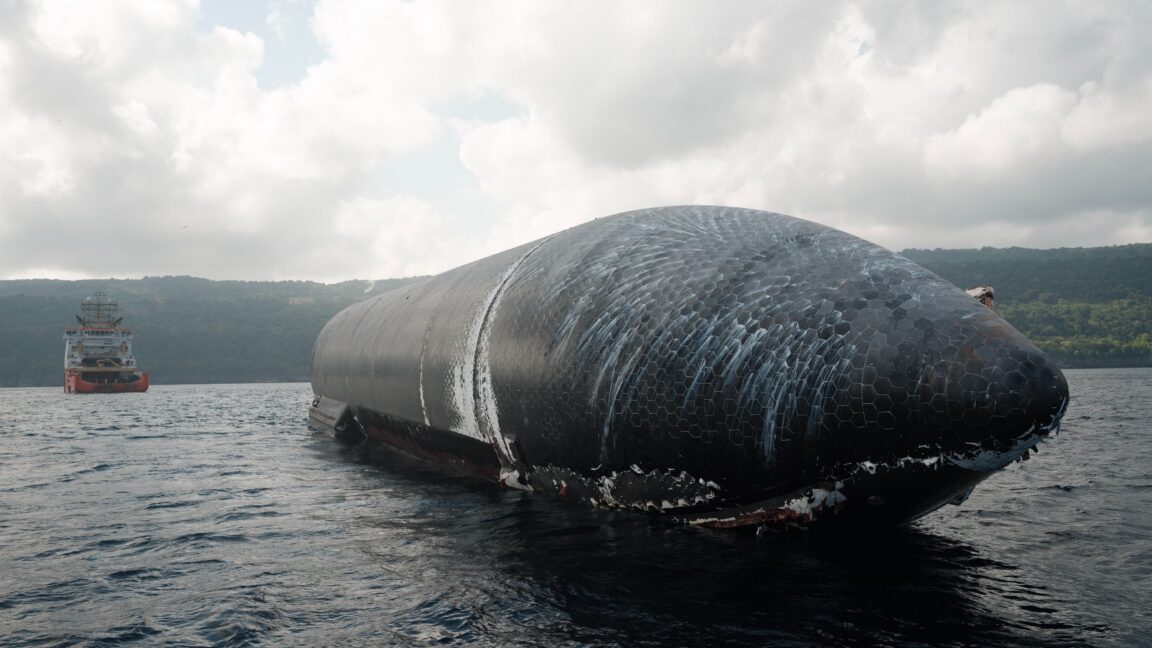
In a historic feat, SpaceX's Starship spacecraft has been successfully brought into port after spending 24 days at sea. Unlike previous tests, the vehicle remained intact following its splashdown.
- Starship completed its journey from South Texas to the Indian Ocean.
- The spacecraft remained intact, defying previous disintegration patterns.
- Engineers are conducting deep-dive analysis on heat shield performance.
The mission of SpaceX's most ambitious spacecraft, Starship, has entered a critical new phase. After a grueling 24 days at sea, the vessel has finally been towed into port. This follows a spectacular flight path that saw the spacecraft travel halfway around the globe from its launch site in South Texas to a splashdown in the Indian Ocean.
Defying the Odds of Disintegration
Historically, Starship test flights have concluded with the vehicle toppling over and undergoing fiery disintegration upon impact with the water. Engineers had prepared for a similar outcome during this most recent mission. However, in a move that stunned both the industry and SpaceX officials, the Starship remained completely intact after its splashdown.
The data gathered during this event is unprecedented. A sophisticated network of onboard sensors, high-definition cameras, sea buoys, and aerial drones provided a real-time look at how the vehicle handled the extreme stresses of reentry and water impact. This data is vital for assessing the durability of the thermal protection system.
Why This Matters
BozokMedia analysis shows that the survival of the Starship structure is a massive leap toward reusable rocket technology. If SpaceX can consistently recover intact spacecraft, the economic model of space exploration will shift from 'disposable' to 'sustainable' almost overnight.
The integrity of the Starship post-splashdown marks a fundamental shift in our ability to master atmospheric reentry.
A specialized team of SpaceX engineers is currently en route to the site to perform a comprehensive forensic analysis of the vehicle. They will specifically focus on the heat shield's condition and the structural integrity of the hull after prolonged exposure to the marine environment.
Frequently Asked Questions
Question 1: Where did the Starship splashdown occur?
Answer: The Starship successfully splashed down in the Indian Ocean.
Question 2: Why was the ship's survival surprising?
Answer: Previous tests resulted in the ship burning up or breaking apart upon hitting the water.