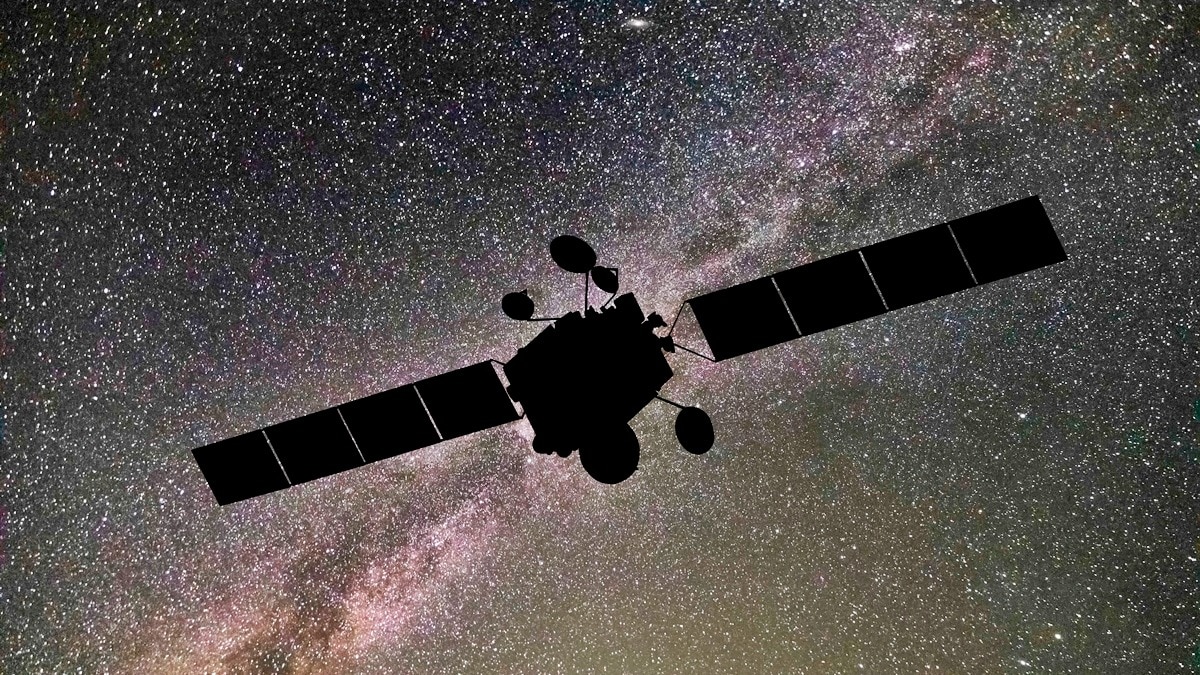
A growing number of satellites in Earth's orbit is creating bright streaks across telescope images, threatening to blind astronomers to the secrets of the cosmos.
- There are currently approximately 15,000 satellites orbiting Earth.
- Massive constellations like SpaceX's Starlink are causing 'photobombing' in astronomical images.
- A study by the European Southern Observatory (ESO) warns of significant data loss.
- If satellite numbers reach 300,000, some telescopes could lose most of their usable data.
The race to dominate low-Earth orbit is creating an unforeseen crisis for science. As satellite constellations expand to provide global internet coverage, the very stars that have guided humanity for millennia are becoming harder to see. A recent study by the European Southern Observatory (ESO) has sounded the alarm, warning that the proliferation of satellites could fundamentally alter our ability to study the cosmos.
The Threat of Satellite 'Photobombing'
The issue extends far beyond simple visual interference. When a satellite passes through the field of view of a powerful telescope, it leaves behind a bright, streaking line of light. ESO astronomer Olivier Hainaut explained that while a single streak might seem like a minor nuisance, the cumulative effect of thousands of satellites creates massive disruptions in astronomical data collection.
Why This Matters
BozokMedia analysis shows that this is not merely an aesthetic concern but a critical scientific bottleneck. Astronomers rely on ground-based observatories to study distant galaxies, exploding supernovae, and potentially hazardous asteroids. If these observations are interrupted by satellite trails, we risk losing irreplaceable data from cosmic events that occur only once in a lifetime.
"A single streak of light may be a minor nuisance, but when the numbers multiply there can be major problems," says Olivier Hainaut.
Using simulations based on the Very Large Telescope (VLT) in Chile's Atacama Desert, researchers modeled various scenarios. The findings were stark: while 100,000 satellites might represent a "bearable" level of interference, reaching 300,000 satellites could result in the catastrophic loss of most observational data. Specifically, large constellations like SpaceX's Starlink could cause field-of-view losses of up to 28% for sensitive instruments.
| Number of Satellites | Impact on Astronomy |
|---|---|
| ~15,000 (Current) | Minimal Interference |
| 100,000 | Manageable/Bearable |
| 300,000+ | Severe/Critical Data Loss |
Furthermore, the problem is compounded by light pollution. Reflected sunlight from these metallic objects scatters through Earth's atmosphere, brightening the overall night sky. This increased 'sky glow' makes it significantly harder to detect faint, distant objects that are crucial for understanding the evolution of the universe.
Frequently Asked Questions
Question 1: Is the scientific community against satellite internet?
No, the ESO study does not argue against the benefits of satellite connectivity; rather, it calls for a technological balance that preserves scientific research capabilities.
Question 2: Can we mitigate this effect?
Potential solutions include keeping the total number of satellites below 100,000 and designing them to be significantly dimmer to avoid reflecting sunlight toward Earth.