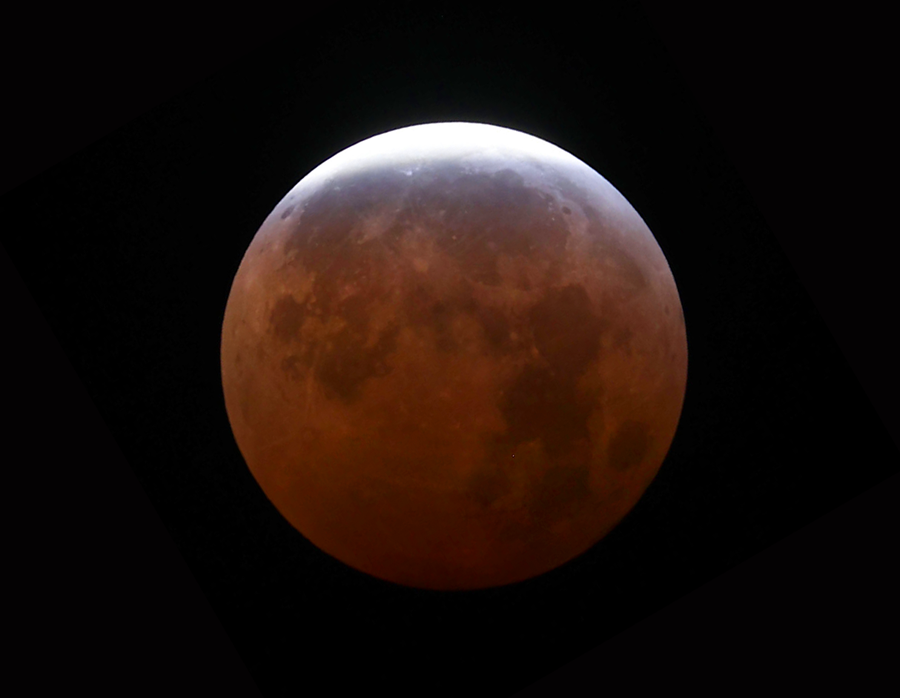
A spectacular deep partial lunar eclipse is approaching on the night of August 27-28, 2026. This celestial event will see 96% of the moon obscured by Earth's shadow.
- A deep partial lunar eclipse will occur on August 27–28, 2026.
- 96% of the Moon's surface will be obscured by Earth's umbra.
- Visible across the Americas, Africa, Europe, and Western Asia.
The cosmic calendar is heating up as we approach the end of August. Following a series of major celestial events, a deep partial lunar eclipse is scheduled to take place on the night of August 27–28, 2026. This event marks a near-perfect alignment of the Sun, Earth, and Moon, a celestial trinity that allows the Moon to slip into the Earth's dark central shadow, known as the umbra.
The Science of the Crimson Glow
During the maximum phase of the eclipse, the Moon will not appear completely dark but will instead glow with the hues of a smoldering sunset. This phenomenon occurs because Earth's atmosphere refracts sunlight, bending the light around the edges of our planet. The atmosphere filters out most colors, leaving behind the long-wavelength red and orange light that bathes the lunar surface.
Interestingly, observers might also notice a subtle, pale turquoise band between the bright penumbral sliver and the reddened disk. This unique hue is caused by sunlight being filtered through the Earth's stratospheric ozone layer, which absorbs red light and allows shorter wavelengths to pass through.
At its peak, the eclipse will feature an obscuration of 96%, making it look strikingly similar to a total lunar eclipse for many observers.
Why This Matters
BozokMedia analysis shows that such high-magnitude eclipses are rare opportunities for both professional astronomers and amateur astrophotographers. The ability to capture the interaction between Earth's atmospheric chemistry and lunar light provides invaluable data regarding our planet's atmospheric composition.
Historical Context: From Omens to Observation
Throughout human history, eclipses have been viewed through a lens of superstition. The ancient Babylonians, while masters of predicting these events, believed a lunar eclipse could signal the death of a king. To protect their monarchs, they famously employed a 'substitute king'—a commoner dressed in royal regalia who would hold the throne temporarily to absorb the 'bad luck' before being ritually removed. Today, we trade superstition for telescopes, viewing these events as magnificent displays of orbital mechanics.
| Metric | Value/Description |
|---|---|
| Magnitude (Diameter Covered) | 0.93 (93%) |
| Obscuration (Area Covered) | 96% |
| Primary Colors | Deep Red, Orange, Turquoise |
| Primary Visibility | Americas, Africa, Europe, Western Asia |
Frequently Asked Questions
Question 1: Do I need special equipment to view this?
Answer: No, a lunar eclipse is perfectly safe to view with the naked eye. However, binoculars or a telescope will enhance the experience.
Question 2: Where is the best place to see it?
Answer: The Americas will have an excellent view, while in Europe and Africa, the event will be visible during the early morning hours of August 28th.