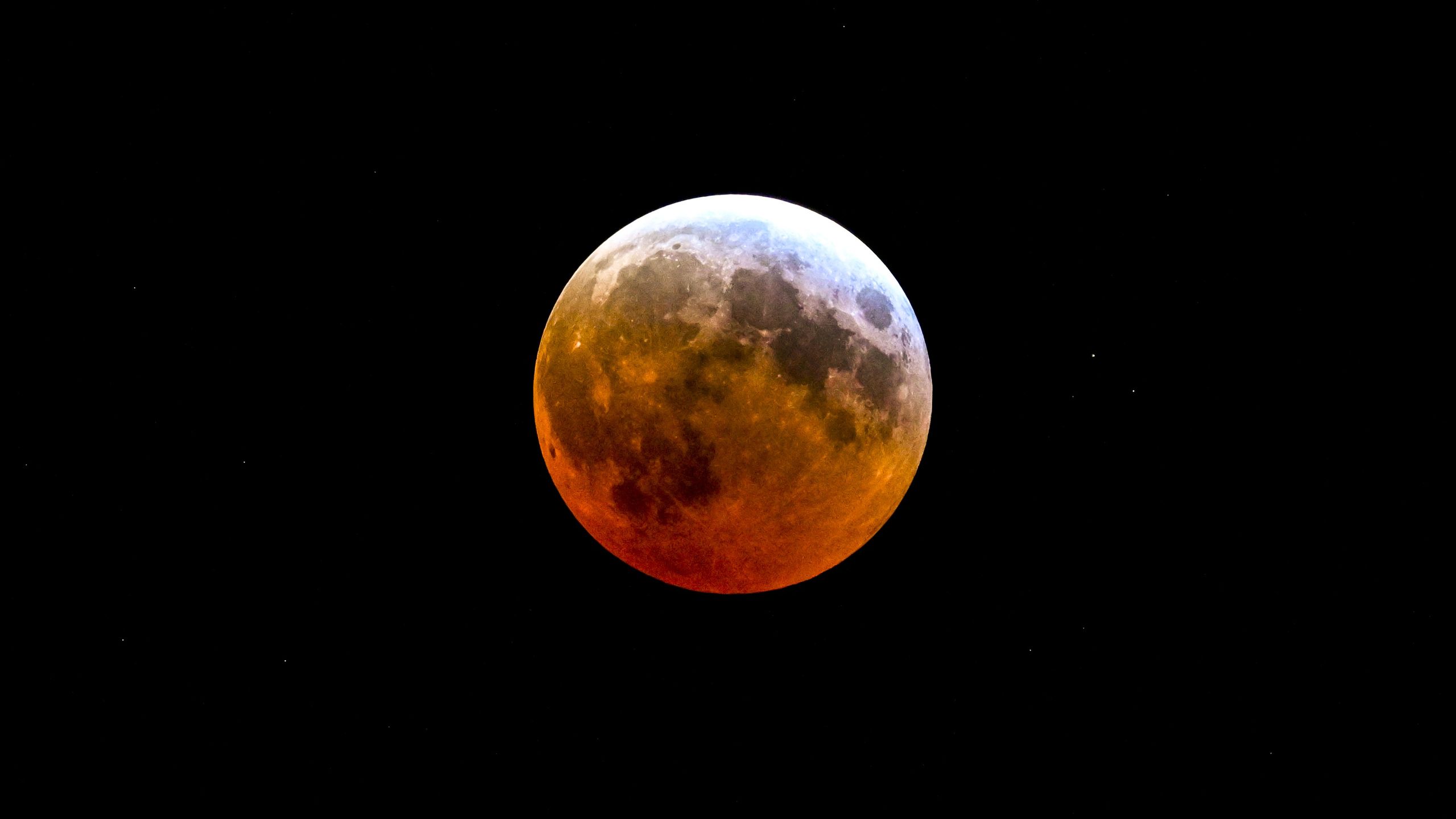
On August 27-28, 2026, Earth's shadow will cover 96% of the moon, creating a stunning crimson spectacle visible across much of the Americas, Europe, and Africa.
- The partial lunar eclipse will occur on the night of August 27-28, 2026.
- Earth's shadow will engulf approximately 96% of the lunar surface.
- Visible to 3.3 billion people in the Americas, Europe, and Africa.
- Not visible from India, Australia, China, or Japan.
Prepare your stargazing gear! On the night of August 27-28, 2026, a spectacular partial lunar eclipse will grace the night sky. As Earth passes directly between the Sun and the Moon, its curved shadow will creep across the lunar landscape, swallowing nearly 96% of the moon's surface. This celestial dance is expected to turn the Moon a breathtaking shade of deep crimson, a phenomenon caused by sunlight filtering through Earth's atmosphere.
The Science Behind the Shadow
A lunar eclipse occurs during the Full Moon phase when the Earth aligns perfectly between the Sun and the Moon. During this specific event in August 2026, the Earth's inner shadow (the umbra) will cover almost the entire lunar disk. The remaining small sliver of the Moon exposed to direct sunlight will create a striking visual contrast against the darkened, reddish surface.
Why This Matters
BozokMedia analysis shows that such high-magnitude partial eclipses are rare opportunities for amateur astronomers to witness the interplay of light and shadow on a planetary scale. The 'blood moon' effect provides a visual representation of Earth's atmospheric composition and its ability to refract light.
The crimson hue of a lunar eclipse is a beautiful reminder of Earth's atmosphere acting as a lens for sunlight.
Global Visibility: Where to Watch?
Visibility depends entirely on your location on Earth. The event will be accessible to roughly 3.3 billion people across specific continents.
- The Americas: Stargazers on the West Coast (Los Angeles, Portland) will see the peak shortly after sunset. On the East Coast (New York, Jacksonville), the spectacle will reach its maximum around midnight.
- Europe and Africa: For these regions, the eclipse will be an early morning event, visible just before sunrise as the Moon sits low on the western horizon.
Unfortunately, for those in India, Australia, China, and Japan, the Moon will be below the horizon during the eclipse, making it impossible to witness the event from these locations.
Historical Context & Viewing Tips
While lunar eclipses are periodic, the depth of this partial eclipse makes it a standout event for the decade. Unlike solar eclipses, lunar eclipses are perfectly safe to view with the naked eye. While not required, using binoculars or a telescope can significantly enhance the experience by revealing the craters of the Moon as the shadow traverses them.
Frequently Asked Questions
Question 1: Do I need special equipment to see the eclipse?
Answer: No, it is safe to view with the naked eye, though binoculars or a telescope will provide a much more detailed view.
Question 2: Why does the moon turn red?
Answer: The red color is caused by Earth's atmosphere scattering sunlight and refracting the red wavelengths toward the Moon.