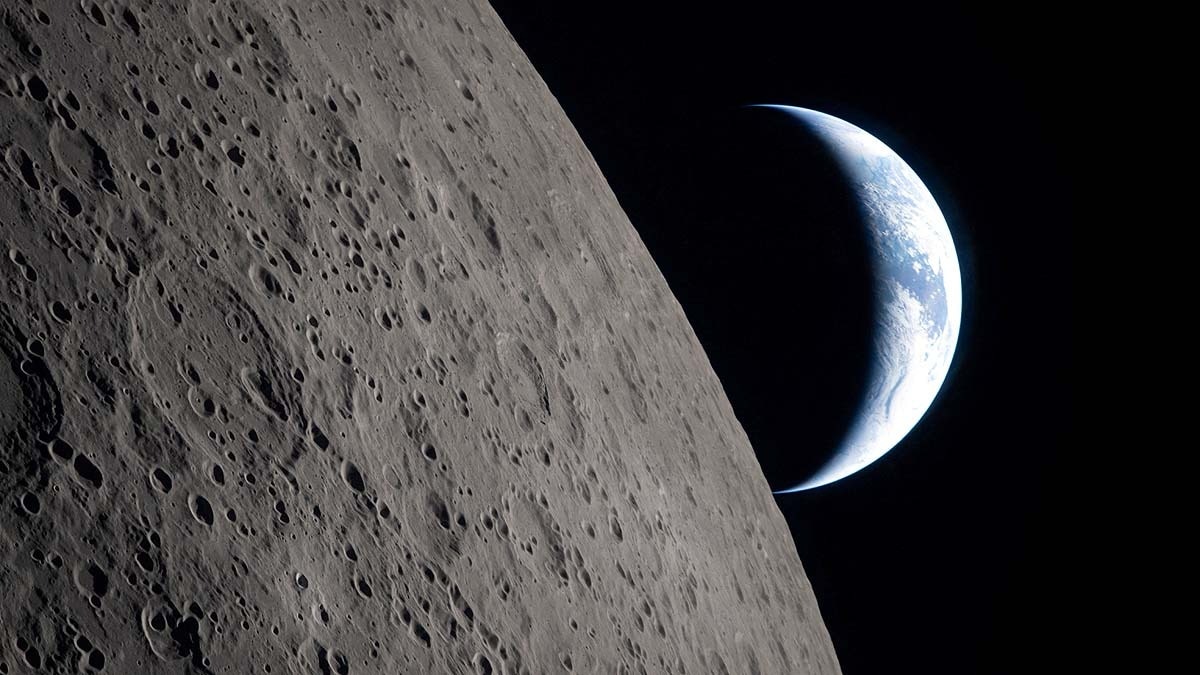
A partial lunar eclipse is set to grace the night sky on August 27-28. Discover where it will be visible and how this celestial alignment creates a stunning visual spectacle.
- Partial Lunar Eclipse occurring on August 27-28.
- Prime visibility for observers in the UK, Europe, and parts of the US.
- No special equipment is needed for safe viewing.
The celestial calendar is marking a significant event as a Partial Lunar Eclipse approaches on August 27-28. Unlike a total eclipse, a partial lunar eclipse occurs when only a portion of the Moon enters the Earth's darkest shadow, known as the umbra, creating a distinct 'bite' out of the lunar disk.
Early risers in the United Kingdom and Europe are expected to have the best vantage points for this event. Meanwhile, observers in the United States may experience a subtle shift in lunar hue, occasionally referred to as a 'Blood Moon' effect, depending on atmospheric conditions and dust particles in the Earth's stratosphere.
Why This Matters
BozokMedia analysis shows that these events drive a massive spike in global interest toward STEM education. By observing the precise timing and movement of the Moon, amateur astronomers can better understand the orbital mechanics of our solar system.
"Lunar eclipses are a gift to the public because they allow everyone to witness the scale of planetary shadows without any risk to their eyesight."
Historical Background
Historically, lunar eclipses were viewed with superstition and fear across various cultures. However, since the era of Aristotle, the scientific community has understood these as predictable alignments. Looking forward to the August 2026 events, this partial eclipse serves as a precursor to more dramatic total eclipses in the coming years.
| Feature | Total Lunar Eclipse | Partial Lunar Eclipse |
|---|---|---|
| Shadow Coverage | Entire Moon in Umbra | Fraction of Moon in Umbra |
| Visual Appearance | Deep Red/Copper | Partial Dark Disk |
Frequently Asked Questions
Q1: Do I need special glasses to watch the lunar eclipse?
No, unlike solar eclipses, lunar eclipses are perfectly safe to view with the naked eye.
Q2: Where is the best place to watch the livestream?
Major astronomical organizations and platforms like Mashable often provide high-definition livestreams for those in non-visible zones.