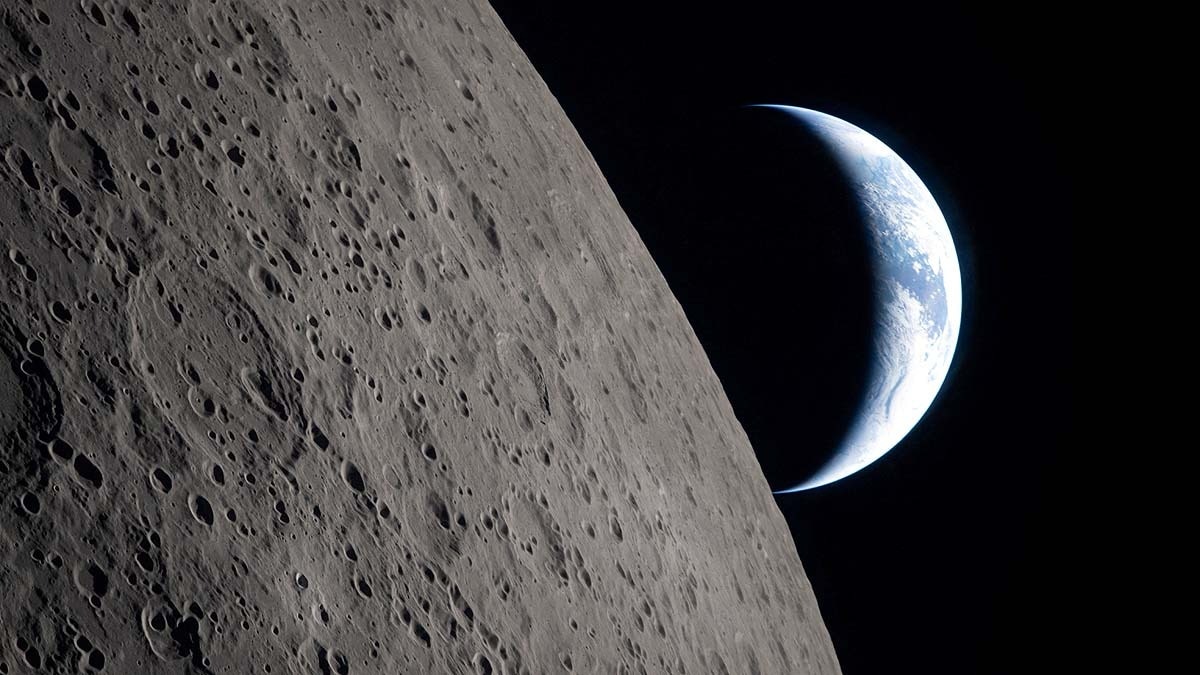
NASA is preparing to launch the Nancy Grace Roman Space Telescope, a revolutionary observatory designed to detect up to 100,000 new worlds and solve deep cosmic mysteries.
- Nancy Grace Roman Space Telescope will launch on August 30.
- Capable of detecting ~100,000 new exoplanets.
- Field of view is 100 times larger than the Hubble Space Telescope.
NASA is on the verge of a paradigm shift in astronomy with the upcoming launch of the Nancy Grace Roman Space Telescope. Scheduled for launch on August 30, this sophisticated instrument is not merely an addition to the current fleet of observatories but a massive leap in our capacity to map the unknown reaches of the universe.
The Roman telescope is specifically engineered to address the limitations of its predecessors. While the Hubble Space Telescope provided breathtaking, narrow-field imagery, the Roman telescope utilizes a wide-field instrument that can capture 100 times more of the sky in a single shot. This allows scientists to conduct large-scale surveys of the cosmos with unprecedented speed and precision.
Why This Matters
BozokMedia analysis shows that the Roman telescope's ability to identify nearly 100,000 new worlds—surpassing the combined discoveries of all previous planet-hunting missions—will fundamentally alter our understanding of planetary formation and the prevalence of Earth-like planets in the galaxy. This mission bridges the gap between the deep-dive capabilities of James Webb and the broad-survey needs of modern astrophysics.
"The Roman Space Telescope represents the next frontier in cosmic cartography, turning the 'needle in a haystack' search for exoplanets into a systematic census."
Beyond planet hunting, the telescope is tasked with investigating the nature of Dark Energy and Dark Matter. By observing how the universe expands and how galaxies cluster over billions of years, NASA hopes to unlock the secrets of the invisible forces that govern 95% of the universe's composition.
Historically, the search for exoplanets relied heavily on the Kepler and TESS missions. While successful, these missions focused on specific sectors or used different detection methods. The Roman telescope will employ gravitational microlensing, a technique that detects planets by observing how their gravity bends light from a distant star, allowing it to find planets further from their host stars.
| Feature | Hubble Space Telescope | Roman Space Telescope |
|---|---|---|
| Field of View | Narrow/Deep | 100x Wider |
| Primary Goal | General Astrophysics | Exoplanets & Dark Energy |
| Discovery Potential | Targeted | Massive Survey (100k worlds) |
Frequently Asked Questions
Q: How does Roman differ from the James Webb Space Telescope?
A: While Webb looks deeply at a very small area of the sky, Roman looks broadly at a massive area, acting as a 'wide-angle lens' for the universe.
Q: When will the first data be available?
A: Following the August 30 launch and calibration phase, data will be released to the global scientific community in stages.