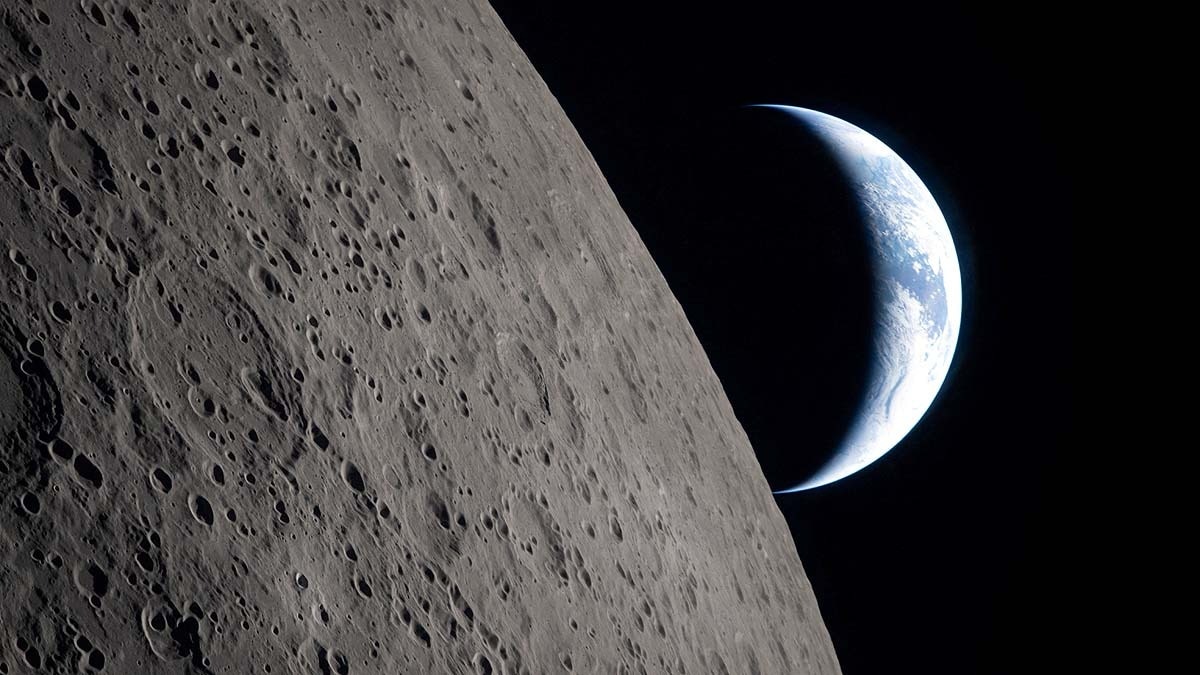
A groundbreaking NASA study reveals that certain Earth-based microbes, particularly fungi, can survive the harsh lunar environment for weeks or months. This discovery raises critical concerns regarding biological contamination for future lunar missions.
- Certain Earth microbes can withstand the extreme conditions of the lunar South Pole.
- Aspergillus niger (black mold) emerged as the most resilient organism in the study.
- The findings highlight a significant risk of forward-contamination for the Artemis missions.
The lunar surface has long been considered a biological wasteland, characterized by a lack of atmosphere, extreme temperature fluctuations, and intense solar radiation. However, a new study by NASA has challenged this notion, demonstrating that specific terrestrial microbes can persist on the Moon's surface for surprisingly long durations.
The research focused on three specific regions of the lunar South Pole: the Nobel Rim, Connecting Ridge, and Day Gerlesh Rim. By utilizing data from the Lunar Reconnaissance Orbiter (LRO) and radiation models, scientists tested five types of microbes—two fungi and three bacteria—using advanced computer simulations to predict their survival rates.
The Battle of Resilience: Fungi vs. Bacteria
The results indicated that fungi are significantly more robust than bacteria in lunar conditions. Aspergillus niger, commonly known as black mold, proved to be the most resilient. This organism is already known to have survived within the International Space Station (ISS). Fusarium, a soil-dwelling fungus, also showed high resilience, though less than Aspergillus.
| Microbe Type | Species | Resilience Level |
|---|---|---|
| Fungus | Aspergillus niger | Extremely High (Most Robust) |
| Fungus | Fusarium | High |
| Bacteria | Deinococcus radiodurans | Moderate to High |
| Bacteria | Bacillus subtilis | Low (UV Sensitive) |
Why This Matters
BozokMedia analysis shows that this discovery introduces a complex ethical and scientific dilemma for the Artemis missions. As humans return to the lunar South Pole, they will inevitably carry Earth-born microbes via spacesuits and equipment. If these microbes survive, future discoveries of organic matter or life-forms in lunar ice could be misleading—scientists may struggle to distinguish between indigenous lunar life and terrestrial "hitchhikers."
"Preventing biological contamination is no longer optional; it is a prerequisite for the scientific integrity of future lunar exploration."
It is crucial to note that 'survival' does not equal 'growth.' The study focused on how long a microbe can stay alive, not whether it can reproduce or form colonies. However, the researchers noted that if microbes are buried beneath the lunar regolith (soil), they would be shielded from UV radiation, potentially extending their survival time even further.
Frequently Asked Questions
Q1: Does this mean the Moon is now inhabited by Earth life?
No, the study suggests that microbes could survive if transported there, not that they have already established a colony.
Q2: Which microbe was the toughest?
Aspergillus niger (black mold) was found to be the most resilient organism tested.