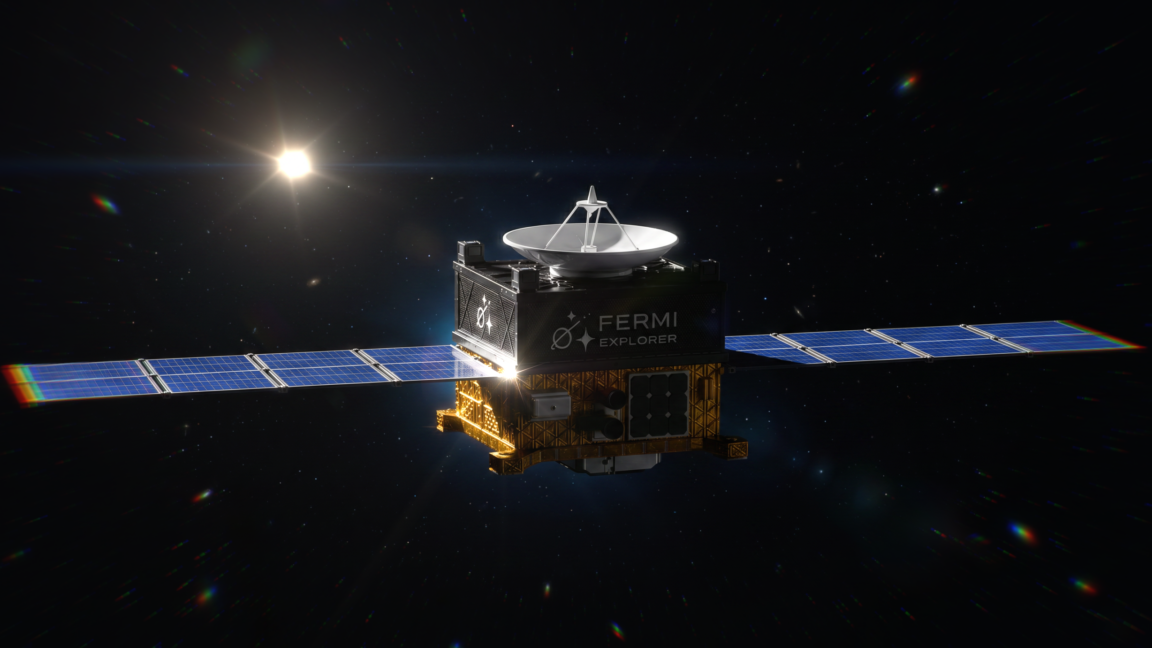
A private group is planning the most affordable mission to Alpha Centauri to investigate the Fermi Paradox and the terrifying possibility of the 'Great Filter'.
- Proposal for the most cost-efficient interstellar probe to Alpha Centauri.
- Investigation into the Fermi Paradox and the absence of alien signals.
- Led by Philip Johnston, co-founder of the $2.3 billion firm Starcloud.
Across the local group of galaxies, including our own Milky Way, there are an estimated several trillion planets. A significant portion of these reside within the habitable zones of their respective stars. Logically, if the conditions for life are so widespread, the universe should be teeming with intelligence. Yet, we encounter a haunting silence.
This discrepancy is known as the Fermi Paradox. It suggests that while the statistical probability of extraterrestrial civilizations is high, the empirical evidence is non-existent. Many theorists believe in a "Great Filter"—a catastrophic evolutionary or technological barrier that prevents civilizations from expanding beyond their home star systems.
Why This Matters
BozokMedia analysis shows that the involvement of figures like Philip Johnston indicates a transition toward 'disruptive space exploration.' By prioritizing the "cheapest possible" mission, the venture aims to bypass the bureaucratic inertia of national space agencies, potentially accelerating our understanding of our place in the cosmos.
"The silence of the stars is either a warning that we are alone, or a sign that the filter is yet to come."
Philip Johnston, a distinguished mathematician and physicist from the United Kingdom, has emerged as a key driver of this ambition. Johnston is already a prominent figure in the aerospace sector for his advocacy of orbital data centers. In 2024, he co-founded Starcloud, a company now valued at $2.3 billion, leveraging high-compute infrastructure in space.
Historically, the distance to Alpha Centauri—roughly 4.37 light-years—has been an insurmountable wall for human engineering. Conventional propulsion would take millennia to arrive. However, the integration of private capital and cutting-edge physics is now challenging these limits.
| Feature | Traditional Government Missions | Proposed Private Mission |
|---|---|---|
| Budget | Multi-billion dollar taxpayers' funds | Optimized low-cost model |
| Primary Goal | Broad scientific discovery | Addressing the Fermi Paradox |
| Approach | Risk-averse, long-term planning | Agile, iterative development |
Frequently Asked Questions
1. What is the Great Filter?
It is the hypothesis that there is a stage of development that is nearly impossible for life to surpass, leading to the extinction of civilizations.
2. Who is Philip Johnston?
A UK-based physicist and co-founder of Starcloud, specializing in orbital data infrastructure and interstellar theory.