From the discovery of mysterious 'black hole stars' to the ability to turn plastic into edible treats, science is rewriting the rulebook.
- Astronomers have identified a 'black hole star' using James Webb Space Telescope data.
- New microbial technology allows the breakdown of plastics into edible substances.
- Biological anomalies like sex-switching avocado flowers are reshaping botany.
The scientific landscape is evolving at a breakneck pace, often leaving groundbreaking stories behind in the rush of daily news. This month, several remarkable discoveries have emerged, ranging from the depths of deep space to the microscopic world of biotechnology.
The Mystery of the 'Black Hole Star'
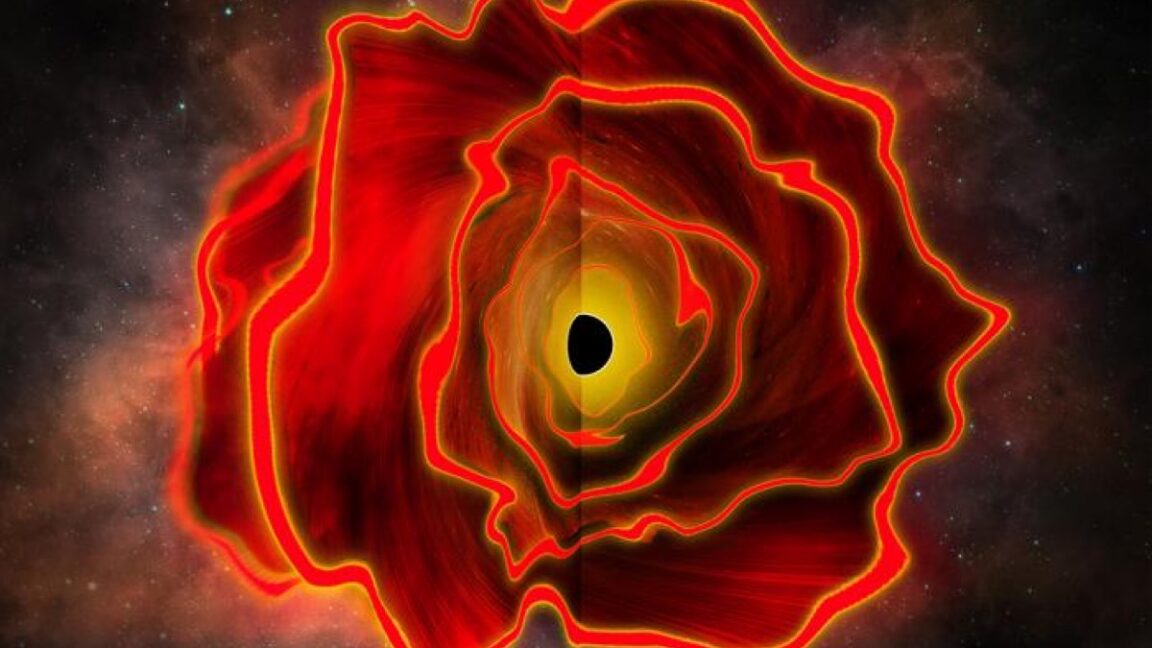
Using data from the James Webb Space Telescope (JWST), astronomers have identified a peculiar object known as a 'black hole star'. While appearing as a bright red dot, its energy output defies standard stellar evolution models. Unlike typical stars that rely on nuclear fusion, this object produces energy levels comparable to an active black hole, despite being the size of a massive star. This discovery provides a window into the Universe when it was only a few hundred million years old.
Why This Matters
BozokMedia analysis shows that such anomalies suggest our current understanding of the early universe and the relationship between gravity and light is incomplete, potentially requiring a revision of astrophysical frameworks.
The discovery of black hole stars challenges the very foundations of how we categorize celestial bodies in the early cosmos.
Turning Plastic into Food: In a stunning leap for sustainability, researchers have successfully used microbes to break down plastics and transform them into edible components, such as cookies. This breakthrough holds immense potential for solving the global plastic crisis while addressing food scarcity.
The roundup also includes fascinating links between whale vocalizations and Einstein's special theory of relativity, and the biological phenomenon where avocado tree flowers switch their sex during the day to optimize pollination. These stories highlight the intricate connectivity of the natural world.
Frequently Asked Questions
Question 1: What makes a black hole star different from a normal star?
Answer: A black hole star produces energy far exceeding the limits of nuclear fusion, mimicking the energy output of an active black hole.
Question 2: Can plastic-based food be consumed safely?
Answer: While the microbial process breaks down polymers, extensive safety and nutritional testing are required before human consumption becomes standard.